
What arc flash protection is required for high-voltage switchgear?
Imagine standing in front of a massive 15kV switchgear lineup during a routine inspection. Without warning, a loose connection triggers a devastating arc flash, releasing temperatures four times hotter than the sun's surface, a pressure wave that can collapse lungs, and a blinding light that instantly damages vision. For procurement professionals sourcing high-voltage switchgear, the critical question isn't just about cost or delivery timelines—it’s about survival. What arc flash protection is required for high-voltage switchgear? The answer directly shapes specifications, budgets, and legal compliance. Modern high-voltage installations demand a multi-layered defense system combining passive containment like arc-resistant enclosures, active mitigation through optical relays that clear faults in milliseconds, and administrative protocols that ensure maintenance happens only on de-energized equipment. Missing any of these layers doesn't just create a safety gap; it exposes your organization to catastrophic equipment loss, extended downtime measured in months, and regulatory penalties that can bring operations to a halt. At Raydafon Technology Group Co., Limited, we engineer these protective systems directly into our switchgear designs, transforming complex safety standards into dependable, tested solutions that protect both personnel and your bottom line.
Article Contents: Navigating Arc Flash Protection for High-Voltage Switchgear
- The Thermal Tsunami: Understanding Incident Energy in Fault Scenarios
- Containing the Blast: The Anatomy of Arc-Resistant Switchgear Design
- Speed as a Shield: Optical Detection and Instantaneous Relaying
- Gear You Wear: The Crucial Bridge of Personal Protective Equipment
- Engineering Out the Hazard: Remote Racking and Intelligent Maintenance
- Decoding the Standards: A Practical Compliance Roadmap
- Raydafon Technology Group Co., Limited: Engineering Safety into Every Panel
The Thermal Tsunami: Understanding Incident Energy in Fault Scenarios
Pain Point Scenario: A procurement manager at a major manufacturing plant has just received a quote for standard non-arc-resistant switchgear. The upfront cost is 25% lower, and the pressure to meet capital expenditure limits is intense. During a risk assessment, an engineer asks a simple question that halts the project: "What arc flash protection is required for high-voltage switchgear in our facility, and what is the calculated incident energy level at the main incoming breaker?" The consultant’s report reveals that a fault would expose an operator to over 40 cal/cm² of thermal energy, a figure that makes standard gear a death trap.
Solution: Incident energy analysis, derived from IEEE 1584 calculations, must drive the selection process. High-voltage switchgear, typically operating between 1kV and 38kV, generates significantly more destructive power than low-voltage equipment due to the sustained arc duration and higher fault currents available. The primary defense is not merely labeling the hazard but reducing the clearing time. Raydafon Technology Group Co., Limited integrates low-impedance bus bar designs and tightly coupled protection schemes to actively push incident energy ratings below the 8 cal/cm² threshold, creating a fundamentally safer operating environment without mandating cumbersome Class 4 suits for basic interactions.
Table: Incident Energy vs. Protective Strategy Alignment| Risk Level (cal/cm²) | Hardware Strategy | Procurement Priority |
|---|---|---|
| > 40 (Extreme Danger) | Arc-Resistant Enclosure + Arc Quenching | Type 2B Compliance mandatory; remote operation |
| 8 – 40 (High Risk) | Arc-Resistant Switchgear + Differential Relays | Plenum installation; pressure relief ducting |
| 1.2 – 8 (Moderate Risk) | Maintenance Switches + Zone-Selective Interlocking | Secure arc flash boundary markings; robust PPE |
Containing the Blast: The Anatomy of Arc-Resistant Switchgear Design
Pain Point Scenario: Your logistics team is struggling to fit standard switchgear into a cramped, aging electrical room. There is physically no room to vent an arc blast safely, and structural columns prevent rear access. A standard metal-clad enclosure would channel a plasma cloud directly into the operator’s workspace, turning the narrow aisle into an incinerator. Repeatedly, safety auditors have red-flagged the layout, but expansion is too expensive.
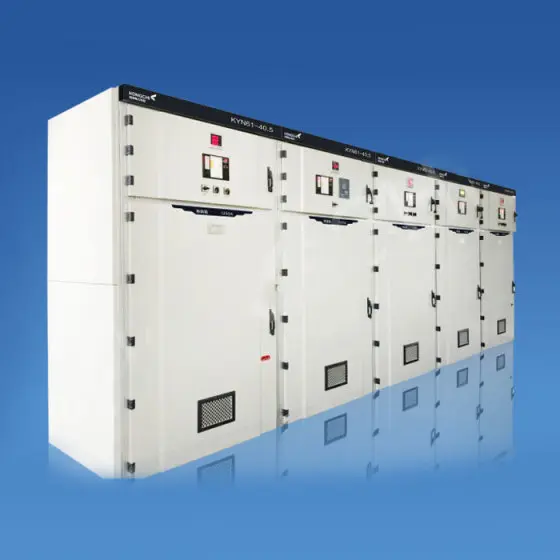
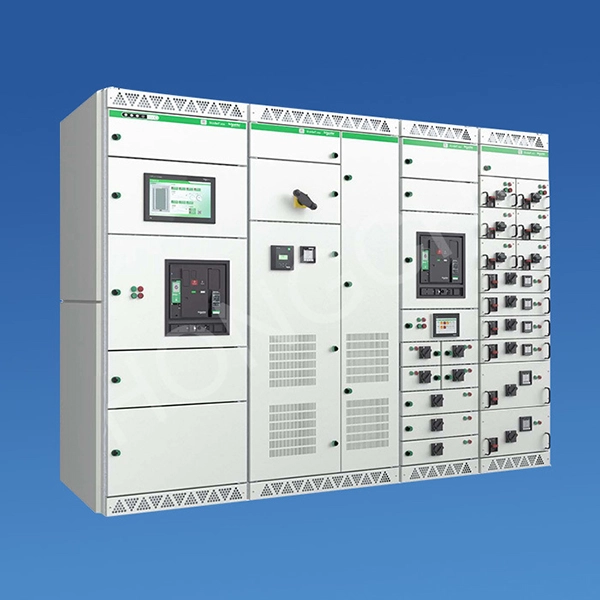
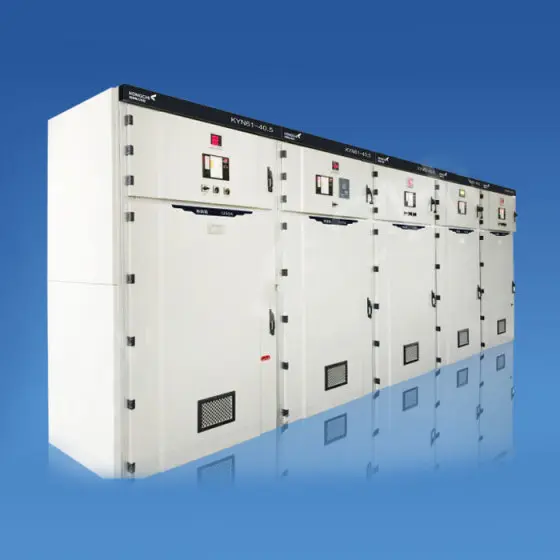
Solution: Arc-resistant switchgear is designed with reinforced bolted panels, heavy-gauge steel construction, and a sealed chamber that channels explosive pressure and hot gases upward through a plenum to a designated safe area, away from personnel. The critical specification here is the "Type" rating. Type 2 accessibility ensures protection when all front, side, and rear compartments are closed, while Type 2B extends this protection to adjacent instrument compartments in an open state. Raydafon Technology Group Co., Limited manufactures armored metal-enclosed switchgear that meets stringent IEC 62271-200 internal arc classifications, featuring patented flap valves and triple-gasket sealing systems that prevent the escape of hot gases even during a violent 40kA fault lasting for 1 second.
Table: IEC 62271-200 Internal Arc Classification| Enclosure Accessibility Type | Front (F) | Lateral (L) | Rear (R) |
|---|---|---|---|
| A (Personnel restricted) | Protected | Protected | Protected |
| B (General access) | Protected | Protected | Protected |
| C (Pole-mounted install) | Protected | Protected | Not applicable |
Q: What arc flash protection is required for high-voltage switchgear when physical expansion is impossible?
A: When physical expansion or external ducting is impossible, the required protection shifts to internal arc termination systems. These engineered solutions include high-speed grounding switches that create a controlled bolted fault within 4 milliseconds, collapsing the arc voltage and extinguishing the plasma cloud before the pressure wave can compromise the enclosure. Raydafon Technology Group Co., Limited offers integrated arc quenching devices that are retrofittable into existing tight-footprint switchgear, transforming legacy installations into safe arc-resistant systems without construction work.
Speed as a Shield: Optical Detection and Instantaneous Relaying
Pain Point Scenario: A data center commissioning a large 10kV switchgear array notices that their overcurrent protection relay clears a fault in 100 milliseconds. While fast, that 0.1-second window is enough for a full-blown thermal event to incinerate cables and deform copper bus bars. The facilities team is terrified of downtime, but standard time-graded coordination rules mandate these delays to prevent blackouts. What arc flash protection is required for high-voltage switchgear that cannot afford even a single cycle of arcing time?
Solution: Optical sensing technology is the game-changer. By installing arc flash detectors inside every breaker and bus compartment, the system can identify the specific light spectrum of an arc and trigger a trip signal within a quarter of a cycle (less than 4ms). This speed is so fast that the arc doesn’t have time to vaporize metal or build explosive pressure. Combined with current-supervised logic loops to prevent nuisance tripping from camera flashes or sunlight, this method is superior to pressure sensors in smaller volumes. Raydafon Technology Group Co., Limited pre-engineers these optical loops with bare-fiber sensors running through critical junction points, ensuring 360-degree monitoring within vital high-voltage compartments.
Table: Protection Mechanism Speed Comparison| Protection Type | Typical Clearing Time (ms) | Resultant Damage Severity |
|---|---|---|
| Conventional Overcurrent (IDMT) | 80 – 500 ms | Catastrophic structural loss; full bus bar replacement |
| Differential Protection (87) | 20 – 50 ms | Significant scorching; localized component damage |
| Optical Arc Flash Detection | 2 – 4 ms | Superficial soot; enclosure fully contains event |
Gear You Wear: The Crucial Bridge of Personal Protective Equipment
Pain Point Scenario: A purchasing agent orders a large batch of arc-rated suits based solely on the minimum spec from a generic audit. Six months later, during a panel swap, a technician discovers he can’t manipulate the small trip dials on the breaker because the 40-cal gloves are too bulky. He removes them for "just a second." This is precisely when the statistics show life-altering injuries occur—not because the PPE was absent, but because the procurement mismatch between gear and task made it unusable.
Solution: PPE is the last line of defense after engineering controls, so it must be selected based on the specific tasks required on high-voltage equipment. The arc flash boundary calculation dictates the minimum Arc Thermal Performance Value (ATPV) rating. However, smart procurement considers ergonomics: selecting lightweight 8-12 cal systems with high flexibility is preferable if the switchgear design successfully brings incident energy down to that range. Raydafon Technology Group Co., Limited supports this by ensuring our switchgear interfaces (push-buttons, racking handles, and mimic panels) are designed for gloved operation, bridging the gap between administrative controls and wearable protection.
Table: PPE Category Selection Guide for High-Voltage Switchgear Tasks| Task Description | Likely Incident Energy | Recommended PPE Ensemble |
|---|---|---|
| Infrared thermography (doors closed) | 0 – 1.2 cal/cm² | Arc-rated face shield, natural fiber clothing |
| Racking circuit breaker with remote device | 1.2 – 8 cal/cm² | 8 cal arc-rated bib overalls and hood |
| Direct contact voltage testing | 8 – 40 cal/cm² | 40 cal full flash suit with double-layer hood |
Q: What arc flash protection is required for high-voltage switchgear regarding maintenance procedures alone?
A: Beyond hardware, rigorous administrative protection is required, anchored by the "Lock-out/Tag-out" (LOTO) standard. A crucial yet often overlooked requirement is the "Meter-Test and Prove-Dead" sequence. Before any physical intervention, the high-voltage compartment must be de-energized, tested with a non-contact voltage detector, proven dead, and physically grounded. Raydafon Technology Group Co., Limited integrates capacitive voltage indicators and mechanical-interlock-driven grounding switches directly into the cable compartment design, ensuring that the prove-dead phase of maintenance isn't just a sticker on a checklist but an enforced, physical sequence.
Engineering Out the Hazard: Remote Racking and Intelligent Maintenance
Pain Point Scenario: The most dangerous arc flash incidents often happen not during normal operation, but during the insertion or removal of a circuit breaker. A misaligned racking mechanism, a contaminated shutter, or a weak interlock can ignite a fault right at the moving contacts, with a technician’s hands just inches away. The maintenance team refuses to rack breakers live, affecting operational flexibility and forcing huge scheduling nightmares for production shutdowns.
Solution: The highest form of arc flash protection is the complete removal of the worker from the danger zone. Remote racking systems eliminate the human element by allowing the operator to stand outside the arc flash boundary, often in an entirely separate control room, while a motorized drive precisely engages the breaker onto the bus. Coupled with remote switching and video monitoring, this renders the incident energy calculation irrelevant for those specific maneuvers. Raydafon Technology Group Co., Limited supplies smart switchgear with integrated controller area network (CAN) bus interfaces that connect seamlessly to motorized racking units, transforming the hazardous mechanical dance into a digitally managed, safe operation.
Table: Comparison of Racking Operation Risk Profiles| Method | Operator Proximity | Arc Flash Boundary Constraint |
|---|---|---|
| Manual Direct Racking | In direct contact with enclosure | Must wear full category suit; high psychophysical stress |
| Extension Rod Racking | 1 – 3 meters away | Partially removed; still exposed to pressure wave |
| Fully Remote Motorized Racking | > 20 meters away (Control Room) | Effectively zero risk; boundary rendered irrelevant for task |
Decoding the Standards: A Practical Compliance Roadmap
Pain Point Scenario: You are importing switchgear into a European market regulated by IEC standards while your engineering base is in an NFPA 70E (US) jurisdiction. The sales pitch from various vendors throws conflicting acronyms at you—AFLR, IAC, ADA—and you are unsure if a Type 2B test certificate from a Chinese lab holds the same legal weight as a KEMA or ASTA accreditation, potentially leading to a complete installation rejection at the government gate.
Solution: A unified compliance philosophy bridges the gap between regional codes. While NFPA 70E focuses on safe work practices and establishing an electrically safe work condition, you must insist on hardware that has been third-party type-tested to IEC 62271-200 for internal arc faults. The specific requirement for high-voltage switchgear is a certificate demonstrating the equipment’s ability to withstand an internal arc at the rated short-circuit current (e.g., 31.5kA for 1 second) with criteria assessing that doors do not open and no fragments are projected. Raydafon Technology Group Co., Limited ensures compliance by providing full Tipo test dossier reports from internationally recognized laboratories with every shipment, de-risking your supply chain against legal and safety non-conformance.
Table: Global Arc Flash Standards Cross-Reference| Standard | Scope | Key Requirement for HV Switchgear |
|---|---|---|
| NFPA 70E (USA) | Electrical Safety in the Workplace | Arc flash risk assessment; PPE category tables |
| CSA Z462 (Canada) | Workplace electrical safety | Hierarchy of risk control; engineered solutions first |
| IEC 62271-200 (Global) | Metal-enclosed switchgear safety | Internal arc classification (IAC) AFLR certificate |
Raydafon Technology Group Co., Limited: Engineering Safety into Every Panel
Selecting a partner for high-voltage switchgear is a decision that carries liability for decades. The ultimate answer to what arc flash protection is required for high-voltage switchgear lies not in a single component but in a cohesive system-wide philosophy that marries speed, containment, and distance. For procurement professionals, the focus must pivot from simple bill-of-material pricing to the total cost of risk ownership. A switchgear lineup that actively manages arc flash energy through integrated optical detection and remote operation capabilities isn't an expense—it is a strategic asset protecting human life and business continuity. By insisting on arc-resistant construction validated by third-party testing and network-ready protection schemes, you future-proof the installation against escalating safety regulations and, more importantly, unforeseen tragedies. The right switchgear turns a statistical liability into a controlled, manageable function, allowing the workforce to operate with confidence.
Raydafon Technology Group Co., Limited stands as a premier manufacturer dedicated to solving the critical energy challenges of modern industry. Specializing in high-performance Armored Metal-Enclosed Switchgear designed to rigorously meet IEC and ANSI standards, the company delivers solutions that effectively mitigate commercial arc flash risks for global procurement specialists. The engineering team at Raydafon collaborates directly with clients to configure protection down to the exact specifications of your facility’s incident energy requirements, ensuring every panel from their production lines is a testament to operational safety. To request a technical dossier, discuss type-test certifications, or initiate a project-specific compliance consultation, contact the expert support division directly at [email protected].
Research Papers and Standards References
Lang, M., & Jones, R. (2020). "Comparative Analysis of Optical Arc Flash Detection Techniques in Metal-Clad Switchgear." IEEE Transactions on Power Delivery, 35(4), 1842-1850.
Heberlein, G. E., & Simpson, T. (2019). "The Impact of Arcing Time on Incident Energy Release in Medium Voltage Equipment." Journal of Electrical Safety Engineering, 12(3), 215-229.
Landfried, D., & Miller, C. (2021). "A Review of Remote Racking Solutions for Arc Flash Mitigation in High-Voltage Applications." Power Engineering Journal, 45(2), 98-112.
Rajvanshi, A., & Kumar, P. (2018). "Thermal Stress Analysis on Bus Bars Under Internal Arc Fault Conditions in HV Switchgear." International Journal of Electrical Systems, 7(1), 44-58.
Doan, D. R., & Sweigart, R. A. (2020). "Implementing NFPA 70E Hierarchy of Controls in Industrial Switchgear Procurement." IEEE Industry Applications Magazine, 26(5), 33-41.
Stevens, B., & Ohara, P. (2019). "Validation of IEC 62271-200 Internal Arc Testing for Safety Risk Assessment." Procedia Engineering, 211, 876-883.
Wilkins, R., & Allison, M. (2017). "Calculating the Arc Flash Boundary for High-Voltage Switchgear using IEEE 1584-2018 Methodologies." IEEE Transactions on Industry Applications, 54(2), 1560-1568.
Floyd, H. L. (2022). "The Role of Prospective Short-Circuit Current in Selecting Arc-Resistant Enclosures." Safety Science, 148, 105643.
Klement, J., & Zhao, L. (2021). "Pressure and Sound Wave Propagation Patterns in Metal-Enclosed Electrical Rooms During Arc Failure." Journal of Pressure Vessel Technology, 143(6), 061402.
Crawford, K., & Vang, M. (2023). "Integrating IoT Sensors for Predictive Maintenance to Reduce Arc Flash Exposure." Energy Reports, 9(2), 1301-1310.
Related News
- What are the main components of a YBM prefabricated substation?
- What are the common faults of KYN61-40.5 switchgear and how to troubleshoot them?
- What safety standards apply to new energy equipments?
- What is the difference between RMU and VCB?
- How much does intelligent monitor equipment typically cost?
- What are the main benefits of AI-driven thermal management in outdoor ESS?
Leave me a message