Medium Voltage Switchgear Manufacturer for Reliable Power Distribution
Medium Voltage Switchgear plays a critical role in modern power distribution networks, acting as the centralized control and protection hub for electrical systems operating between 1 kV and 52 kV. Raydafon Group designs and manufactures medium voltage switchgear assemblies that meet the demanding requirements of utilities, industrial plants, data centers, hospitals, and infrastructure projects. With two decades of hands-on SEO and industry analysis experience, this article details the technical specifications, construction features, performance parameters, and frequently asked questions about medium voltage switchgear, with a focus on the engineering capabilities of Raydafon Group.
Understanding Medium Voltage Switchgear
Medium voltage switchgear is an integrated assembly of circuit breakers, disconnect switches, busbars, protective relays, current transformers, voltage transformers, and control equipment. Its primary function is to isolate faulty sections, interrupt short-circuit currents, and maintain service continuity under normal and abnormal conditions. Raydafon Group builds both air-insulated switchgear (AIS) and gas-insulated switchgear (GIS) configurations, each suited to specific footprint, environmental, and reliability requirements.
The switchgear must coordinate with protection schemes to clear faults within milliseconds, minimizing equipment damage and downtime. Key performance indicators include rated voltage, rated current, short-time withstand current, peak withstand current, internal arc classification, insulation level, and mechanical endurance. Raydafon Group engineers select materials and design geometries to achieve consistent dielectric performance across all operating temperatures and humidity levels.
Key Construction and Design Features
- Segregated compartments for busbar, circuit breaker, cable, and low-voltage control sections to prevent fault propagation.
- Vacuum circuit breaker technology with operating sequences of O-0.3s-CO-15s-CO and mechanical endurance exceeding 10,000 operations.
- Epoxy resin insulation for bushing, support insulators, and current transformer housings, offering high partial discharge resistance.
- Interlocking systems to prevent unsafe operations such as racking a breaker while closed or opening a door when live.
- Pressure relief flaps that redirect internal arc gases away from operator zones.
- Anti-corrosion treatments including zinc plating, powder coating, and stainless steel hardware for marine and humid environments.
- Integrated smart sensors for temperature monitoring, partial discharge detection, and breaker condition assessment.
- Modular busbar design allowing extension or reconfiguration without complete replacement.
Technical Parameters of Raydafon Medium Voltage Switchgear
The following table summarizes the standard technical parameters available from Raydafon Group. Custom ratings can be engineered for specific project needs, including seismic zones, high altitude, and aggressive industrial atmospheres.
| Parameter | Unit | Standard Range | Optional / Custom Range |
|---|---|---|---|
| Rated voltage | kV | 3.6, 7.2, 12, 17.5, 24 | 36, 40.5 |
| Rated frequency | Hz | 50 / 60 | 50 / 60 |
| Rated current (main busbar) | A | 630, 1250, 1600, 2000, 2500 | 3150, 4000 |
| Rated current (feeder) | A | 630, 1250, 1600, 2000 | 2500, 3150 |
| Rated short-time withstand current (1s / 3s) | kA | 20, 25, 31.5 | 40, 50 (1s) |
| Rated peak withstand current | kA | 50, 63, 80 | 100, 125 |
| Rated short-circuit breaking current | kA | 20, 25, 31.5 | 40, 50 |
| Rated short-circuit making current | kA | 50, 63, 80 | 100, 125 |
| Power frequency withstand voltage (1 min) | kV | 28, 42, 50, 65 | 70, 95 |
| Lightning impulse withstand voltage | kV | 75, 95, 125, 145 | 170, 200 |
| Internal arc classification (IAC) | kA / s | 31.5 / 1 | 40 / 1, 50 / 0.5 |
| Protection degree (enclosure) | IP | IP4X, IP41 | IP54, IP65 |
| Control voltage | V DC | 110, 220 | 48, 125 |
| Auxiliary power supply | V AC | 230 / 400 | 110, 127, 480 |
| Operating ambient temperature | °C | -5 to +40 | -25 to +55 |
| Relative humidity | % | ≤ 95 (non-condensing) | ≤ 100 with anti-condensation heaters |
| Altitude | m | ≤ 1000 | ≤ 5000 with derating |
| Standards | - | IEC 62271-200, IEC 62271-1 | GB 3906, ANSI/IEEE C37.20.2 |
Circuit Breaker Parameter Details
- Vacuum interrupter rated voltage: 12 kV, 24 kV, 36 kV, 40.5 kV depending on panel rating.
- Rated operating sequence: O-0.3s-CO-15s-CO for auto-reclosing applications.
- Mechanical endurance: 10,000 operations for circuit breaker, 30,000 operations for disconnect switch.
- Opening time: ≤ 45 ms, closing time ≤ 80 ms for breaker at rated control voltage.
- Contact erosion life: 30 full short-circuit interruptions at rated breaking current.
- Spring charging time: ≤ 10 s for manually charged spring, motor charging ≤ 15 s.
Product Range Offered by Raydafon Group
Raydafon Group supplies a complete portfolio of medium voltage switchgear configurations tailored to project requirements. Each design is type-tested according to the relevant IEC or ANSI standards and verified through internal arc testing, temperature rise testing, and seismic qualification where needed.
Air-Insulated Switchgear (AIS)
- RV-MVS12: 12 kV metal-clad switchgear, withdrawable vacuum circuit breaker, panel width 800 mm or 1000 mm.
- RV-MVS24: 24 kV metal-enclosed switchgear, single busbar or double busbar, rated up to 2500 A.
- RV-MVS36: 36 kV AIS with vacuum or SF6 circuit breaker, compact footprint for substation upgrades.
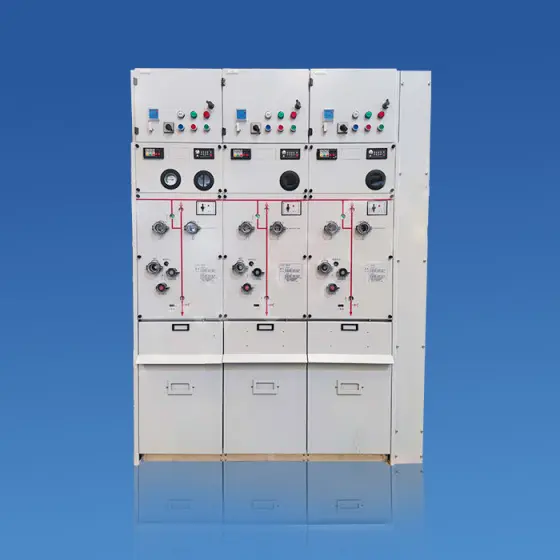
- RV-Compact RMU: Ring main unit for secondary distribution, 12/24 kV, sealed gas tank or air insulated options.
Gas-Insulated Switchgear (GIS)
- RV-GIS36: 36 kV SF6-insulated switchgear with single busbar, panel width 600 mm, rated up to 2500 A.
- RV-GIS40: 40.5 kV GIS for harsh environments, internal arc classified 31.5 kA / 1 s.
- RV-GIS Eco: Alternative insulation gas mixture option with lower global warming potential.
Specialty Panels
- Bus tie breaker panels for load transfer and parallel operation.
- Metering and voltage transformer panels with integrated protection and revenue metering.
- Capacitor bank switching panels with detuned reactors and zero-crossing closing control.
- Motor starter panels with fused contactor or vacuum circuit breaker, up to 4000 A busbar.
- Arc-resistant panels evaluated to IEC 62271-200 Annex A, accessibility type A or B.
Protection, Control, and Monitoring
Raydafon medium voltage switchgear can be equipped with advanced protection relays from major brands or Raydafon’s own protection and control platform. Standard protection functions include overcurrent (50/51), earth fault (50N/51N), overvoltage (59), undervoltage (27), thermal overload (49), and breaker failure (50BF). Communication protocols such as IEC 61850, Modbus RTU/TCP, and DNP3 enable seamless integration into SCADA and energy management systems.
Condition monitoring packages include:
- Wireless temperature sensors on busbar joints and cable terminations, with threshold alarms.
- Partial discharge detection using transient earth voltage (TEV) or ultrasonic sensors.
- Breaker travel and coil current monitoring to predict maintenance needs.
- Environmental sensors for humidity, ambient temperature, and internal arc pressure.
Safety and Compliance
Safety is engineered into every Raydafon Group switchgear panel. Internal arc classification testing verifies that the enclosure contains hot gases and arc products, protecting personnel during a fault. Panels are available with arc-resistant features including reinforced doors, pressure relief ducts, and arc fault detection relay inputs. Additional safety measures include key interlock systems, capacitive voltage indicators, earthing switches with short-circuit making capacity, and padlockable handles. All products are tested according to applicable standards, and Raydafon Group maintains ISO 9001, ISO 14001, and ISO 45001 certifications across manufacturing facilities.
Installation and Environmental Requirements
Raydafon medium voltage switchgear is designed for indoor installation in standard electrical rooms, but weatherproof enclosures and containerized substations are available for outdoor duty. The following installation conditions are recommended for optimal performance:
- Foundation: Level steel channels or concrete plinth with dimensional tolerance ±2 mm per meter.
- Ventilation: Natural or forced ventilation to limit ambient temperature below 40°C at rated current.
- Clearances: Minimum front aisle 1200 mm for breaker withdrawal, rear access 800 mm if required.
- Cable entry: Top or bottom entry through removable gland plates, with arc proof cable boxes if specified.
- Auxiliary power: Stable DC supply for protection and control circuits, with battery backup recommended.
Frequently Asked Questions About Medium Voltage Switchgear
Q: What voltage levels are classified as medium voltage switchgear?
A: Medium voltage switchgear generally covers systems with rated voltages above 1 kV and up to 52 kV. Common standard ratings are 3.6 kV, 7.2 kV, 12 kV, 17.5 kV, 24 kV, 36 kV, and 40.5 kV. Raydafon Group manufactures panels across this range, with the 12 kV and 24 kV classes being the most widely used in industrial and utility distribution networks.
Q: What is the difference between air-insulated and gas-insulated medium voltage switchgear?
A: Air-insulated switchgear uses atmospheric air as the primary insulation medium between live parts and earth, resulting in larger panel dimensions but simpler maintenance. Gas-insulated switchgear uses compressed SF6 or alternative gas mixtures in sealed compartments, allowing a much smaller footprint and better performance in polluted or humid environments. Raydafon Group offers both technologies, and the selection depends on available space, environmental conditions, and lifecycle cost.
Q: How do I choose the correct rated short-circuit breaking current for medium voltage switchgear?
A: The rated short-circuit breaking current must exceed the maximum calculated fault level at the point of installation. A short-circuit study should be performed considering transformer impedance, motor contribution, cable impedance, and utility fault level. Raydafon Group recommends selecting a panel with at least 20% margin over the calculated fault current to accommodate future network growth. Typical ratings are 20 kA, 25 kA, 31.5 kA, and 40 kA for 12 kV and 24 kV systems.
Q: What standards apply to Raydafon medium voltage switchgear?
A: The primary international standard is IEC 62271-200 for AC metal-enclosed switchgear for rated voltages above 1 kV and up to and including 52 kV. Additional applicable standards include IEC 62271-1 for common specifications, IEC 62271-100 for circuit breakers, IEC 62271-102 for disconnectors, and IEC 62271-200 Annex A for internal arc testing. For projects following Chinese GB or American ANSI/IEEE specifications, Raydafon Group can provide compliant designs and certification documentation.
Q: Can Raydafon Group provide custom medium voltage switchgear for outdoor or containerized installations?
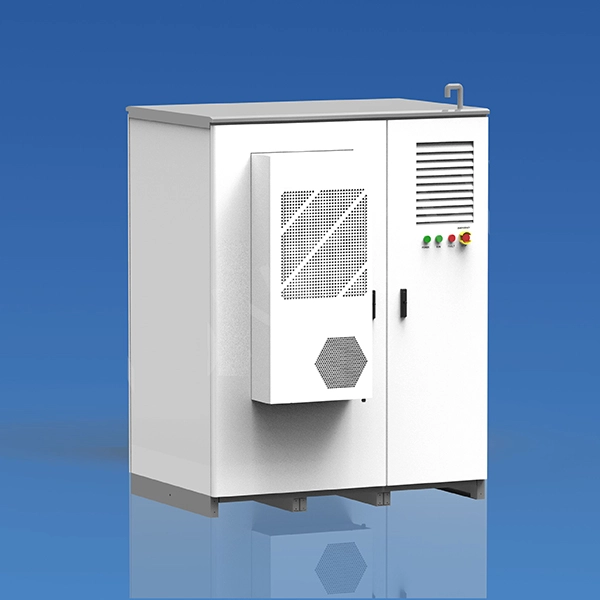
A: Yes. Raydafon Group supplies weatherproof outdoor enclosures, walk-in containerized substations, and skid-mounted switchgear modules for remote sites, mining operations, and temporary power installations. Outdoor designs include IP54 or IP65 protection, anti-condensation heaters, sun shields, and corrosion-resistant coatings suitable for coastal or desert environments.
Q: What maintenance is required for medium voltage switchgear?
A: Maintenance intervals depend on operating conditions, number of switching operations, and environmental contamination. Recommended practices include annual visual inspection, thermal imaging of busbar joints, partial discharge testing every 2-3 years, breaker contact erosion checks after every 10 full short-circuit interruptions, and lubrication of operating mechanisms every 5 years. Raydafon Group provides detailed maintenance manuals, training, and optional condition monitoring sensors to support predictive maintenance programs.
Q: Can medium voltage switchgear be extended or retrofitted after installation?
A: Raydafon Group designs switchgear with modular busbar systems and provision for extension panels. Existing installations can often be extended by adding panels of the same model, provided the original busbar rating and short-circuit rating are not exceeded. Retrofitting options include replacing obsolete circuit breakers with new vacuum units, upgrading protection relays, and adding online monitoring sensors without full shutdown.
Q: What is the typical lead time for Raydafon medium voltage switchgear?
A: Standard configurations of 12 kV and 24 kV switchgear can be delivered within 8 to 12 weeks after approval of drawings. Custom designs, GIS panels, and projects requiring special type tests or seismic certification may require 16 to 24 weeks. Raydafon Group maintains a stock of common components to reduce lead times for urgent orders.
Q: What information is needed to request a quotation for medium voltage switchgear?
A: Provide the system voltage, rated current, short-circuit level, single line diagram, panel quantity, control voltage, communication protocol, ambient conditions, and any special requirements such as arc-resistant construction or outdoor installation. Raydafon Group engineers will review the specifications and propose the most suitable switchgear configuration with detailed technical datasheets and drawings.
Q: Does Raydafon Group offer factory acceptance testing and site commissioning?
A: Yes. Raydafon Group performs routine tests on every panel before delivery, including power frequency withstand, circuit breaker timing, resistance measurement, and operational checks. Optional factory acceptance testing can include partial discharge measurement, internal arc testing on a representative panel, and customer witness tests. Site commissioning by Raydafon engineers covers installation supervision, cable termination checks, protection relay settings, and functional testing.
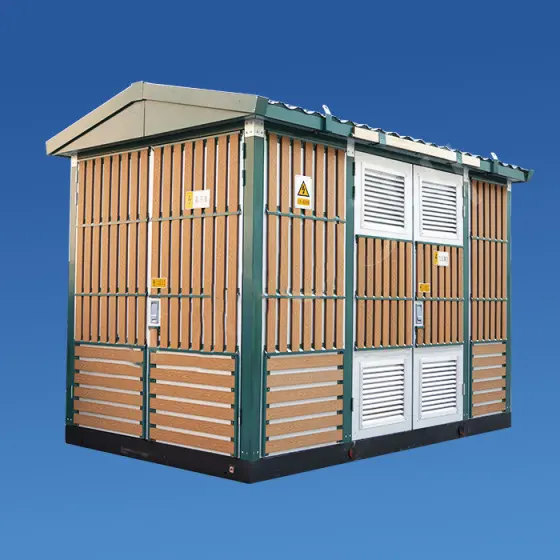
- View as
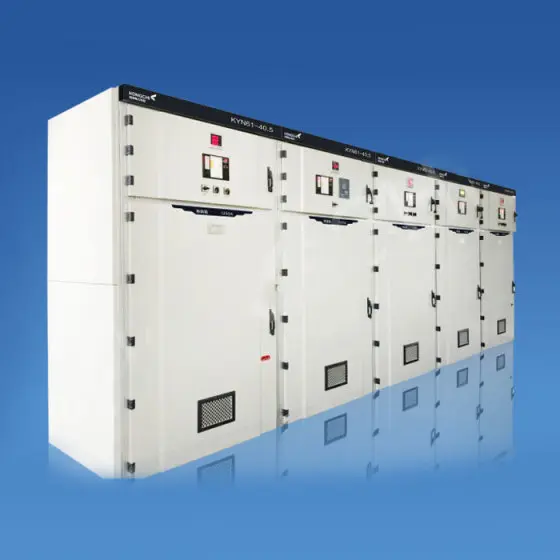
KYN61-40.5 Armored Metal-Clad Switchgear (40.5kV)
Raydafon Group's KYN61-40.5 Armored Metal-Clad Switchgear (40.5kV) delivers robust performance and safety.
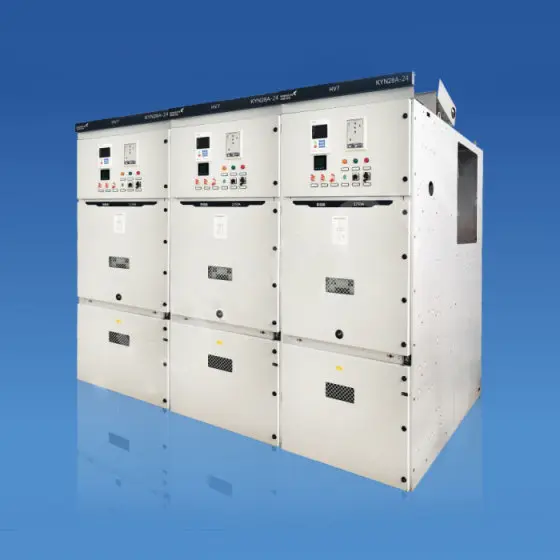
KYN28A-24 Removable AC Metal-Clad Switchgear (24kV)
Raydafon Group's KYN28A-24 removable AC metal-clad switchgear offers safe, compact 24kV power distribution with easy maintenance, ideal for substations and industrial plants seeking reliable performance.
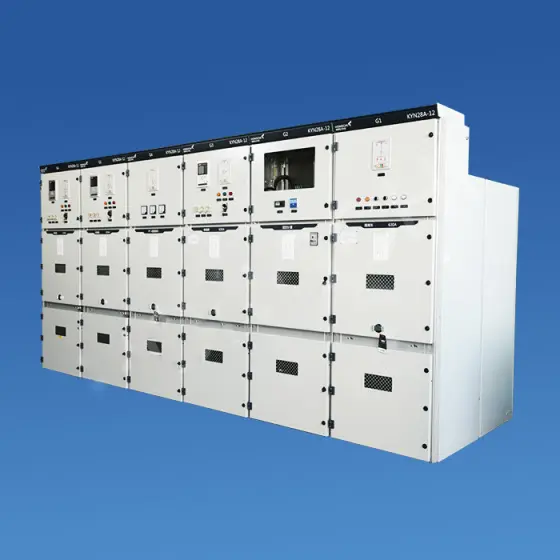
KYN28A-12 Removable AC Metal-Clad Switchgear (12kV)
Raydafon Group KYN28A-12 removable AC metal-clad switchgear ensures safe, compact 12kV power control with easy maintenance.