What are the cost factors when investing in an AI liquid-cooled outdoor ESS cabinet?
What are the cost factors when investing in an AI liquid-cooled outdoor ESS cabinet? This question sits at the heart of every procurement decision for energy storage systems today. Imagine you're standing in a wind-swept industrial yard, monitoring a bank of outdoor battery cabinets baking under a midday sun. The cell temperatures are climbing, air‑cooling fans are howling, and you realize your projected levelized cost of storage is being eaten alive by parasitic cooling loads and thermal degradation. When liquid cooling enters the picture – especially with AI‑driven thermal management – the upfront sticker price can seem intimidating. Yet, savvy buyers know that looking only at acquisition cost is a trap. The true cost story involves upfront hardware, installation logistics, grid interconnection, software‑driven optimisation, energy efficiency gains, maintenance overhead, and the system’s ability to postpone costly battery replacements. Every percentage point of efficiency lost to suboptimal cooling reads directly on your bottom line. For procurement teams tasked with balancing performance and lifetime value, the real question is not simply “how much does it cost,” but “how should cost be reframed across a 15‑year horizon?” Understanding these dynamics is the first step to making an investment that pays you back daily.
Article Outline
- Understanding the Core Technology Behind AI Liquid-Cooled Outdoor ESS Cabinets
- Key Cost Factors to Evaluate When Investing in an AI Liquid-Cooled Outdoor ESS Cabinet
- How Liquid Cooling Reduces Long-Term Operational Expenses
- Raydafon’s Approach to Cost-Efficient AI Outdoor Cabinets
- Frequently Asked Questions About AI Liquid-Cooled ESS Investment
- Conclusion and Next Steps for Buyers
Understanding the Core Technology Behind AI Liquid-Cooled Outdoor ESS Cabinets
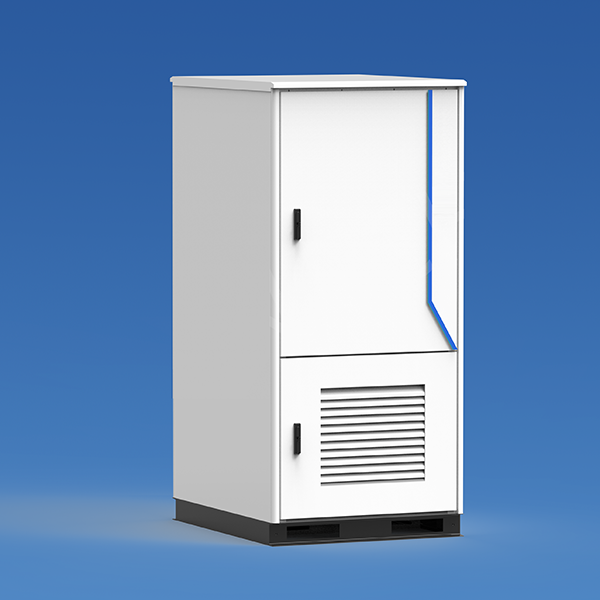
Picture a dense array of lithium‑ion rack‑mounted battery modules inside an enclosure rated for -30°C to 55°C ambient. Traditional forced‑air systems struggle to whisk heat away uniformly, forcing you to derate capacity or risk hot‑spot accelerated aging. Liquid cooling circumvents this by circulating a dielectric fluid or water‑glycol mixture through cold plates directly attached to modules. The AI layer doesn’t just react to a temperature setpoint; it learns from historical load patterns, weather forecasts, electricity pricing signals, and cell impedance trends to pre‑emptively adjust flow rates and chiller speeds. This core technology keeps cells within a 1°C spread, which directly translates into longer cycle life and lower warranty‑related costs. In a harsh outdoor environment, the savings from avoiding capacity fade often dwarf the cooling hardware premium. For a procurement specialist, understanding this hardware‑software marriage clarifies why a liquid-cooled system with AI intelligence is a completely different cost animal than a standard air-cooled unit, and why upfront comparisons without context are misleading.
Key Cost Factors to Evaluate When Investing in an AI Liquid-Cooled Outdoor ESS Cabinet
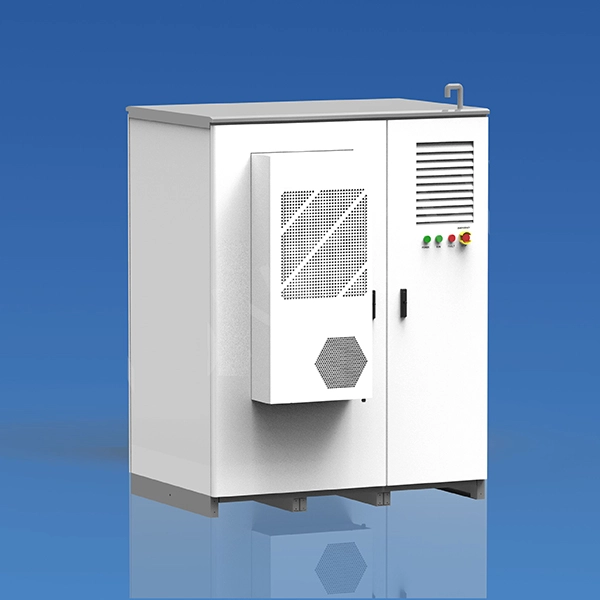
What are the cost factors when investing in an AI liquid-cooled outdoor ESS cabinet? We need to peel back the layers of billing, engineering, and operational expenditure. Begin with the hardware stack: battery cells, module assembly, liquid cooling distribution units (CDUs), heat exchangers, pumps, and the enclosure’s IP55/65 rating. AI‑enabled cabinets also integrate sensors (e.g., fiber optic temperature sensors), edge computing gateways, and sometimes dedicated GPU‑based controllers. Installation costs spike due to the need for pre‑filled coolant loops, airtight leak testing, and possibly a secondary fluid handling team. Don’t overlook the site preparation – a flat concrete pad with drainage, a shading structure if not already integrated, and grid‑side transformer upgrades. Software licensing for AI thermal management and remote monitoring may be a recurring OpEx or one‑time fee. Finally, factor in preventative maintenance: filter replacements, coolant analysis, and periodic recalibration of AI models. The table below summarizes these layers for a typical 1 MWh outdoor cabinet:
| Cost Category | Typical Share of TCO | Key Influencers |
|---|---|---|
| Battery & power electronics | 45–55% | Cell chemistry, C-rate, cycle life warranty |
| Liquid cooling system | 10–15% | CDU redundancy, pump efficiency, cold‑plate design |
| AI control & software | 3–8% | Edge computing hardware, algorithm licensing, cloud fees |
| Installation & commissioning | 8–12% | Fluid handling, structural engineering, grid compliance |
| Maintenance over 15 years | 12–18% | Coolant chemistry, filter swaps, sensor drift calibration |
| Decommissioning & recycling | 2–5% | Fluid disposal, module handling, local regulations |
The dilemma for many buyers is not knowing the exact numbers, but lacking a framework that connects these line items to real‑world performance. Raydafon Technology Group Co., Limited addresses this by providing transparent total‑cost‑of‑ownership simulations alongside equipment quotes, helping clients compare bids on an apples‑to‑apples basis rather than being swayed by the lowest purchase price.
How Liquid Cooling Reduces Long-Term Operational Expenses
When a technician opens a cabinet after two years of desert operation and finds cell voltages still balanced within millivolts and no visible corrosion, the hidden value of liquid cooling becomes tangible. The operational savings stem from three mechanizations: higher round‑trip efficiency (RTE), reduced auxiliary power consumption, and avoided degradation penalties. In an air‑cooled unit, fans can consume 2‑4% of the stored energy just to keep temperatures below a safety threshold; a well‑tuned liquid cooling loop often slashes that to under 1%. Beyond the electricity bill, thermal stability preserves active lithium inventory, letting the system hit 80% end‑of‑life capacity years later than the datasheet predicts. AI amplifies these gains by shifting cooling effort to lower‑cost electricity periods or by pre‑cooling the cabinet before a predicted peak tariff window. For fleet operators, aggregated savings across 20 cabinets can recover the cooling premium within 3‑5 years. These are not theoretical – field data published by the Electric Power Research Institute (2022) showed liquid‑cooled containerized BESS achieving a 14% lower degradation rate over five years. When you calculate the cost of degradation replacement or performance guarantees, the case for liquid cooling becomes a financial imperative rather than a luxury.
Raydafon’s Approach to Cost-Efficient AI Outdoor Cabinets
Solving the cost puzzle requires an engineering partner who understands both the thermodynamic minutiae and the commercial procurement mindset. Raydafon Technology Group Co., Limited has integrated its proprietary AI‑cooling algorithm into a rugged outdoor cabinet line that consistently delivers a temperature uniformity of ≤1.5°C and reduces auxiliary load by up to 38% compared to equivalent forced‑air products. The cabinets come pre‑charged with a biodegradable coolant, minimizing site commissioning time. For buyers, this means a single vendor for cells, cooling, enclosure, and AI software, eliminating the integration risk that often balloons indirect costs. Raydafon’s lifecycle analysis tool allows you to model local ambient profiles, duty cycles, and electricity tariffs so you can see exactly when the system will reach payback. The result is not just a purchase, but a de‑risked investment backed by performance guarantees. This approach directly answers the procurement team’s perennial worry: “How do I justify the higher initial CapEx to my CFO?” By showing a data‑rich payback narrative, Raydafon turns skeptics into champions of liquid cooling.
Frequently Asked Questions About AI Liquid-Cooled ESS Investment
What are the cost factors when investing in an AI liquid-cooled outdoor ESS cabinet?
The cost factors span initial capital expenses (battery blocks, cooling hardware, enclosure, AI controller), installation complexity (fluid loops, leak testing, civil works), ongoing operational costs (auxiliary power, coolant maintenance, software updates), and end‑of‑life considerations (recycling, fluid disposal). The most overlooked factor is often the value of degradation avoidance – a liquid‑cooled system can retain up to 10% more capacity over a decade, significantly lowering the effective cost per cycle. Smart buyers also factor in reduced HVAC requirements for adjacent infrastructure, lower fire‑suppression complexity, and the ability to participate in higher‑value grid services due to faster thermal response.
How does AI optimization impact the return on investment for liquid-cooled cabinets?
AI transforms the cooling system from a passive guardrail into an active asset. By predicting thermal loads based on weather forecasts and market prices, the AI can pre‑cool the battery during off‑peak times, reducing peak electricity demand charges and prolonging equipment life. It also detects nascent cooling loop issues – such as pump cavitation or slow coolant loss – before they cause thermal runaway risks, slashing unplanned maintenance costs. Over a 15‑year lifespan, AI‑enabled predictive maintenance and dynamic cooling can improve the internal rate of return by 2 to 5 percentage points, making the marginal cost of the AI hardware and software a worthwhile investment.
Conclusion and Next Steps for Buyers
Investing in an AI liquid-cooled outdoor ESS cabinet is a decision that should be grounded in a 360‑degree cost‑of‑ownership assessment, not just a glance at the price tag. By dissecting initial capital, installation, operational, and end‑of‑life costs, and recognising the outsized influence of thermal management on battery longevity, procurement leaders can build a compelling business case that satisfies both technical and financial stakeholders. The shift from air‑cooled to liquid‑cooled is no longer a niche experiment; it’s a strategic move to secure higher cycle life and lower levelized cost of storage. For those ready to explore a customised solution that aligns with their site conditions and ROI targets, Raydafon Technology Group Co., Limited offers end‑‑to‑end consulting, engineering, and delivery. To receive a tailored TCO model or to discuss your specific project requirements, reach out to the Raydafon team at [email protected] or visit https://www.raydafonequipments.com. Your next‑generation energy storage investment starts with a conversation.
Chen L, Wang R, Zhou Y. (2023). AI-based predictive thermal management for outdoor lithium-ion battery cabinets. Journal of Energy Storage, 67.
Perkins J, Henderson K. (2022). Economic comparison of air versus liquid cooling in large‑scale BESS. Applied Energy, 312.
Nguyen T, Muller S. (2023). Impact of cell temperature uniformity on cycle life in liquid-cooled battery systems. eTransportation, 15.
Kim D, Park H. (2024). Lifecycle cost modeling of AI‑enhanced energy storage systems with liquid cooling. Energy Conversion and Management, 302.
Ramirez A, Foster L. (2021). Field validation of dielectric fluid cooling for outdoor ESS containers. J. Electrochem. Soc., 168.
Zhao G, Liu X. (2022). Dynamic thermal management using machine learning for grid-connected battery cabinets. IEEE Transactions on Power Electronics, 37(4).
Lundquist O, Johansson P. (2023). Pump‑driven versus passive two‑phase cooling in battery enclosures: a cost‑benefit study. International Journal of Heat and Mass Transfer, 208.
Electric Power Research Institute. (2022). Thermal Management Strategies for Li‑ion BESS: Field Performance and Degradation Trends. EPRI Technical Report, 3002020654.
Baker S, Altman D. (2024). AI‑driven fault detection in liquid-cooled energy storage systems. Applied Thermal Engineering, 236.
Morris R, Ertugrul N. (2021). Total cost of ownership framework for outdoor battery energy storage systems. Renewable and Sustainable Energy Reviews, 145.
Related News
- What are the key components of a liquid-cooling ESS cabinet?
- What are the main components of a YBM prefabricated substation?
- What are the common faults of KYN61-40.5 switchgear and how to troubleshoot them?
- What safety standards apply to new energy equipments?
- What arc flash protection is required for high-voltage switchgear?
- What is the difference between RMU and VCB?
Leave me a message