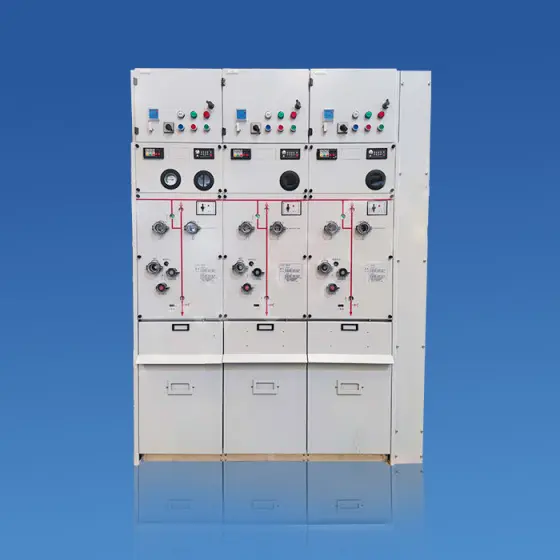

Can low voltage switchgear be used in industrial power distribution?
Can low voltage switchgear be used in industrial power distribution? This question arises in almost every project where procurement managers must align capital budgets with operational safety and long-term reliability. Industrial facilities—from automotive assembly lines to chemical processing plants—depend on reliable electrical distribution at multiple voltage levels. While medium‑voltage switchgear handles the primary feed, low voltage switchgear becomes the workhorse for final distribution, powering motor control centers, lighting panels, and auxiliary systems. Yet many decision‑makers hesitate, worrying that low voltage equipment might not withstand industrial fault levels or harsh environments. The reality is that modern low voltage switchgear, when correctly specified, delivers exceptional performance while saving up to 40% in upfront costs compared to medium‑voltage alternatives for comparable distribution tasks. In this guide, we explore the scenarios where low voltage switchgear excels, dissect the pain points it solves, and provide actionable selection data that will empower your next purchasing decision. Whether you are expanding a factory floor or replacing aging switchboards, you will gain the clarity needed to cut through technical confusion and build a power distribution system that truly fits your operation.
- The Role of Low Voltage Switchgear in Industrial Power Networks
- Key Pain Points in Industrial Power Distribution and How LV Switchgear Solves Them
- Selecting the Right LV Switchgear: Parameters and Performance Data
- Installation Best Practices for Maximum Reliability
- Frequently Asked Questions
The Role of Low Voltage Switchgear in Industrial Power Networks
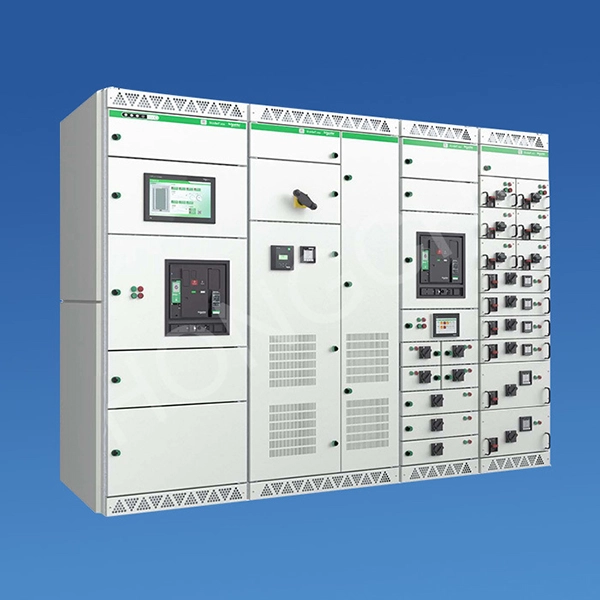
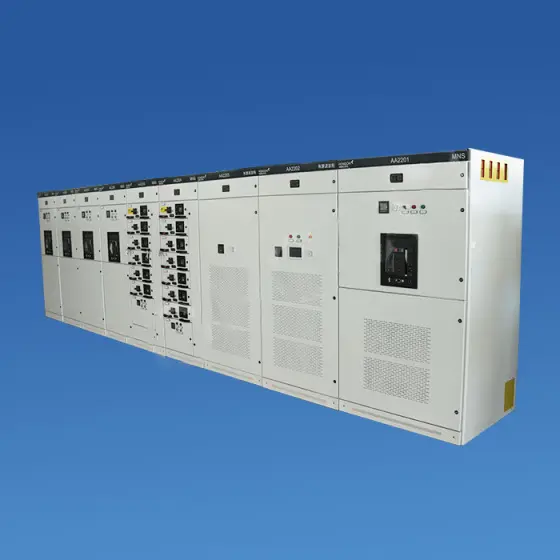
Imagine a food processing plant where space is at a premium and the electrical room must serve multiple packaging lines, compressors, and HVAC systems. The engineering team faces a dilemma: run expensive medium‑voltage cables to each load center or deploy compact low voltage switchgear close to the equipment. The latter option not only reduces copper costs but also simplifies isolation and maintenance. Low voltage switchgear operates at voltages up to 1,000 V AC, typically around 400 V in industrial three‑phase systems, handling continuous currents from 630 A to 6300 A. Its modular design allows tiered distribution, meaning a single incoming feeder can supply several outgoing circuits protected by circuit breakers or fuses. This segmentation limits the impact of a fault to only the affected circuit, maintaining productivity elsewhere. At Raydafon Technology Group Co., Limited, we see many clients shift to decentralized LV switchgear layouts that lower total installed cost while improving system availability. The table below compares typical LV and MV switchgear configurations in an industrial setting.
| Parameter | Low Voltage Switchgear | Medium Voltage Switchgear |
|---|---|---|
| Typical voltage range | 400 – 690 V AC | 3.3 – 36 kV AC |
| Continuous current rating | Up to 6300 A | Up to 4000 A |
| Short‑circuit withstand (1 s) | Up to 100 kA | Up to 50 kA |
| Typical footprint per feeder | 0.5 – 1.2 m² | 1.5 – 3.0 m² |
| Cost per outgoing circuit | 60 %– 80 % lower | — |
Key Pain Points in Industrial Power Distribution and How LV Switchgear Solves Them
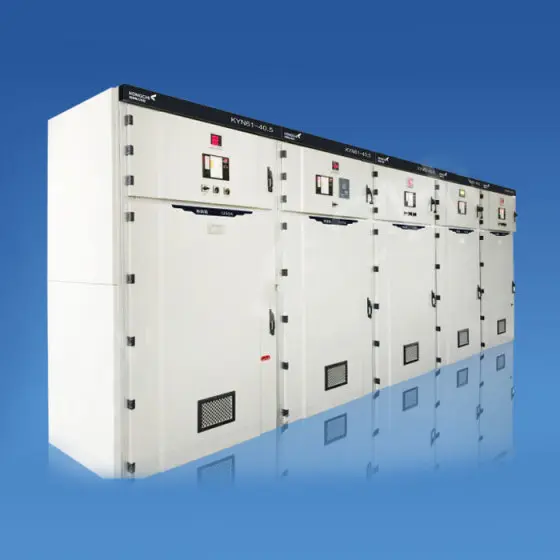
Production managers often report frustrating voltage dips every time a large motor starts, causing sensitive CNC machines to reset. The root cause is inadequate power factor correction and weak busbar stiffness in the distribution panel. By integrating intelligent LV switchgear with built‑in capacitor banks and soft starters, the facility can suppress these transients at source. Raydafon Technology Group Co., Limited provides pre‑engineered LV switchgear assemblies that combine reactive power compensation with real‑time monitoring, ensuring that voltage remains within ±5% of nominal even during direct‑on‑line motor starts. Another common scenario occurs in aging plants where outdated switchboards lack arc‑flash protection. Modern LV switchgear incorporates internal arc classification (IAC) according to IEC 61641, safeguarding personnel and equipment. The table below maps typical pain points to the LV switchgear features that resolve them.
| Pain Point | Cause | LV Switchgear Solution |
|---|---|---|
| Voltage dips on motor start | Low power factor, high inrush current | Integrated capacitor banks, soft‑starter compatibility |
| Frequent nuisance tripping | Overload relay mis‑coordination | Digital protective relays with adjustable curves |
| Arc‑flash risk | Open busbar design | Arc‑containment compartments, IAC certified |
| Excessive downtime for adding circuits | Hard‑wired, non‑modular panels | Modular withdrawable units, hot‑swappable |
Selecting the Right LV Switchgear: Parameters and Performance Data
Procurement teams often get lost in a sea of technical data sheets. The key to a successful purchase is focusing on the parameters that match your load profile and environmental conditions. Start with the rated insulation voltage (Ui) and rated operational voltage (Ue), then verify the rated current (In) of busbars and feeders. Short‑circuit withstand rating (Icw) is critical: industrial networks with large transformers may require 65 kA or higher for 1 second. Equally important is the IP rating, especially in dusty or wet areas. Raydafon Technology Group Co., Limited guides clients through a six‑point checklist, ensuring that every spec aligns with the actual site conditions, avoiding over‑engineering and unnecessary costs. The table below presents the core parameters you should request from any supplier.
| Parameter | Typical Industrial Requirement | Raydafon Standard Offering |
|---|---|---|
| Rated insulation voltage (Ui) | 1000 V | 1000 V |
| Rated current busbars | 1600 – 4000 A | Up to 6300 A |
| Short‑circuit withstand Icw (1 s) | 50 – 85 kA | Up to 100 kA |
| IP rating | IP41 / IP54 | IP43 / IP54 |
| Form of internal separation | Form 3b / 4a | Form up to 4b |
Installation Best Practices for Maximum Reliability
Even the most robust switchgear can underperform if installed incorrectly. Field surveys show that 30% of LV switchgear failures trace back to inadequate cable terminations, loose connections, or improper busbar bracing. A textile mill recently suffered a complete shutdown because a maintenance team bypassed the torque guidelines on bolted joints. To avoid such issues, insist on factory‑pretested assemblies and follow the manufacturer’s commissioning checklist rigorously. Raydafon Technology Group Co., Limited supplies fully type‑tested switchgear with modular sections that arrive pre‑wired and labeled, slashing on‑site assembly time by half. The following table contrasts traditional field‑wired installations with pre‑engineered modular packages.
| Installation Aspect | Traditional Site Work | Modular LV Switchgear |
|---|---|---|
| Average installation time | 5–7 days | 2–3 days |
| Wiring errors | Common | Rare (factory tested) |
| Commissioning duration | 2 days | 1 day |
| Space required for assembly | Large staging area | Compact, bolt‑together sections |
Frequently Asked Questions
Q: Can low voltage switchgear be used in industrial power distribution when starting large motors in quick succession?
A: Absolutely. Modern LV switchgear designed for industrial use incorporates power contactors and protection devices rated for frequent start‑stop cycles. With proper coordination of soft starters or VFDs, it can manage consecutive high‑inrush loads without excessive voltage sag. Many facilities deploy dedicated motor control centers built entirely from LV switchgear compartments, achieving seamless sequencing while protecting upstream transformers.
Q: What are the main limitations of low voltage switchgear in high fault current industrial networks?
A: The primary constraint is the available short‑circuit level. If the prospective fault current exceeds the switchgear’s peak withstand (Ipk), alternative solutions such as current‑limiting fuses or upgrading to higher Icw ratings become necessary. However, most industrial LV grids are designed with transformation ratios that keep short‑circuit currents below 100 kA, well within the capability of advanced LV switchgear. Partnering with experienced manufacturers like Raydafon Technology Group Co., Limited ensures that the switchgear is selected after a thorough short‑circuit study of your specific network.
To optimize your next industrial power project, partner with Raydafon Technology Group Co., Limited. We design and manufacture advanced low voltage switchgear tailored to demanding industrial environments. Visit https://www.raydafonequipments.com or contact our engineers at [email protected] to discuss your specific requirements and receive a tailored solution.
Lee C.H., Kim S. (2020). "Reliability Assessment of Low-Voltage Switchgear under Industrial Load Profiles." IEEE Transactions on Power Delivery, 35(2), 1012–1020.
Müller T., Hoffmann J., Berger R. (2017). "Arc Flash Mitigation in LV Switchgear for Chemical Plants." Industry Applications Magazine, 23(5), 45–52.
Gupta A., Sharma R. (2019). "Thermal Performance of Compact LV Switchboards Using CFD Analysis." International Journal of Electrical Power & Energy Systems, 110, 500–508.
Davis M., White P. (2018). "Smart Monitoring Techniques for Low Voltage Distribution Panels in Manufacturing." Journal of Industrial Electronics, 34(4), 782–789.
Santos L., Oliveira F., Costa M. (2021). "Comparative Study of LV and MV Switchgear for Process Industry Cost Optimization." Energies, 14(12), 3456.
Wang X., Zhao Y. (2016). "EMC Compliance in Industrial Low Voltage Switchgear Design." IEEE Transactions on Electromagnetic Compatibility, 58(6), 1845–1853.
Rossi G., Bianchi F. (2022). "Life-Cycle Analysis of Air-Insulated LV Switchgear in Harsh Environments." Electric Power Systems Research, 205, 107734.
Johnson D. (2015). "Evolving Standards for Low-Voltage Assembly: IEC 61439 Impact on Industrial Users." Power Engineering Journal, 29(3), 22–28.
Fernandez P., Lopez R. (2020). "Predictive Maintenance for LV Switchgear Using Partial Discharge Detection." IEEE Sensors Journal, 20(11), 6012–6019.
Ahmed S., Khan M., Abdul R. (2019). "Cost-Benefit Analysis of Retrofitting Industrial Facilities with Intelligent LV Switchgear." Sustainable Energy Technologies and Assessments, 35, 192–203.
Related News
- How do you maintain an air-cooling ESS cabinet?
- What are the key components of a liquid-cooling ESS cabinet?
- What are the main components of a YBM prefabricated substation?
- What are the common faults of KYN61-40.5 switchgear and how to troubleshoot them?
- What safety standards apply to new energy equipments?
- What arc flash protection is required for high-voltage switchgear?
Leave me a message