How does Remote-9001 Intelligent Monitor Equipment compare to other monitoring solutions?
How does Remote-9001 Intelligent Monitor Equipment compare to other monitoring solutions? For procurement professionals navigating the complex landscape of industrial monitoring, this is a critical question. Traditional systems often create a fragmented view, with separate devices for temperature, vibration, and power quality, leading to data silos and reactive maintenance. The result? Unexpected downtime, costly repairs, and operational inefficiencies. The Remote-9001 Intelligent Monitor Equipment from Zhejiang Raydafon Electric Power Technology Co., Ltd. redefines this paradigm by offering a consolidated, intelligent solution. It doesn't just collect data; it provides actionable insights through advanced analytics, enabling predictive maintenance and significantly reducing operational risks. This article will delve into a detailed comparison, showcasing how the Remote-9001 stands out by directly addressing the core challenges faced in modern industrial environments.
Article Outline:
- The High Cost of Reactive Maintenance and Unexpected Failures
- The Struggle with Data Silos and Incompatible Systems
- Frequently Asked Questions (FAQs)
- Conclusion and Next Steps
The High Cost of Reactive Maintenance and Unexpected Failures
Imagine a critical production line halting abruptly due to a motor failure. The immediate costs are staggering: lost production, emergency repair crews, and expedited parts shipping. This reactive scenario is the daily nightmare for procurement managers relying on basic alarm systems or periodic manual checks. These traditional methods offer no warning, leaving operations vulnerable.
This is where the Remote-9001 Intelligent Monitor Equipment provides a transformative solution. It employs continuous, real-time monitoring of key parameters like vibration, temperature, and current. Its embedded intelligence analyzes trends, detecting subtle anomalies long before a catastrophic failure occurs. Instead of an alarm signaling a breakdown, you receive a predictive alert suggesting maintenance within a specific timeframe. This shift from reactive to predictive maintenance is the core differentiator.
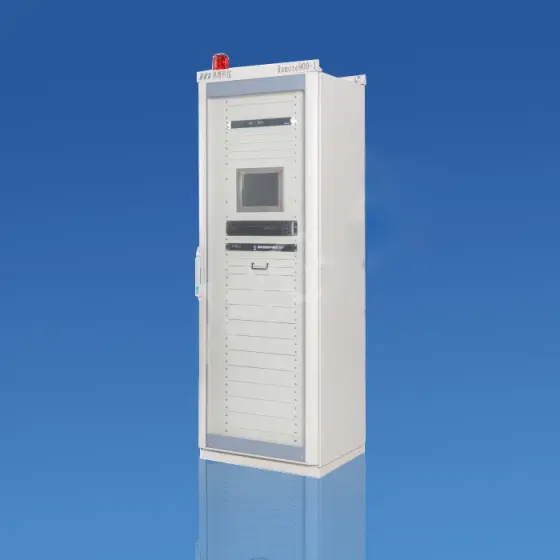
How does Remote-9001 Intelligent Monitor Equipment compare to other monitoring solutions in this context? While standard monitors might log data, the Remote-9001 interprets it. See the comparison below:
| Feature / Challenge | Traditional Basic Monitors | Remote-9001 Intelligent Solution |
|---|---|---|
| Failure Prediction | None. Alerts only after failure. | Advanced analytics for early anomaly detection and predictive alerts. |
| Maintenance Strategy | Reactive (run-to-failure). | Predictive & Planned (condition-based). |
| Impact on Downtime | High, unplanned, and disruptive. | Minimized, scheduled, and controlled. |
| Data Output | Raw data logs requiring expert analysis. | Actionable insights and health reports directly on the dashboard. |
By choosing Zhejiang Raydafon's Remote-9001, you are not just buying a sensor; you are investing in a system that actively protects your capital assets and ensures operational continuity.
The Struggle with Data Silos and Incompatible Systems
Another common frustration is managing multiple vendor systems that don't communicate. You might have one system for energy monitoring, another for equipment health, and a separate SCADA system. Correlating data across these platforms is a manual, time-consuming process that often misses critical insights. This fragmentation hinders a holistic view of operations.
The Remote-9001 tackles this head-on by being a multi-parameter, unified platform. It integrates electrical parameters (voltage, current, power factor), mechanical health (vibration, temperature), and environmental data into a single device. All this data streams to a centralized, user-friendly software platform provided by Zhejiang Raydafon Electric Power Technology Co., Ltd. This eliminates data silos and provides a 360-degree view of your asset's health and performance from one pane of glass.
How does Remote-9001 Intelligent Monitor Equipment compare to other monitoring solutions regarding integration? Its open architecture and support for standard protocols (like Modbus, MQTT) make it a flexible core for your IIoT ecosystem, unlike proprietary closed systems.
| Feature / Challenge | Multiple Disparate Systems | Remote-9001 Unified Platform |
|---|---|---|
| System Integration | Complex, costly, often impossible. | Native multi-parameter design. Easy integration via standard protocols. |
| Data Accessibility | Scattered across different software interfaces. | Centralized dashboard with correlated data views. |
| Decision-Making Speed | Slow, due to manual data consolidation. | Fast, with all relevant data presented contextually. |
| Total Cost of Ownership | High (multiple licenses, support contracts). | Optimized (single system, reduced IT overhead). |
This cohesive approach by Zhejiang Raydafon directly solves the interoperability problem, providing procurement teams with a future-proof, scalable solution that simplifies management and unlocks deeper operational intelligence.
Frequently Asked Questions (FAQs)
Q1: How does Remote-9001 Intelligent Monitor Equipment compare to other monitoring solutions in terms of installation and setup?
A1: The Remote-9001 is designed for ease of deployment. Unlike complex systems requiring extensive configuration and programming, it features a plug-and-play philosophy for standard measurements. Its compact form factor and clear wiring diagrams simplify physical installation. The accompanying cloud-based or on-premise software has intuitive wizards to guide you through asset registration and threshold setting, significantly reducing the time from unboxing to actionable insights compared to traditional, more engineering-intensive solutions.
Q2: How does Remote-9001 Intelligent Monitor Equipment compare on data security and reliability, which are critical for industrial applications?
A2: Zhejiang Raydafon prioritizes robust security and reliability. The Remote-9001 employs encrypted data transmission (TLS/SSL) to protect your data in transit. It features industrial-grade components designed for harsh environments with wide operating temperature ranges and high EMI immunity. Local data buffering ensures no data loss during network interruptions. This combination of enterprise-grade security and rugged hardware reliability often surpasses that of generic or consumer-grade monitoring devices, making it a trusted choice for critical infrastructure.
Conclusion and Next Steps
The comparison is clear. While conventional monitoring solutions offer piecemeal data, the Remote-9001 Intelligent Monitor Equipment delivers integrated intelligence. It directly addresses the primary pain points of procurement and operations teams: preventing expensive downtime and breaking down data silos. By enabling predictive maintenance and providing a unified operational view, it transforms monitoring from a cost center into a strategic asset for efficiency and reliability.
We encourage you to evaluate your current monitoring strategy. Are you reacting to failures or predicting them? Is your data working for you, or are you working to assemble it? For a detailed technical consultation or to request a case study relevant to your industry, please reach out. Discover how a partnership with Raydafon can future-proof your operations.
For over a decade, Zhejiang Raydafon Electric Power Technology Co., Ltd. has been at the forefront of developing innovative power monitoring and intelligent equipment solutions. As a dedicated manufacturer, we combine rigorous R&D with a deep understanding of industrial challenges to create reliable, cutting-edge products like the Remote-9001 series. We are committed to providing not just equipment, but comprehensive support to ensure our clients achieve their operational excellence goals. Learn more about our full product portfolio and expertise on our official website https://www.raydafonequipments.com. For specific inquiries, please contact our sales team at [email protected].
Supporting Research & Further Reading:
Lee, J., Bagheri, B., & Kao, H. A. (2015). A Cyber-Physical Systems architecture for Industry 4.0-based manufacturing systems. Manufacturing Letters, 3, 18-23.
Tao, F., Zhang, M., & Nee, A. Y. C. (2018). Digital Twin Driven Smart Manufacturing. Academic Press.
Jardine, A. K., Lin, D., & Banjevic, D. (2006). A review on machinery diagnostics and prognostics implementing condition-based maintenance. Mechanical Systems and Signal Processing, 20(7), 1483-1510.
Vichare, N. M., & Pecht, M. G. (2006). Prognostics and health management of electronics. IEEE Transactions on Components and Packaging Technologies, 29(1), 222-229.
Sikorska, J. Z., Hodkiewicz, M., & Ma, L. (2011). Prognostic modelling options for remaining useful life estimation by industry. Mechanical Systems and Signal Processing, 25(5), 1803-1836.
Wang, W., & Christer, A. H. (2000). Towards a general condition based maintenance model for a stochastic dynamic system. Journal of the Operational Research Society, 51(2), 145-155.
Khan, S., & Yairi, T. (2018). A review on the application of deep learning in system health management. Mechanical Systems and Signal Processing, 107, 241-265.
Lei, Y., Li, N., Guo, L., Li, N., Yan, T., & Lin, J. (2018). Machinery health prognostics: A systematic review from data acquisition to RUL prediction. Mechanical Systems and Signal Processing, 104, 799-834.
Yang, B. S., Di, X., & Han, T. (2018). Random forests regression for online prediction of mechanical system health. Journal of Mechanical Science and Technology, 32(1), 19-28.
Zio, E. (2012). Prognostics and health management of industrial equipment. Diagnostics and Prognostics of Engineering Systems: Methods and Techniques, 333-356.
Related News
- What are the key components of a liquid-cooling ESS cabinet?
- What are the main components of a YBM prefabricated substation?
- What are the common faults of KYN61-40.5 switchgear and how to troubleshoot them?
- What safety standards apply to new energy equipments?
- What arc flash protection is required for high-voltage switchgear?
- What is the difference between RMU and VCB?
Leave me a message