China factory direct energy storage systems with reliable performance and long cycle life
Why Energy Storage Has Become a Core Infrastructure Decision
Power quality, demand charges, and resilience are no longer back-office concerns. Facility managers, utility planners, and renewable developers now treat storage as a critical layer between generation and consumption. A well-designed battery storage platform reduces peak demand costs, shifts solar generation into evening hours, and keeps essential loads running during grid events. The rapid decline in lithium iron phosphate cell prices has made these projects financially viable for a much wider range of buildings and sites.
Energy Storage Systems sit at the center of that shift. Raydafon Group builds modular storage platforms that serve residential backup, commercial peak shaving, industrial microgrids, and utility-scale applications. Instead of forcing buyers into a one-size-fits-all cabinet, the product line uses standardized modules that can be paralleled for higher capacity, larger power output, or longer discharge duration. This approach keeps design and permitting work predictable while allowing enough flexibility for site-specific constraints.
Most Raydafon Group storage units use lithium iron phosphate chemistry because it offers a stronger thermal safety profile, a longer cycle life, and stable performance under partial state-of-charge operation. The integrated battery management system monitors cell voltage, current, and temperature at multiple points inside each module. That data feeds into the energy management controller, which decides when to charge from solar, when to discharge to the building, and when to hold reserve capacity for backup events.
How Raydafon Group Designs Its Energy Storage Product Line
Raydafon Group approaches storage design from the electrical room outward. The enclosures are serviceable from the front, ventilation is either forced air or liquid cooling depending on the model, and all power connections use industrial-grade terminals that field crews can access without removing a full battery module. Each cabinet includes a lockable DC disconnect, surge protection, and a ground-fault monitoring circuit. The system can operate in grid-tied mode, off-grid mode, or generator-supported mode.
The battery modules are configured in series strings to match the inverter DC bus. On smaller residential and light commercial units, the nominal voltage is 48 V. On larger commercial and utility cabinets, the DC bus runs between 300 V and 800 V to reduce current, cable size, and balance-of-system losses. The power conversion system sits in a separate compartment or separate enclosure to isolate heat and make servicing safer.
Battery Chemistry and System Architecture
All standard Raydafon Group storage cabinets use lithium iron phosphate cells. The cells are sourced from tier-one manufacturers and undergo incoming inspection for capacity, internal resistance, and self-discharge. Each battery pack includes welded busbars, compression plates, and cell-level temperature sensors. The pack-level BMS communicates with the string management unit over isolated CAN bus. The string management unit then communicates with the system controller over Modbus TCP, Modbus RTU, or CAN depending on the order configuration.
- Cell chemistry: lithium iron phosphate
- Module design: 51.2 V / 100 Ah, 51.2 V / 200 Ah, or 76.8 V / 280 Ah depending on cabinet
- String configuration: up to 8 modules in series on high-voltage cabinets
- BMS architecture: three-level protection with cell, module, and system monitoring
- Cooling: passive or forced air on standard units, liquid cooling optional on 100 kWh and larger cabinets
- DC disconnect: integrated, lockable, rated for full string voltage and current
- Communications: CAN 2.0B, RS485, Modbus TCP, optional Wi-Fi and LTE gateway
- Firmware updates: local USB or remote over-the-air on gateway-connected systems
Technical Specifications for Raydafon Group Energy Storage Units
The table below lists the standard models most frequently specified for residential, commercial, and industrial projects. Custom voltage or capacity configurations are available for larger orders. All specifications are subject to final engineering review and may change as the product line is updated.
| Model | Nominal Capacity | Nominal Power | DC Voltage Range | Round-Trip Efficiency | Cycle Life | Dimensions W×D×H | Weight | Typical Application |
|---|---|---|---|---|---|---|---|---|
| Raydafon ESH-5K | 5.12 kWh | 5 kW | 44.8–57.6 V | 95.0% | ≥6,000 cycles at 0.5C | 650×400×850 mm | 78 kg | Residential backup, small office UPS |
| Raydafon ESH-10K | 10.24 kWh | 10 kW | 44.8–57.6 V | 95.5% | ≥6,000 cycles at 0.5C | 650×400×1,300 mm | 135 kg | Residential backup, light commercial |
| Raydafon ESH-20K | 20.48 kWh | 20 kW | 44.8–57.6 V | 96.0% | ≥6,000 cycles at 0.5C | 700×500×1,600 mm | 245 kg | Commercial backup, solar self-consumption |
| Raydafon ESS-C50 | 52.0 kWh | 50 kW | 300–450 V | 96.5% | ≥6,000 cycles at 0.5C | 1,200×1,100×2,000 mm | 620 kg | Commercial microgrid, demand management |
| Raydafon ESS-C100 | 104.0 kWh | 100 kW | 380–480 V | 97.0% | ≥6,000 cycles at 0.5C | 1,400×1,300×2,200 mm | 1,150 kg | Industrial demand response, EV charging support |
| Raydafon ESS-C200 | 208.0 kWh | 200 kW | 480–690 V | 97.5% | ≥6,000 cycles at 0.5C | 1,800×1,600×2,400 mm | 2,250 kg | Utility-scale, large microgrid |
Environmental and Operational Limits
Storage systems are often placed in unconditioned spaces, outdoor pads, or shipping containers. Raydafon Group equipment is tested for a wide operating envelope and for the temperature swings common in coastal, desert, and mountain installations. The table below summarizes the standard environmental ratings.
| Parameter | Standard Range | Optional Range |
|---|---|---|
| Operating ambient temperature | -20°C to 55°C | -30°C to 60°C with cold-start kit |
| Storage temperature | -30°C to 60°C | Same |
| Relative humidity | 5% to 95% non-condensing | Same |
| Altitude | Up to 2,000 m without derating | Up to 4,000 m with derating |
| Ingress protection | IP55 on indoor enclosures | IP65 on outdoor cabinets |
| Cooling method | Forced air | Liquid cooling on 100 kWh and larger |
| Noise level | ≤65 dB at 1 m | ≤55 dB with low-noise fan option |
| Seismic rating | Zone 4 per IEEE 693 | Site-specific anchoring available |
Control, Monitoring, and Grid Interaction
Every Raydafon Group storage unit includes a local energy management controller that handles charge and discharge scheduling, voltage and frequency ride-through, and islanding detection. The controller supports time-of-use optimization, peak shaving, solar self-consumption, and scheduled backup reserve. For larger sites, multiple cabinets can be aggregated into a single virtual power plant interface through the Raydafon Group energy cloud platform.
The system can respond to Modbus commands from a building management system or SCADA platform. It also supports both IEEE 2030.5 and OpenADR profiles for utility demand response programs. If the site loses grid power, the controller disconnects from the grid within the required clearing time and forms a local microgrid. The transition is typically fast enough to keep lighting, HVAC controls, server racks, and process controllers running without interruption.
- Operating modes: grid-tie, off-grid, grid-support, generator support
- Peak shaving: configurable demand limit with predictive discharge
- Solar integration: DC-coupled or AC-coupled depending on inverter layout
- Remote monitoring: cloud portal with real-time SOC, SOH, temperature, and event logs
- Demand response: OpenADR 2.0b and IEEE 2030.5 ready
- Firmware update: over-the-air with rollback protection
- User interface: local 7-inch touchscreen on 20 kWh and larger units
Common Applications for Energy Storage Systems
Storage is no longer limited to off-grid cabins or remote telecom sites. The same core battery technology now supports commercial rate optimization, industrial power quality, electric vehicle charging, and grid-scale renewable integration. Raydafon Group configures each cabinet for the specific duty cycle rather than treating all applications the same.
- Demand charge management: Commercial buildings discharge stored energy during 15-minute or 30-minute peak windows to reduce utility demand charges.
- Solar self-consumption: Facilities with rooftop or ground-mount solar store midday surplus and use it in the evening, avoiding low export rates.
- Backup power: Critical loads such as refrigerated storage, medical equipment, data rooms, and security systems remain powered during outages.
- Microgrids: Remote communities, farms, and industrial campuses use storage to balance diesel generators, solar arrays, and wind turbines.
- EV charging support: High-power chargers create sharp load spikes. Storage buffers those spikes so the site can avoid costly service upgrades.
- Frequency regulation and ancillary services: Utility-scale storage responds to frequency deviations within milliseconds when paired with the appropriate inverter controls.
- Generator optimization: Storage reduces generator run hours by covering low-load periods and supporting high-load starts.
Installation, Safety, and Compliance Considerations
Raydafon Group storage cabinets are shipped with a detailed installation manual, a pre-commissioning checklist, and a full set of electrical drawings for the specific order. The standard warranty covers the battery modules for 10 years or the stated cycle life, whichever comes first. The power electronics carry a separate 5-year warranty. Extended service plans are available for sites that require annual infrared scans, firmware upgrades, and capacity testing.
Safety is built into the cell selection, module design, and enclosure layout. Lithium iron phosphate chemistry has a lower risk of thermal runaway than nickel-manganese-cobalt chemistries. Each module includes a fuse, contactor, and current sensor. The system-level BMS enforces overvoltage, undervoltage, overcurrent, short-circuit, and overtemperature limits. If a fault exceeds a preset threshold, the contactor opens and the DC bus is de-energized. The fire suppression system on larger cabinets uses aerosol or clean-agent technology and is triggered by the BMS through a dry contact.
Frequently Asked Questions About Energy Storage Systems
Q: What is an energy storage system and how does it work?
A: An energy storage system captures electricity during periods of low cost or high renewable generation and releases it when demand is high or when the grid is unavailable. A complete system includes battery modules, a battery management system, a power conversion system, thermal management, and a controller. The batteries store direct current energy. The power conversion system converts that direct current into alternating current for use by the building or for export to the grid. The controller decides when to charge and discharge based on electricity rates, solar production, demand limits, or backup reserve requirements.
Q: How do I size an energy storage system for my facility?
A: The correct size depends on your load profile, your peak demand, your solar generation, and your backup needs. Start by collecting interval data from your utility meter for at least 12 months. Identify the highest 15-minute demand peaks and the amount of energy used during those peaks. Then determine which loads must stay online during an outage and how long they must run. A Raydafon Group applications engineer typically models the site with time-of-use rates, solar production, and load data to recommend a capacity between 0.5 and 4 hours of discharge. The goal is to right-size the system so it cycles enough to create savings without paying for unused capacity.
Q: What is the expected lifespan of a Raydafon Group energy storage system?
A: The standard lithium iron phosphate cells are rated for at least 6,000 cycles at 0.5C charge and discharge, 80% depth of discharge, and 25°C ambient temperature. At one full cycle per day, that equates to more than 16 years of calendar life before the cells reach 80% of original capacity. However, most commercial systems do not complete a full cycle every day. Partial cycling, common in demand management and solar self-consumption, places less stress on the cells and can extend calendar life beyond 15 years. The battery management system tracks state of health continuously, so operators can see when capacity fade reaches a level that affects project economics. The enclosure, cooling fans, and power electronics may require servicing or replacement before the cells reach end of life.
Q: Can energy storage systems be used with an existing solar installation?
A: Yes. A storage system can be added to an existing solar installation using either an AC-coupled or DC-coupled configuration. AC coupling is usually simpler for retrofit projects because the storage inverter connects to the building's AC panel and communicates with the solar inverter through frequency or controller signals. DC coupling is more efficient for new installations because the solar array and battery share the same DC bus, reducing conversion losses. Raydafon Group provides wiring diagrams and controller settings for both methods. The storage controller can also be programmed to only charge from solar, to charge from the grid during off-peak periods, or to use a combination of both.
Q: What safety certifications do Raydafon Group storage units carry?
A: Standard models are certified to UL 9540 for the complete energy storage system, UL 9540A for fire propagation testing, IEC 62619 for battery safety, and UN38.3 for transportation. The power conversion system carries UL 1741 and IEEE 1547 grid interconnection compliance. The enclosures are rated IP55 or IP65 depending on indoor or outdoor deployment. The factory also maintains ISO 9001 quality management and ISO 14001 environmental management certifications. Copies of all certificates are available through the Raydafon Group sales team and are included in the documentation package for each shipped unit.
Q: How much maintenance does an energy storage system require?
A: Battery systems require less maintenance than generators, but they are not zero-maintenance. Recommended tasks include a quarterly visual inspection of the enclosure, air filters, cable connections, and display readings. Once per year, a qualified technician should torque-check power connections, clean or replace air filters, verify the firmware version, and review the event log for any abnormal alarms. The battery modules themselves do not require watering or equalization. The BMS performs automatic cell balancing during charge cycles. Raydafon Group recommends an annual capacity test every three years on larger commercial and utility systems to confirm that available energy still matches project requirements. The cooling fans and air filters are the most common wear components and are designed for field replacement.
- View as
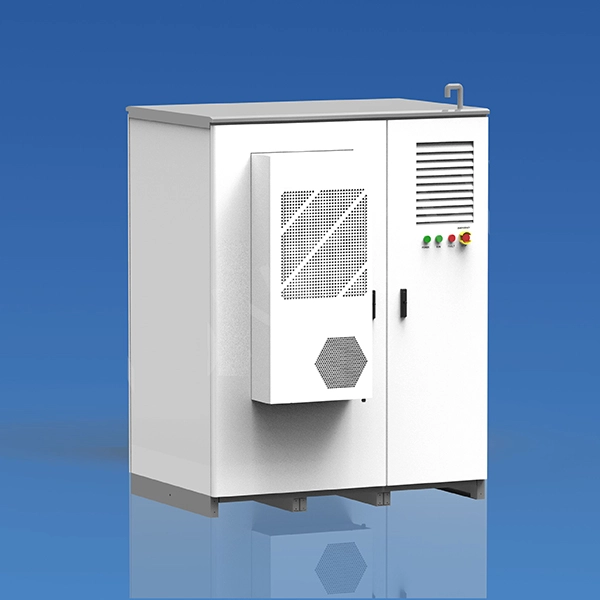
AI Air-Cooling Outdoor ESS Cabinet
Raydafon Group's AI Air-Cooling Outdoor ESS Cabinet delivers intelligent thermal management for energy storage, maximizing safety and efficiency even in extreme conditions. Perfect for solar farms and industrial backup, its smart cooling extends battery life while reducing energy loss.
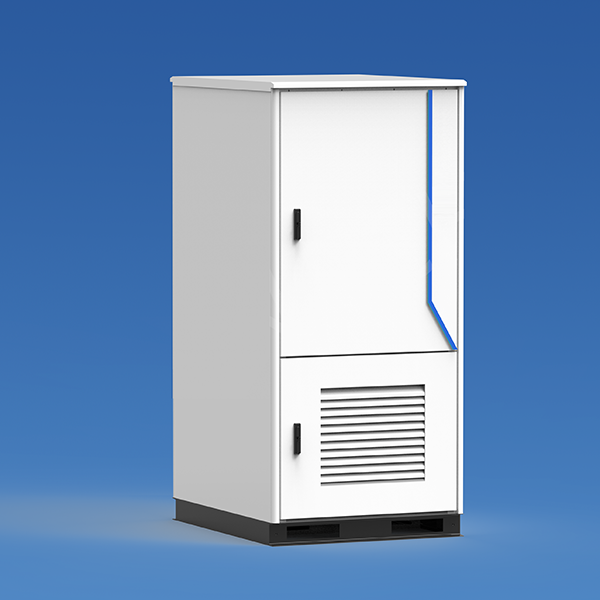
AI Liquid-Cooling Outdoor ESS Cabinet
Raydafon Group's AI Liquid-Cooling Outdoor ESS Cabinet: smart liquid cooling, efficient energy storage.