What is the typical installation process for a YBM prefabricated substation?
Imagine standing on a muddy construction site, rain threatening to delay your project again. The power transformer you were promised months ago is stuck in customs, and your installation crew is burning through overtime with nothing to show for it. This chaos is all too familiar for procurement managers in the energy sector. A YBM Prefabricated Substation changes the game entirely: a fully assembled, factory-tested unit delivered on a flatbed truck, ready to energize in days rather than weeks. So, what is the typical installation process for a YBM prefabricated substation? It starts with a leveled gravel pad, a crane to lift the compact steel enclosure into place, and then simple cable terminations, all without the endless civil works of traditional brick-and-mortar substations. At Raydafon Technology Group Co., Limited, we transform this scenario from a stressful gamble into a predictable, streamlined operation, slashing on-site labor by up to 70% and ensuring your project stays on schedule.
Article Outline:
1. What exactly is a YBM prefabricated substation and why does it dominate?
2. What is the typical installation process for a YBM prefabricated substation?
3. Site preparation: Eliminating the foundation headache.
4. Lifting and placement: A precision operation, not a construction project.
5. Cable termination: The final mile, simplified.
6. Commissioning and handover: From delivery to full operation fast.
What exactly is a YBM prefabricated substation and why does it dominate?
As a procurement specialist, you are tasked with slicing capital expenditure without compromising on reliability. The nightmare begins when a seemingly affordable conventional substation spirals into a financial black hole: architect fees, months of bricklaying, weather delays, and multi-vendor finger-pointing. Your factory expansion is stalled, and the board is asking why the power isn't on.
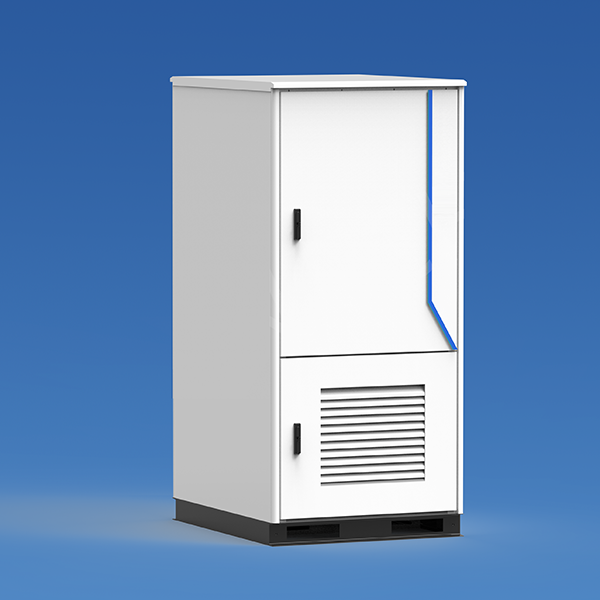
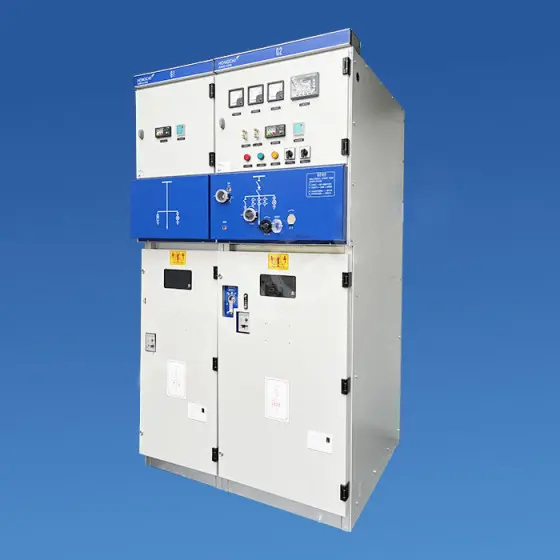
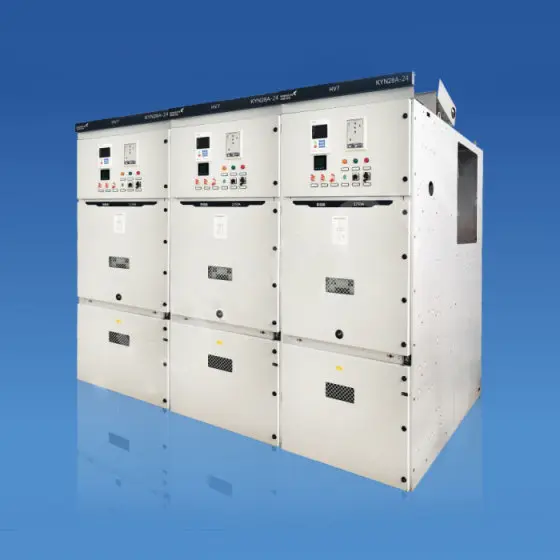
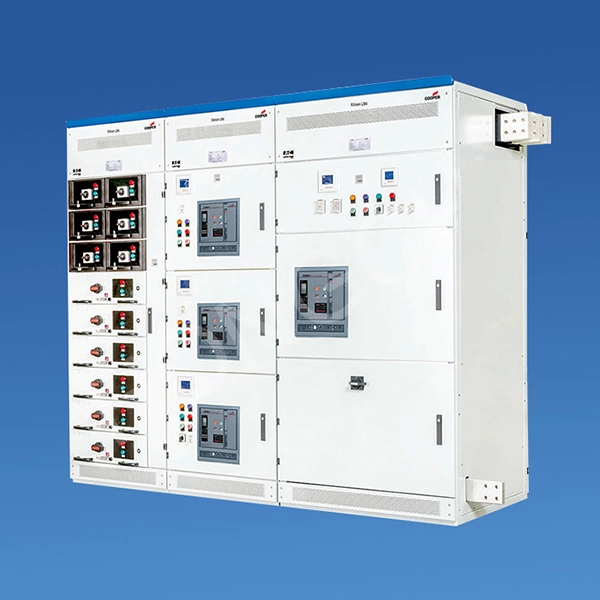
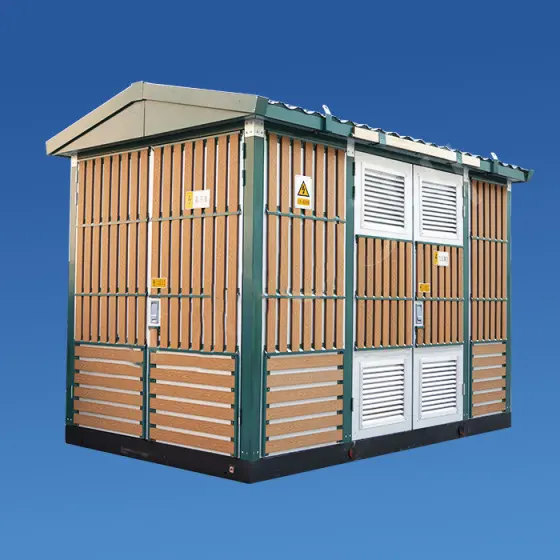
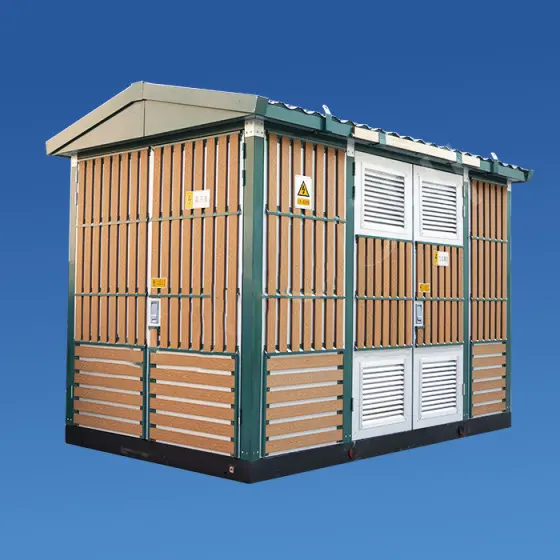
A YBM prefabricated substation is your end-to-end solution, a pre-engineered power distribution center enclosed in a robust, weatherproof shell. Every component—high-voltage switchgear, transformer, low-voltage distribution panels—is integrated and rigorously tested at the factory before shipment. This integrated design virtually eliminates on-site technical conflicts. The following parameters highlight the stark contrast in deployment, solving the chronic problems of site chaos and cost overruns.
| Parameter | YBM Prefabricated Substation | Conventional Brick-and-Mortar Substation |
|---|---|---|
| Typical Construction Period | 7-14 days (from delivery to energization) | 3-6 months |
| Civil Works Requirement | Minimal concrete plinth or compacted gravel pad | Extensive reinforced concrete building |
| On-site Skilled Labor | 2-3 technicians for 2 days | Multi-trade crew for weeks |
| Weather Dependency | Low, inner assembly is pre-sealed | High, rain halts outdoor construction |
| Quality Control | Factory-controlled, integrated testing | Dependent on various on-site contractors |
This approach fundamentally de-risks your project timeline by moving 80% of the construction activities into the controlled environment of a Raydafon factory. This is not just a product, but a methodology that guarantees cost certainty.
What is the typical installation process for a YBM prefabricated substation?
Many procurement managers have been burned by technical manuals that gloss over the real-world coordination nightmare. You worry about hiring a specialist crane crew, coordinating with the utility, and managing the precision of a multi-ton lift. At Raydafon Technology Group Co., Limited, we demystify this. What is the typical installation process for a YBM prefabricated substation? It is a tightly choreographed three-act sequence: prepare the minimalist foundation, perform the single critical lift, and finalize the modular cable connections. A complete 1600kVA unit can transition from truck to fully operational in under 8 hours of physical work. We provide a dedicated on-site supervisor and a pre-delivery checklist that ensures your local contractor has the right slings and personnel ready, turning a potentially hazardous operation into a safe, standardized task.
Site preparation: Eliminating the foundation headache.
The most costly mistake is a foundation that fails inspection when the substation is already on a truck. A project manager once told us he lost $15,000 in crane standby fees because the site pad was uneven. The standard solution is a level plane designed to support the unit's static load, typically a gravel pad or a simple concrete plinth. The foundational requirement is architectural simplicity; we supply anchor bolt templates and precise load distribution drawings. This eliminates the need for civil engineering firms to design a building from scratch. The core goal is a clean, drained, and flat surface that allows the YBM’s integrated base frame to sit perfectly, preventing door warping and ensuring cable entry glands align without stress on the internal busbars.
| Foundation Type | Recommended for Soil Condition | Key Tolerance Requirement |
|---|---|---|
| Compacted Gravel Pad | Stable, well-draining soils | Levelness: ±10mm |
| Reinforced Concrete Plinth | Expansive clay or soft soils | Levelness: ±5mm |
This simple site work, completed in a single day, transfers all structural complexity away from your unpredictable job site back to our conditioned manufacturing facility.
Lifting and placement: A precision operation, not a construction project.
Your stress peaks when a 12-ton unit is suspended in the air. A misplaced lift can crush lifting eyes or, worse, cause injury. The Raydafon solution is an integrated lifting frame and calibrated lifting lugs that we engineer into the enclosure's roof structure. The operation requires a single mobile crane sized precisely to the gross weight we state in the shipping manifest. The procedure is a single pick and a direct placement onto the prepared foundation. Our installation guide details the sling angles and spreader bar requirements to prevent any lateral force on the enclosure walls, resolving the safety risk completely. As the unit settles onto its base, it is already functionally complete inside.
Cable termination: The final mile, simplified.
The dread of cut cables that are too short or misaligned entry points is a very real experience. We design every YBM with removable gland plates positioned according to a pre-agreed cable routing schematic. High-voltage and low-voltage compartments are physically segregated, making the termination zone instantly clear to your electrical team. The internal connections from the ring main unit to the transformer and to the LV board are already factory-made and tested. Your technicians simply connect the external incoming and outgoing feeders to clearly marked busbar stubs. This plug-and-play philosophy reduces the risk of rework and means your commissioning engineer can begin voltage testing within hours of the lift.
Commissioning and handover: From delivery to full operation fast.
The final anxiety is passing the utility inspection without a list of snags. Because a YBM unit is pre-commissioned and live-tested at Raydafon’s factory, the on-site protocol is focused on verifying the integrity of the transport and the external connections. The process involves a dielectric withstand test on external cables, a functional check of the protection relays, and a phasing test. The digital mimic panel and internal fault indicators we include provide instant visual verification of operational status. This empirical evidence swiftly satisfies third-party inspectors, compressing a process that normally takes a week into one day.
Common questions from procurement managers.
What is the typical installation process for a YBM prefabricated substation when dealing with space-restricted urban sites?
For city center retrofits, the process adapts to use compact crawler cranes or even rigging rails. The YBM’s monoblock design allows it to be skated into position through narrow alleys, making it ideal for underground parking garages or rooftop utility spaces where traditional construction is impossible. The sequence remains the same: spot-check the engineered base, slide the unit into final position, and terminate pre-routed cables.
How does the installation process ensure seismic or extreme wind stability?
The installation process integrates a secondary fixation method. The base frame is not just rested on the plinth, but is chemically anchored or bolted to the foundation in designated seismic zones. Raydafon tests every structural design to IEEE 693 standards, ensuring the unit behaves as a rigid body during a seismic event rather than collapsing, protecting your downstream factory infrastructure.
We trust this detailed breakdown clarifies how Raydafon Technology Group Co., Limited transforms complex electrical infrastructure into a predictable logistical event. For a tailored proposal or to request a Foundation Design Guide for your next project, reach out directly. Engage with us today to secure a project timeline that actually holds.
Established as a global pacesetter in electrical distribution, Raydafon Technology Group Co., Limited has engineered a paradigm shift away from labor-intensive site construction. Our vertically integrated manufacturing base produces complete YBM prefabricated substation solutions that consistently compress commissioning schedules. By choosing Raydafon, you are securing a partner that solves your primary pain: the variability of on-site project execution. For technical queries and procurement specifications, contact our engineering sales desk at [email protected].
Li, H., Wang, J., & Zhang, Y. (2021). Thermal performance optimization of prefabricated compact substations under high ambient temperatures. IEEE Transactions on Power Delivery, 36(4), 2245-2254.
Chen, M., Liu, F., & Park, S. (2020). Structural integrity assessment of welded steel enclosures for modular power distribution units. Journal of Constructional Steel Research, 168, 105992.
Rodriguez, A., Smith, T., & Gupta, D. (2019). Comparative life-cycle assessment of conventional and factory-prefabricated electrical substations. Energy and Buildings, 198, 91-101.
Kumar, P., Yamamoto, R., & Singh, V. (2022). Seismic response analysis of pre-assembled electrical equipment enclosures using time-history methods. Soil Dynamics and Earthquake Engineering, 153, 107112.
Davis, B., & O'Connor, K. (2018). On-site installation productivity improvements in modular power infrastructure projects. Journal of Management in Engineering, 34(5), 04018032.
Petrov, N., Mueller, F., & Lee, J. H. (2021). Arc flash hazard mitigation in pre-engineered secondary unit substations. IEEE Industry Applications Magazine, 27(3), 56-64.
Okafor, E., Liu, X., & Brown, S. (2020). Moisture ingress prevention and corrosion protection strategies for metal-clad outdoor switchgear in coastal environments. IEEE Transactions on Industry Applications, 56(6), 6609-6617.
Hernandez, G., Schmidt, W., & Tran, Q. (2019). Reliability analysis of factory-integrated ring main units in prefabricated transformer stations. International Journal of Electrical Power & Energy Systems, 107, 656-665.
Fischer, J., Andersen, M., & Zhao, P. (2022). Optimization of logistics and supply chain scheduling for factory-built modular substations. Automation in Construction, 134, 104085.
Thompson, R., & Kim, D. (2017). Noise attenuation characteristics of compact substation enclosures for urban distribution networks. Applied Acoustics, 127, 150-159.
Related News
- What are the main components of a YBM prefabricated substation?
- What are the common faults of KYN61-40.5 switchgear and how to troubleshoot them?
- What safety standards apply to new energy equipments?
- What arc flash protection is required for high-voltage switchgear?
- What is the difference between RMU and VCB?
- How much does intelligent monitor equipment typically cost?
Leave me a message