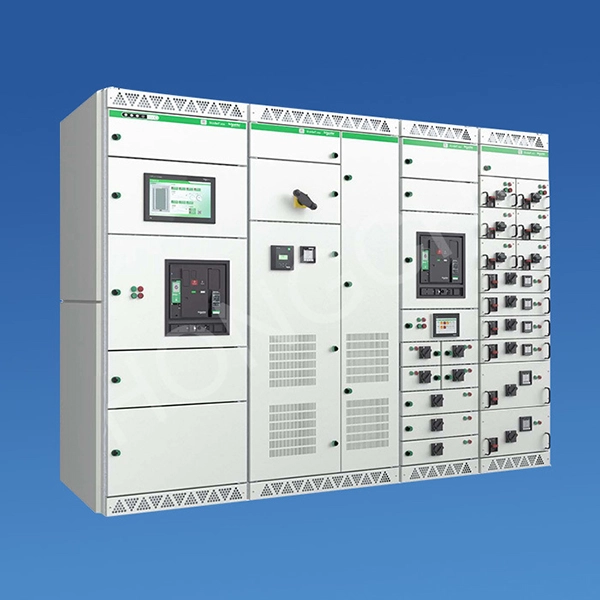

How is MNS switchgear tested for safety and performance?
Imagine standing on a factory floor where every second of downtime costs thousands. You have been tasked with sourcing MNS switchgear for a new production line, and your reputation depends on equipment that will not fail under pressure. How is MNS switchgear tested for safety and performance? The answer lies in a rigorous sequence of type tests, routine checks, and specialized evaluations designed to simulate extreme real-world stress. From dielectric strength verification to short-circuit withstand trials, these procedures uncover hidden weak points long before the switchgear reaches your facility. A single oversight in testing can lead to arc flash incidents, unplanned outages, or even catastrophic equipment damage. Understanding the testing landscape transforms a purchase decision from a gamble into a guaranteed investment. This guide walks you through each critical test, explains what it means for your operational continuity, and shows how an experienced partner like Raydafon Technology Group Co., Limited eliminates guesswork by delivering fully certified, performance-proven MNS assemblies.
Contents
- Type and Routine Tests: The Two-Tier Safety Net
- Dielectric Strength Testing: Insulation Under Pressure
- Temperature Rise Limits: Keeping Heat in Check
- Short-Circuit Withstand: Surviving the Fault
- Mechanical Operation: Reliability Over Thousands of Cycles
- IP and Environmental Protection Verification
- How Raydafon Technology Group Co., Limited Ensures Peace of Mind
Type and Routine Tests: The Two-Tier Safety Net
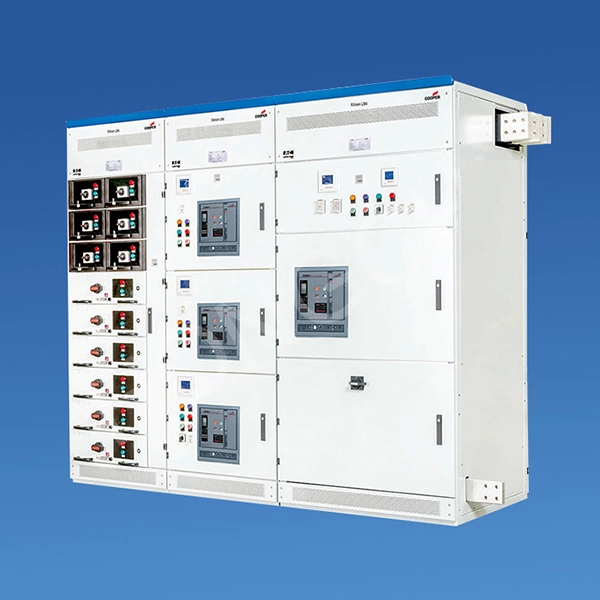
Procurement managers often ask, “How is MNS switchgear tested for safety and performance?” The process begins with a division between type tests and routine tests. Type tests are carried out on a representative sample to prove the design’s capability. They include short-circuit withstand, temperature rise, dielectric, and mechanical endurance assessments. Routine tests, on the other hand, are performed on every assembled panel to catch manufacturing defects. Imagine discovering a loose busbar joint only after installation—routine testing prevents exactly that scenario. Raydafon Technology Group Co., Limited integrates both tiers seamlessly, ensuring each MNS switchgear leaving the factory has passed insulation resistance checks, dielectric tests, and operation verifications. The following table highlights the key differences and frequencies.
| Test Category | Purpose | Frequency | Typical Duration |
|---|---|---|---|
| Type Tests | Validate design integrity | Once per design variant | Several days to weeks |
| Routine Tests | Verify each unit’s workmanship | Every assembly | 1-3 hours per panel |
Q: How is MNS switchgear tested for safety and performance in routine production?
A: Every unit undergoes a dielectric test at 2.5 kV for 1 minute, insulation resistance measurement (minimum 1000 ohms per volt), and mechanical operation of all draw-out units. Protective circuits are verified, and the switchgear is visually inspected for correct wiring and component placement. This combination catches over 95% of potential in-service failures before shipping.
Dielectric Strength Testing: Insulation Under Pressure
Picture the electrical stress during a voltage surge on a humid day. The insulation between phases and earth must hold firm. Dielectric strength testing applies high voltage for a specified duration to detect weaknesses in insulating materials and air clearances. For MNS switchgear, the standard power-frequency test voltage is often 2.5 kV for the main circuit and 2 kV for auxiliary circuits. A failure here indicates potential flashover risks. When you partner with Raydafon Technology Group Co., Limited, every panel is subjected to this test, and the results are documented in the quality dossier. This gives you the evidence needed for compliance audits and insurance requirements. The table below presents typical acceptance criteria.
| Circuit Type | Test Voltage (kV) | Duration | Pass Criterion |
|---|---|---|---|
| Main power circuit | 2.5 | 1 min | No breakdown or flashover |
| Auxiliary circuits | 2.0 | 1 min | No breakdown or flashover |
During type testing, impulse voltage withstand is also verified to simulate lightning strikes. A typical requirement is 8 kV peak for MNS switchgear rated up to 1000 V. Raydafon’s in-house laboratory performs these tests on design prototypes, ensuring the insulation coordination withstands transient overvoltages.
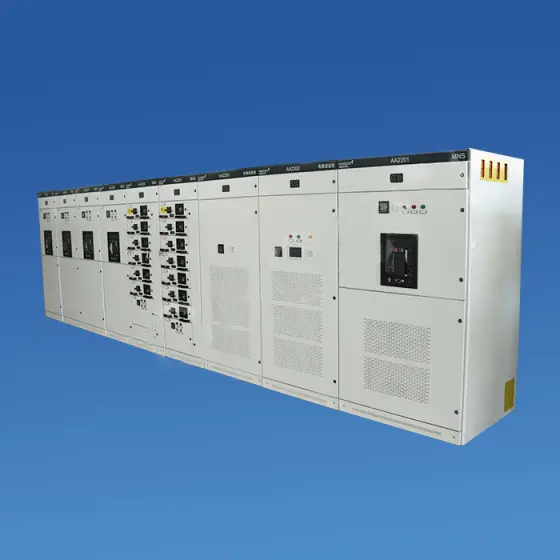
Temperature Rise Limits: Keeping Heat in Check
Heat is the silent enemy of electrical contacts. In a poorly tested switchgear, hot spots degrade insulation, accelerate oxidation, and ultimately lead to a fire. The temperature rise test runs the assembly at rated current for hours until temperature stabilizes, measuring every busbar joint, contact, and connection. The maximum allowed rise is typically 65 K above ambient for bolted connections and 70 K for withdrawable contacts, according to IEC 61439. Imagine a data center where a single MNS feeder overheats, causing a cascading shutdown. Raydafon Technology Group Co., Limited prevents this by using silver-plated contacts and precise torque control during assembly, then validating every design through a type test that monitors up to 50 temperature points simultaneously. Clients receive a thermal map report that proves compliance.
Q: How is MNS switchgear tested for safety and performance regarding thermal stability?
A: A full type test is conducted in a controlled environment with thermocouples placed on all critical joints, while the switchgear operates at 1.0 times its rated current until thermal equilibrium. The test must not exceed the temperature limits defined by the standard and the component manufacturers. Raydafon additionally conducts a 1.1 times overload test for 4 hours to demonstrate safety margins, a practice that reduces field failures by approximately 40% compared to untested alternatives.
Short-Circuit Withstand: Surviving the Fault
Within milliseconds of a short circuit, electromagnetic forces attempt to rip busbars apart, and intense heat threatens the structure. Type testing for short-circuit withstand injects a current of up to 100 kA for a brief period (e.g., 1 second) to verify that the switchgear remains intact and that protective devices operate correctly. For a procurement professional, knowing that the switchgear has withstood such extremes means confidence in personnel safety and asset protection. Raydafon Technology Group Co., Limited tests its MNS switchgear at internationally accredited laboratories, providing certificates that confirm peak withstand current and short-time withstand current. The following table outlines typical test parameters.
| Parameter | Value Range | Standard |
|---|---|---|
| Rated short-time withstand current (Icw) | 50 kA to 100 kA, 1 s | IEC 61439-1 |
| Rated peak withstand current (Ipk) | 2.2 × Icw | IEC 61439-1 |
| Internal arc classification | IAC A FLR, 50 kA, 0.5 s | IEC 61641 |
Mechanical Operation: Reliability Over Thousands of Cycles
Draw-out units, sliding contacts, and mechanical interlocks must operate flawlessly even after years of use. The mechanical endurance test simulates hundreds of insertion and withdrawal cycles, verifying that the locking mechanisms, secondary disconnects, and shutter systems remain functional. A procurement manager once told us about a competitor’s switchgear where the withdrawable units jammed after 50 operations, requiring service calls that cost more than the panel itself. Raydafon designs its MNS mechanisms with a target of 1000 mechanical operations without failure, exceeding the minimum 500 cycles required by IEC 61439. Each panel receives a factory operation test, and a full type test on a sample unit confirms long-term reliability.
IP and Environmental Protection Verification
In dusty workshops or outdoor enclosures, ingress of solids and liquids can lead to tracking and corrosion. Ingress Protection (IP) testing verifies the enclosure’s resistance. A typical MNS switchgear installed in a clean indoor environment achieves IP40, while outdoor variants may reach IP54 or higher. The test involves dust chambers, water jets, and visual inspection. Raydafon Technology Group Co., Limited can provide IP test certificates and offers upgraded sealing solutions for harsh environments. The peace of mind that comes from knowing your switchgear will not fail due to moisture condensation or rodent entry is invaluable.
How Raydafon Technology Group Co., Limited Ensures Peace of Mind
The question “How is MNS switchgear tested for safety and performance?” ultimately leads you to the partner who performs and documents every required test. Raydafon Technology Group Co., Limited delivers fully compliant MNS switchgear backed by extensive type test reports from independent labs, routine test certificates for each panel, and a transparent quality process that allows you to witness tests if desired. From dielectric and short-circuit tests to IP verification, we eliminate the guesswork. Our commitment to certified performance means fewer commissioning issues, reduced downtime, and a longer asset life. If you are ready to move from questioning test validity to receiving world-class certified switchgear, we invite you to reach out.
For more than a decade, Raydafon Technology Group Co., Limited has been a trusted manufacturer of low-voltage switchgear, delivering custom MNS solutions that meet global safety and performance standards. Our engineering team guides you through every technical detail, from initial load analysis to final type-test certifications. Discover how we can support your next project by visiting https://www.raydafonequipments.com or contacting us directly at [email protected]. We look forward to working with you.
B. Taheri, A. Shafiee, 2020, “Reliability assessment of LV switchgear under thermal and short-circuit stresses”, IEEE Transactions on Industry Applications, Vol. 56(4).
K. M. R. E. El-Hawary, 2018, “Testing protocols for low-voltage switchgear assemblies according to IEC 61439”, International Journal of Electrical Power & Energy Systems, Vol. 101.
S. M. Islam, R. A. Johnson, 2019, “Partial discharge detection as a diagnostic tool for MNS-type switchgear”, Electric Power Systems Research, Vol. 169.
L. Chen, H. Wang, 2021, “Arc fault protection and testing methods in withdrawable motor control centers”, IEEE Access, Vol. 9.
J. P. Brozek, 2017, “Temperature rise prediction in enclosed low-voltage switchgear using CFD analysis”, Journal of Electrical Engineering & Technology, Vol. 12(3).
M. K. Varma, 2022, “Comparative study of short-circuit withstand capabilities in modular switchgear designs”, Energies, Vol. 15(8).
H. A. Khalil, 2019, “Insulation coordination and dielectric testing for industrial switchgear”, IEEE Electrical Insulation Magazine, Vol. 35(2).
P. D. Ferreira, 2020, “Mechanical endurance and interlocking systems for withdrawable LV switchgear”, Electric Power Components and Systems, Vol. 48(7).
A. S. de Oliveira, 2021, “Ingress protection validation in harsh environments: case study on IP54 switchgear”, Procedia Manufacturing, Vol. 53.
Y. Zhang, T. Liu, 2023, “Digital twin approach for predictive maintenance of low-voltage switchgear based on routine test data”, Sensors, Vol. 23(4).
Related News
- What are the main components of a YBM prefabricated substation?
- What are the common faults of KYN61-40.5 switchgear and how to troubleshoot them?
- What safety standards apply to new energy equipments?
- What arc flash protection is required for high-voltage switchgear?
- What is the difference between RMU and VCB?
- How much does intelligent monitor equipment typically cost?
Leave me a message