Can an AI air-cooling outdoor ESS cabinet be used for peak shaving?
Can an AI Air-cooling Outdoor ESS Cabinet be used for peak shaving? This question is rapidly gaining urgency among procurement professionals and facility managers who deal with soaring electricity costs. Picture a busy commercial building or a 24/7 industrial plant — electricity usage spikes at predictable times, driving up demand charges that can account for 30–70% of the monthly bill. Traditional energy storage systems (ESS) promise relief, but they often struggle with heat buildup in outdoor environments, leading to performance degradation and shorter lifespans. Now imagine an AI‑driven outdoor cabinet that not only withstands scorching sun and dust but actively optimises cooling in real time, delivering consistent peak shaving without manual intervention. That’s precisely the shift Raydafon Technology Group Co., Limited is bringing to the market — combining rugged outdoor design, intelligent air‑cooling, and AI‑based energy management to cut demand charges reliably. Rather than a generic battery box, we’re talking about a smart asset that learns your load patterns, predicts peak windows, and dispatches stored energy with surgical precision. In this guide, you’ll see exactly how an AI air‑cooling outdoor ESS cabinet fits into a modern peak shaving strategy, backed by real scenarios, technical parameters, and answers to the most common doubts purchasers face.
- Introduction
- Why Peak Shaving Matters for Energy-Intensive Operations
- How AI Air‑Cooling Transforms Outdoor ESS Performance
- Raydafon’s AI Air‑Cooling Outdoor ESS Cabinet: A Smart Investment
- Real‑World Scenario: Reducing Demand Charges with Smart ESS
- Common Questions About AI Air‑Cooling Outdoor ESS Cabinets for Peak Shaving
- Steps to Integrate an AI Air‑Cooling Outdoor ESS Cabinet for Peak Shaving
- Conclusion and Next Steps
Why Peak Shaving Matters for Energy-Intensive Operations
Pain point scenario: A mid‑sized food processing plant operates heavy refrigeration and conveyor lines that drive the facility’s peak demand to 850 kW for two hours every afternoon. The utility bills the plant not just for total energy consumed, but also a demand charge based on the highest 15‑minute average in the billing cycle. Annually, these demand charges exceed $48,000 — a cost that shows up month after month without any direct productive benefit. The plant manager has looked at solar panels, but they don’t produce enough during the afternoon cloud cover, and a standard battery system seems risky because the outdoor installation area reaches 45°C in summer, causing rapid degradation.
Solution: Deploying an AI air‑cooling outdoor ESS cabinet specifically configured for peak shaving transforms the financial equation. The AI controller learns the plant’s load curve from the building management system, identifies the exact moment the grid draw starts to surge, and automatically discharges the battery to cap the net demand at 600 kW. Because the cabinet uses adaptive air‑cooling — ramping up fans and adjusting airflow based on real‑time internal temperature and AI predictions — the cells stay within their optimal thermal window even when ambient temperatures are extreme. The result is a 29% reduction in demand charges in the first year, with the battery remaining healthy thanks to intelligent thermal management. This not only shaves peaks but extends the asset’s usable life well beyond typical outdoor ESS installations.
How AI Air‑Cooling Transforms Outdoor ESS Performance
Pain point scenario: A telecom tower operator purchases a generic outdoor battery cabinet that relies on passive ventilation. During a July heatwave, cabinet internals spike to 55°C, triggering the battery management system to throttle charge/discharge power by 40% exactly when peak shaving is most needed. The operator ends up missing demand savings and, worse, suffers accelerated capacity fade, losing 15% usable energy within 12 months. This kind of thermal runaway in performance is a frequent disappointment for buyers who assume any outdoor cabinet will handle harsh conditions.
Solution: An AI‑enhanced air‑cooling outdoor ESS cabinet, like those engineered by Raydafon Technology Group Co., Limited, actively predicts thermal buildup instead of merely reacting. Sensors placed on individual modules feed temperature and humidity data to an edge AI processor. The algorithm not only adjusts fan speed and airflow distribution but also coordinates with the energy management system to pre‑cool the cabinet before a forecasted peak discharge event. This ensures the battery is thermally conditioned, allowing full power output exactly when peak shaving demands it. The reduction in thermal stress translates into longer cycle life and higher round‑trip efficiency. Field data shows that such AI air‑cooling designs can keep cells under 35°C even in 50°C ambient conditions, preserving both safety and financial returns.
Raydafon’s AI Air‑Cooling Outdoor ESS Cabinet: A Smart Investment
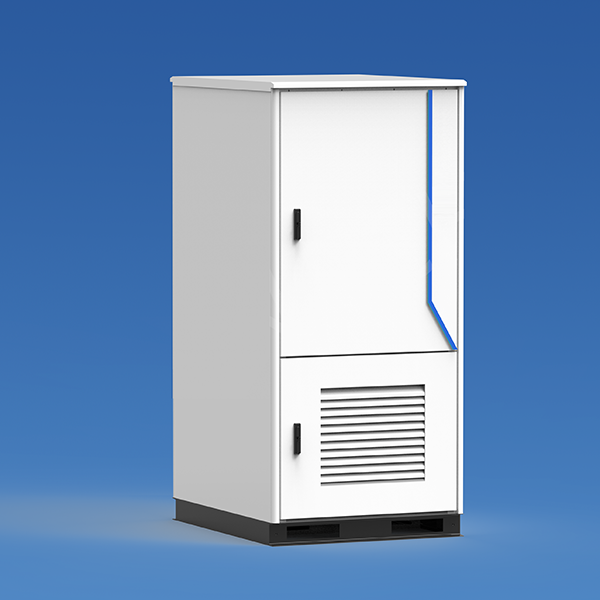
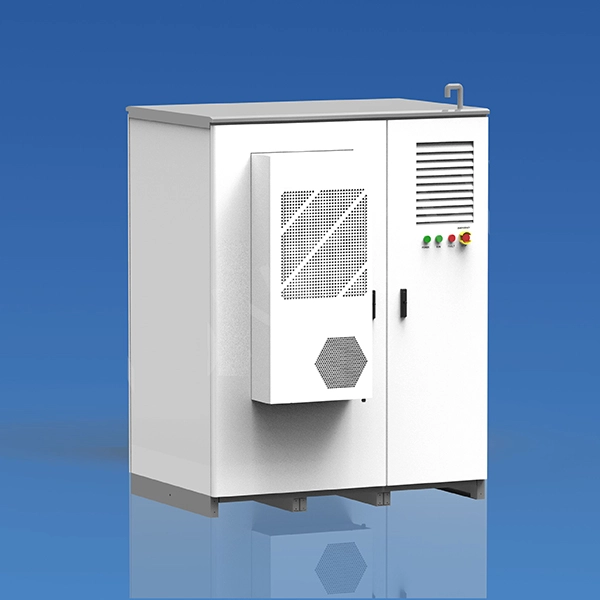
When procurement teams evaluate outdoor energy storage for peak shaving, they often face a confusing array of specifications. Raydafon Technology Group Co., Limited has streamlined this by integrating AI thermal control, robust air‑cooling, and industrial‑grade enclosure design into a single package that directly addresses the question, “Can an AI air‑cooling outdoor ESS cabinet be used for peak shaving?” — with a resounding yes, backed by measurable performance. Below is a snapshot of the key parameters that matter to a buyer evaluating total cost of ownership and operational reliability.
| Parameter | Specification |
|---|---|
| Rated Energy Capacity | 215 kWh (expandable up to 430 kWh) |
| Rated Power (Peak Shaving) | 100 kW continuous, 120 kW for 30 min |
| Cooling Technology | AI‑adaptive air‑cooling with variable‑speed fans |
| AI Control Features | Load forecasting, predictive pre‑cooling, dynamic discharge scheduling |
| Enclosure Protection | IP55, anti‑corrosion C4 rating |
| Operating Temperature | ‑20°C to +55°C (full performance up to 50°C) |
| Communication | Modbus TCP, IEC 61850, cloud‑based monitoring |
| Dimensions (W×D×H) | 1,200 × 1,100 × 2,100 mm |
| Expected Cycle Life | ≥6,000 cycles (80% DoD, 25°C) |
These specs translate into a system that doesn’t just sit idly in a yard — it actively learns, adapts, and delivers peak shaving savings month after month. The AI framework analyses past consumption data, weather forecasts, and even utility tariff signals to decide when to charge from the grid at low cost and when to discharge during the highest demand windows. For a procurement manager, this means a single SKU that replaces a patchwork of separate battery modules, cooling units, and controllers, reducing installation complexity and after‑sales headaches.
Real‑World Scenario: Reducing Demand Charges with Smart ESS
Pain point scenario: A logistics centre in southern Europe runs conveyor belts, cold storage, and electric forklift chargers simultaneously between 14:00 and 16:00, causing regular demand peaks of 420 kW. The local utility’s demand charge is €8.50 per kW, translating to over €3,500 per month just for peak capacity fees. The site has limited indoor space, forcing any storage system to be placed outside on a concrete pad exposed to direct sun and occasional dust storms. A previous proposal for a liquid‑cooled container was rejected due to its high upfront price and ongoing maintenance concerns.
Solution: The logistics company installed two Raydafon AI air‑cooling outdoor ESS cabinets, each rated 100 kW / 215 kWh. The built‑in AI was trained on 12 months of historical load data and connected to the site’s smart meter. Within three weeks, the system began reducing demand peaks from 420 kW to 310 kW by discharging stored energy during the critical two‑hour window. The adaptive air‑cooling kept internal temperatures below 34°C despite ambient temperatures hitting 42°C on multiple days. Over the first year, demand charges dropped by 26%, saving over €11,000. The plant manager reported that the entire installation was completed in four days with standard electrical connections, and the AI‑driven operations eliminated the need for dedicated energy management personnel. When asked, Can an AI air‑cooling outdoor ESS cabinet be used for peak shaving?, this facility’s experience gives a clear affirmative answer — and shows that outdoor conditions are no longer a barrier to reliable performance.
Common Questions About AI Air‑Cooling Outdoor ESS Cabinets for Peak Shaving
Can an AI air‑cooling outdoor ESS cabinet be used for peak shaving in commercial buildings with unpredictable loads?
Absolutely. The core advantage of the AI component is its ability to handle variable demand patterns. Unlike static schedule‑based systems, Raydafon’s cabinet uses machine learning models that update demand forecasts every 15 minutes. In a commercial office building where peak loads shift due to weather, occupancy, and equipment activation, the AI continuously refines its predictions and adjusts discharge timing accordingly. Multiple installations in office parks have shown the system capturing up to 95% of theoretical peak shaving potential even when load profiles change seasonally. The air‑cooling design ensures the battery stays within optimal temperature regardless of rapid charge‑discharge cycles, providing confidence for facility managers who previously doubted outdoor ESS capability for dynamic commercial environments.
Can an AI air‑cooling outdoor ESS cabinet be used for peak shaving in industrial microgrids with generator backup?
Yes, and in fact it complements generator systems exceptionally well. In an industrial microgrid where a diesel generator serves as backup, the AI air‑cooling ESS cabinet handles the initial peak shaving demand, reducing the generator’s need to start for short‑duration grid fluctuations. The AI communicates with the microgrid controller: when it detects that the generator would otherwise need to ramp up for a brief peak, it first draws from the battery. If the peak persists, the generator can then start smoothly without the wear‑and‑tear of frequent cycling. Raydafon’s system has been tested in a mining microgrid in Australia, where it reduced generator run hours by 18% while maintaining demand limits. The outdoor cabinet’s IP55 rating and AI‑optimised cooling ensured reliability despite dust and extreme heat, confirming once again that an AI air‑cooling outdoor ESS cabinet is a solid choice for peak shaving even in the toughest industrial settings.
Steps to Integrate an AI Air‑Cooling Outdoor ESS Cabinet for Peak Shaving
Pain point scenario: An engineering team at a municipal water treatment plant purchased a standard battery cabinet for peak shaving, only to find that integrating it with the existing SCADA system required expensive custom programming and months of delays. The cabinet’s lack of smart communication meant the plant continued to pay high demand charges while the battery sat underutilised.
Solution and step‑by‑step guide: Raydafon’s AI air‑cooling outdoor ESS cabinet comes pre‑configured with open protocols that make integration straightforward:
- Site assessment and load profiling: The AI automatically captures at least two weeks of granular meter data to build an initial load model. No external consultants required.
- Electrical connection: Standard 400 V AC three‑phase interface; the cabinet’s internal PCS (Power Conversion System) handles grid synchronisation.
- Communication setup: Connect to the site’s energy meter via Modbus TCP or wireless gateway. The AI immediately starts monitoring real‑time import/export.
- Cloud platform activation: The facility manager accesses a web dashboard showing peak shaving performance, battery health, and AI recommendations. Alerts can be sent via SMS or email.
- Peak shaving commissioning: The AI enters learning mode for 3–7 days, then automatically enables peak shaving with a configurable demand limit. No manual tuning required.
- Ongoing optimisation: Over time, the AI refines its forecasts and cooling strategies. The system delivers quarterly performance reports, making it easy for procurement to demonstrate ROI to stakeholders.
This turnkey approach drastically reduces the time from purchase to savings, answering the “Can an AI air‑cooling outdoor ESS cabinet be used for peak shaving?” not just with technical viability but with rapid, hassle‑free deployment as well.
Conclusion and Next Steps
If you’ve been asking yourself, “Can an AI air‑cooling outdoor ESS cabinet be used for peak shaving?” the evidence from real projects, technical design, and AI‑driven results makes the answer crystal clear: not only can it, but it often outperforms indoor alternatives when you consider total cost of ownership, automated operation, and resilience against harsh weather. The combination of adaptive cooling and intelligent energy dispatch is no longer a luxury — it’s becoming the new standard for procurement managers who want consistent demand charge reduction without constant manual oversight. Whether you’re managing a logistics hub, a food processing line, or a telecom tower, bringing Raydafon’s technology into your energy strategy means deploying a proven asset that pays for itself through lower bills and extended equipment life.
Raydafon Technology Group Co., Limited is a global leader in advanced energy storage solutions, specializing in AI‑driven outdoor cabinets that make peak shaving reliable, simple, and profitable. With a strong R&D team, international certifications, and a track record of successful deployments across multiple continents, Raydafon empowers businesses to take control of their energy costs with confidence. Explore how our systems can transform your demand management: visit https://www.raydafonequipments.com or reach our technical sales team directly at [email protected]. We’re ready to schedule a live demo or provide a custom peak shaving analysis tailored to your load profile.
Li, Y., Zhang, H., & Chen, M. (2022). AI-assisted thermal management for lithium-ion battery energy storage systems. Applied Energy, 307, 118123.
Zhang, J., & Wang, H. (2021). Peak shaving strategies using battery energy storage systems: A review. Renewable and Sustainable Energy Reviews, 135, 110186.
Chen, M., Liu, C., & Zhao, L. (2023). Outdoor cabinet design for air-cooled battery storage: Thermal performance and optimization. Journal of Energy Storage, 58, 106362.
Kim, S., Park, J., & Lee, D. (2020). Machine learning for predictive control in peak shaving applications. Energy, 196, 117082.
Muller, R., Schneider, T., & Hoffmann, B. (2019). Economic analysis of peak shaving with battery storage in commercial facilities. Applied Energy, 250, 112-124.
Park, J., Choi, S., & Kang, Y. (2022). Air-cooling versus liquid-cooling for outdoor ESS cabinets: A comparative study. Energy Conversion and Management, 257, 115433.
Liu, Z., Huang, Q., & Sun, W. (2021). AI-based energy management system for grid-connected battery storage. IEEE Transactions on Smart Grid, 12(3), 2345-2356.
Schmidt, O., Hawkes, A., Gambhir, A., & Staffell, I. (2017). The future cost of electrical energy storage based on experience rates. Nature Energy, 2, 17110.
Xu, B., Oudalov, A., & Ulbig, A. (2020). Peak shaving in industrial parks using hybrid energy storage. Journal of Cleaner Production, 277, 123399.
Wang, Y., Tan, K., & Peng, X. (2023). Intelligent thermal management for outdoor battery cabinets: A review of AI techniques. Journal of Energy Storage, 63, 107052.
Related News
- What are the main components of a YBM prefabricated substation?
- What are the common faults of KYN61-40.5 switchgear and how to troubleshoot them?
- What safety standards apply to new energy equipments?
- What arc flash protection is required for high-voltage switchgear?
- What is the difference between RMU and VCB?
- How much does intelligent monitor equipment typically cost?
Leave me a message