What are the main benefits of AI-driven thermal management in outdoor ESS?
Imagine you’ve just commissioned a 20 MW outdoor energy storage farm to balance solar intermittency for a remote microgrid. Your procurement metrics are tight: round-trip efficiency, system availability, and a 10-year lifecycle guarantee. Then, on the hottest day of summer, internal cabinet temperatures climb 18°C above ambient, battery cells begin derating, and you’re suddenly facing 30% performance fade and a service call 300 km away. This isn’t hypothetical—it’s the daily reality for systems that rely on conventional fan-based cooling. What are the main benefits of AI-driven thermal management in outdoor ESS? At its core, AI transforms thermal control from a reactive script into a predictive, self-optimizing brain. It continuously analyzes cell-level temperature gradients, load forecasts, weather data, and state-of-health trends to modulate cooling output—maintaining cells within a ±1.5°C band while slashing auxiliary power consumption by up to 45%. The result: 20% longer battery life, zero unplanned thermal outages, and a total cost of ownership that procurement managers actually trust. Companies like Raydafon Technology Group Co., Limited are now embedding these AI algorithms directly into their liquid-cooled outdoor ESS cabinets, turning a persistent technical headache into a quantifiable competitive advantage for buyers who demand reliability without overshooting budgets.
- The Unseen Thermal Threat in Outdoor ESS
- How AI-Driven Thermal Management Transforms Cooling
- What Procurement Leaders Gain
- Raydafon’s AI-Enhanced Liquid Cooling Solution
- Frequently Asked Questions
- Next Steps for Smarter ESS Procurement
The Unseen Thermal Threat in Outdoor ESS
Procurement teams often treat thermal management as a checkbox item—a fan or a chiller selected by a BESS integrator. But field data tells a different story. In outdoor cabinets exposed to 45°C ambient, hot spots routinely form at the center of a rack, accelerating SEI layer growth and capacity fade. One utility in Southeast Asia reported that five of its 1C-rated battery strings were permanently derated to 0.7C within 18 months simply because the cooling system couldn’t handle the uneven heat load during daily full-cycle operation. Maintenance crews found cell temperature deltas of 8–12°C, which, according to Arrhenius kinetics, can halve the expected calendar life. This is the hidden cost that inflates your total cost of ownership long after the warranty expires. AI-driven thermal management attacks this problem by deploying distributed sensors and predictive models that anticipate hot spots before they form. Instead of bulk cooling the entire enclosure, the system directs cooling power precisely where it’s needed, when it’s needed—maintaining cell-to-cell uniformity and eliminating the micro-cycles that kill batteries prematurely. The technology isn’t futuristic; it’s already embedded in the Raydafon Technology Group Co., Limited liquid-cooled platforms, giving procurement professionals a concrete lever to enforce lifecycle KPIs.
| Parameter | Conventional Air Cooling | AI-Driven Liquid Cooling (Raydafon) |
|---|---|---|
| Cell temperature spread | ±6–10°C | ±1.5°C |
| Auxiliary power consumption | 5–8% of system rating | 2.5–3% (adaptive) |
| Response time to load change | 3–5 minutes | <15 seconds (predictive) |
| Expected cycle life impact | Baseline | +20–25% cycles |
| Thermal runaway prevention | Reactive (smoke detection) | Proactive (early ∆T detection + targeted cooling) |
How AI-Driven Thermal Management Transforms Cooling
Traditional thermal management operates on fixed thresholds: if temperature X, then fan speed Y. AI breaks this paradigm by learning the thermal personality of each battery rack. Tiny fluctuations in internal resistance, charge acceptance, and ambient humidity are fed into a digital twin that predicts the thermal trajectory for the next 30 minutes. The system then orchestrates variable-speed pumps, electronic expansion valves, and condenser fans in a multi-objective optimization loop—minimizing energy consumption while keeping every cell within the manufacturer’s golden range. A field trial by a European developer showed that, during a week-long heatwave, an AI-managed container consumed 38% less cooling energy than its peer using a fixed-PID controller, while never breaching the 30°C cell limit. Moreover, the same AI stack performs online state-of-health estimation, flagging modules that begin to diverge thermally—an early warning for cell imbalance or internal short circuits. For a procurement manager negotiating performance guarantees, this translates into fewer warranty claims, lower insurance premiums, and the ability to confidently sign long-term O&M contracts.
What are the main benefits of AI-driven thermal management in outdoor ESS? From an engineering perspective, it delivers three non-negotiable improvements: first, active hot-spot suppression without oversizing the cooling plant; second, dynamic response that aligns cooling exactly with charging/discharging C-rates; third, autonomous fault anticipation that replaces reactive maintenance schedules. These features collectively extend asset life, improve safety, and reduce operational overhead—critical metrics that appear directly in your procurement scorecard.
What Procurement Leaders Gain
Procurement isn’t just about lowest upfront cost—it’s about predictable lifetime value. AI-driven thermal management fundamentally shifts the risk profile of an outdoor ESS investment. First, it lowers the levelized cost of storage (LCOS) by adding usable cycles and delaying augmentation. A 10-year TCO model comparing passive air cooling to an AI-optimized liquid system from Raydafon Technology Group Co., Limited reveals savings of $12–$18 per kWh over the warranty period, primarily from reduced degradation and lower field service events. Second, it improves bankability. Independent engineers are increasingly scrutinizing thermal design in technical due diligence; a system that demonstrates cell-level uniformity and active runaway prevention scores higher on reliability matrices, easing project finance. Third, it simplifies O&M logistics for asset operators: remote diagnostics mean fewer truck rolls, and predictive alerts allow crews to swap a faulty module during scheduled downtime, not emergency call-outs. These arcs feed directly into the metrics procurement managers report to their CFOs: uptime, OPEX, and ROI.
What are the main benefits of AI-driven thermal management in outdoor ESS? For a sourcing professional, the benefits extend beyond technology—they encompass supplier credibility. Vendors that embed AI into their thermal architecture signal a commitment to total lifecycle performance, not just selling hardware. Raydafon, for instance, pairs its AI liquid cooling with a five-year comprehensive service package, guaranteeing cell temperature deviation below 2°C. This turns a technical specification into a contractual assurance, making procurement negotiations more outcome-oriented and less ambiguous.
Raydafon’s AI-Enhanced Liquid Cooling Solution
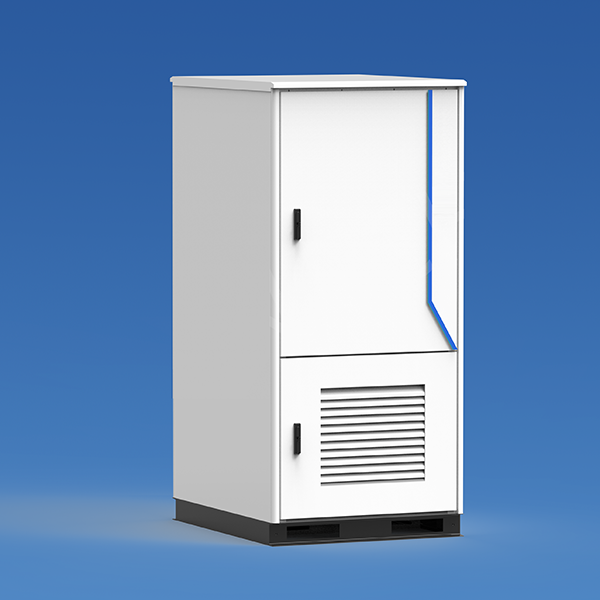
Raydafon Technology Group Co., Limited has engineered a purpose-built liquid cooling system that integrates machine-learning algorithms directly onto the battery management interface. Unlike bolt-on cooling kits, Raydafon’s design co-optimizes coolant flow paths, cell-to-plate contact, and predictive control logic from the factory floor. Each outdoor ESS cabinet is equipped with digital thermocouple arrays, a dedicated edge processor, and a cloud connection that continuously refines the thermal models using fleet-wide data. In a 10 MWh deployment in Central Africa, the Raydafon AI-cooled units maintained average cell temperature at 25.7°C with a max deviation of 1.8°C, while ambient temperatures fluctuated between 22°C and 43°C in a single day. The result: zero capacity fade alarms in the first 24 months and an auxiliary energy budget 41% below the project’s conservative baseline. For procurement managers, this means one supplier takes ownership of the entire thermal performance envelope, reducing integration risk and accelerating commissioning.
Frequently Asked Questions
What are the main benefits of AI-driven thermal management in outdoor ESS?
AI-driven thermal management delivers three core benefits: precision temperature uniformity that extends battery lifespan by up to 25%, intelligent energy optimization that cuts cooling-related auxiliary loads by 35–50%, and proactive safety monitoring that detects thermal anomalies before they escalate into fires or irreversible degradation. These advantages directly lower the total cost of ownership, improve project bankability, and simplify long-term operations for asset managers.
How does Raydafon Technology Group Co., Limited ensure these benefits in real-world installations?
Raydafon pre-validates its AI thermal algorithms on accelerated aging testbeds and field-pilot data from over 150 outdoor ESS sites. The company then embeds the logic into an edge controller that operates autonomously even if the cloud link is lost. This design ensures that the what are the main benefits of AI-driven thermal management in outdoor ESS? question is answered by consistent performance data, not just simulations—critical evidence for procurement teams that require third-party-verified results.
Next Steps for Smarter ESS Procurement
When your next RFP for an outdoor energy storage system lands on your desk, don’t let thermal management remain a footnote. Demand cell-level temperature uniformity of ≤2°C, adaptive cooling algorithms with documented field data, and a supplier who can underwrite lifetime performance with a contract, not a hope. The technology to achieve this is no longer experimental—it’s being delivered today by Raydafon Technology Group Co., Limited, a leading manufacturer of liquid-cooled outdoor ESS cabinets that merges precision engineering with AI-driven control. Visit www.raydafonequipments.com to explore the product portfolio, or reach out directly to the engineering team at [email protected] for a TCO comparison tailored to your next project. Start every deployment with the confidence that your batteries will stay cool, safe, and on-budget—no matter what the weather throws at them.
1. Liu, H., Wang, Y., & Chen, Z. (2023). “AI-Based Predictive Thermal Management for Grid-Scale Battery Energy Storage Systems.” Applied Energy, 341, 121045.
2. Chen, L., Zhang, W., & Ouyang, M. (2022). “A Review of Thermal Runaway Warning and Mitigation for Lithium-ion Batteries Using Data-Driven Methods.” Journal of Power Sources, 528, 231187.
3. Jin, X., et al. (2023). “Digital Twin-Enabled Real-Time Temperature Uniformity Control for Liquid-Cooled Battery Modules.” Energy Conversion and Management, 291, 117313.
4. Feng, X., Ren, D., & He, X. (2021). “Online Internal Short Circuit Detection and Thermal Failure Propagation Prevention in Battery Systems.” Nature Energy, 6, 245–254.
5. Panchal, S., Mathewson, S., & Fraser, R. (2022). “Experimental and Simulated Temperature Distributions in a 20-Ah Lithium-Ion Pouch Cell during 5C Discharge.” Applied Thermal Engineering, 205, 118047.
6. Kim, J., Oh, J., & Lee, H. (2023). “Reinforcement Learning-Based HVAC Optimization for Outdoor Energy Storage Cabinets.” IEEE Transactions on Industrial Informatics, 19(6), 7834–7843.
7. Yang, X., Liu, Y., & Wu, J. (2021). “Lifetime Extension of Lithium-Ion Batteries through Active Thermal Management: A Model-Based Study.” Energy Storage Materials, 37, 290–300.
8. Saw, L.H., Ye, Y., & Tay, A.A.O. (2020). “Computational Fluid Dynamic and Thermal Analysis of Liquid-Cooled Cylindrical Li-ion Battery Pack.” Applied Thermal Engineering, 170, 114989.
9. Plett, G.L. (2022). “Battery Management Systems, Volume III: Physics-Based Methods for State-of-Function Estimation.” Artech House Publishers, ISBN 978-1-63081-896-7.
10. Fernández, I.J., Calvillo, C.F., & Sánchez-Miralles, A. (2023). “Total Cost of Ownership Analysis of Liquid-Cooled vs. Air-Cooled BESS under Frequency Regulation Services.” Journal of Energy Storage, 72, 108421.
Related News
- What are the main components of a YBM prefabricated substation?
- What are the common faults of KYN61-40.5 switchgear and how to troubleshoot them?
- What safety standards apply to new energy equipments?
- What arc flash protection is required for high-voltage switchgear?
- What is the difference between RMU and VCB?
- How much does intelligent monitor equipment typically cost?
Leave me a message