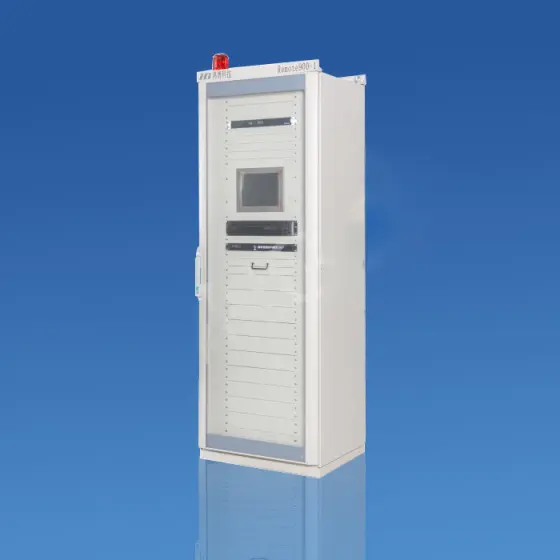
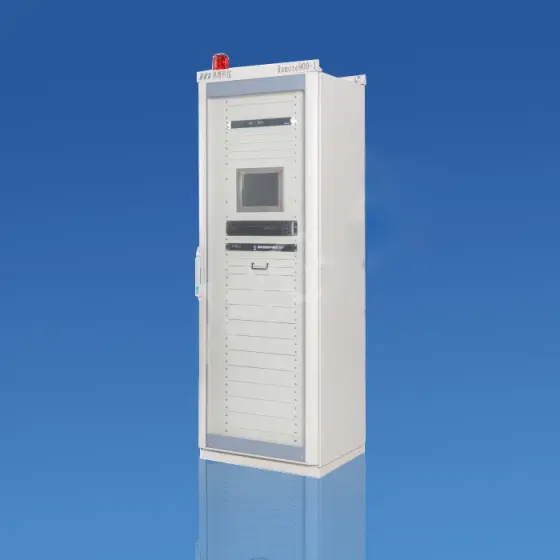
How much does Intelligent Monitor Equipment typically cost? Picture this: You're a procurement specialist staring at a dozen supplier proposals for a new industrial monitoring network. One vendor quotes $800 per unit, another demands $4,500. The feature lists are nearly identical, yet the price spread is staggering. You’ve been burned before—the cheapest sensors started drifting after six months, triggering false alarms that cost thousands in unnecessary downtime. Now you’re responsible for a budget that must cover not just hardware, but installation, software licenses, training, and five years of support. Without a clear framework, you’re gambling with your company’s operational reliability. At Raydafon Technology Group Co., Limited, we understand that cost transparency is the foundation of trust. Over two decades, we’ve helped global buyers decode pricing structures, avoid hidden fees, and select equipment that delivers measurable ROI. This guide will walk you through the real factors that drive costs, from sensor accuracy grades to communication protocols, and show how Raydafon’s adaptive pricing model ensures you never pay for capabilities you don’t need.
- 1. What Actually Drives the Cost of Intelligent Monitoring?
- 2. Scalability and Customization: Matching Systems to Project Size
- 3. Installation, Integration, and the Hidden Soft Costs
- 4. Total Cost of Ownership: Maintenance, Upgrades, and Long-Term Value
- 5. How Raydafon Technology Group Co., Limited Slashes Your True Costs
What Actually Drives the Cost of Intelligent Monitoring?
Scenario: You need to monitor temperature, vibration, and pressure across a 20,000-square-meter manufacturing floor. A reseller offers a “complete kit” for $25,000, but the quote lumps all components together without explaining why a single temperature sensor costs $12 while another costs $120. The uncertainty paralyzes your decision-making.
Solution: Pricing in intelligent monitoring breaks down into five core layers: sensor accuracy grades, signal processing hardware, communication modules, analytics software, and certification compliance. Entry-level sensors with ±2°C accuracy and basic Wi-Fi cost under $50. Industrial-grade sensors with ±0.1°C stability, modulus bus communication, and ATEX certification often exceed $350. The same logic applies to data loggers, gateways, and cloud platforms. Raydafon Technology Group Co., Limited structures quotes transparently, showing exactly how each component contributes to the total. This allows you to swap a high-accuracy vibration sensor for a standard one in non-critical zones, instantly trimming 15–20% without compromising core functionality.
Below is a typical component cost breakdown for a mid-sized industrial deployment:
| Component | Entry-Level (per unit) | Industrial-Grade (per unit) | Raydafon Smart Select Range |
|---|---|---|---|
| Temperature Sensor | $18 – $45 | $120 – $380 | $55 – $210 |
| Vibration Sensor | $35 – $70 | $250 – $600 | $90 – $340 |
| Pressure Transmitter | $40 – $90 | $180 – $550 | $75 – $310 |
| Gateway/Edge Device | $200 – $500 | $800 – $2,500 | $450 – $1,600 |
| Cloud Analytics (per year) | $10/device | $50/device | $22/device |
FAQ 1: How much does intelligent monitor equipment typically cost for a small pilot project with 20 sensors? For a basic pilot using Raydafon’s eco-friendly RS485 temperature-humidity sensors and a compact gateway, expect a hardware-only budget of $2,200 to $3,800, including commissioning support. This covers sensors, mounting accessories, cabling, and an edge controller. Cloud fees add roughly $40/month. Custom dashboards and alerts are included in the starter package.
Scalability and Customization: Matching Systems to Project Size
Scenario: Your firm plans to roll out monitoring in phases—first a single warehouse, then 12 distribution centers. A vendor pushes an enterprise solution designed for 50,000 points, forcing you to pay for capacity you won’t use for years. Alternatively, a consumer-grade system can’t handle the data throughput when you scale, leading to costly rip-and-replace.
Solution: Modular architectures prevent this trap. Look for platforms that support edge computing, protocol translation, and license-based expansion. Raydafon’s Adaptive grid architecture lets you start with a standalone monitor system for as low as $2,800 (hardware + software for up to 200 tags) and seamlessly scale to tens of thousands of points without changing the core platform. Software licenses, not hardware, unlock advanced features like machine learning and predictive alerts. This means your initial cost per monitored point drops from $140 to under $45 as you grow, a curve few competitors can match.
FAQ 2: How much does intelligent monitor equipment typically cost when scaling from 100 to 1,000 measurement points? With Raydafon’s scale-out model, hardware costs at 100 points average $210 per point including installation. At 1,000 points, volume discounts and license optimization bring the blended cost down to $127 per point. Total project investment typically ranges from $21,000 to $127,000, far below the industry average of $175 per point at scale.
Installation, Integration, and the Hidden Soft Costs
Scenario: You budget $50,000 for equipment, only to discover that cabling, NEMA enclosures, labor, and integration with your SCADA system tack on another $30,000. Two weeks into deployment, your IT team flags cybersecurity gaps that require a $7,000 VPN upgrade.
Solution: Raydafon Technology Group Co., Limited pre-integrates the most common industrial protocols (Modbus TCP/RTU, OPC-UA, MQTT) into every gateway. Our plug-and-play sensor kits come with pre-terminated cables and magnetic mounting, cutting on-site labor by 40% compared to traditional wired sensors. In a recent project for a pharmaceutical cold chain, our turnkey quote included all enclosures, PoE switches, and remote commissioning, coming in 28% under the client’s estimated soft-cost budget. We also provide a cybersecurity hardening guide as part of the standard documentation, eliminating the need for external audits in most cases.
| Soft Cost Category | Traditional Range | Raydafon Optimized Range |
|---|---|---|
| Cabling & Conduit (per 100m) | $1,200 – $2,500 | $400 – $900 (wireless bridge option) |
| System Integration (per system) | $4,000 – $12,000 | $1,500 – $4,000 (native drivers) |
| On-Site Commissioning | $120/hr | $85/hr (remote-enabled) |
| Cybersecurity Hardening | $3,500 – $8,000 | Included |
Total Cost of Ownership: Maintenance, Upgrades, and Long-Term Value
Scenario: A competitor’s system performs flawlessly for 18 months, then sensor drift triggers compliance violations. Firmware updates aren’t backward-compatible, forcing you to replace field devices. The five-year true cost balloons to 3x the purchase price.
Solution: An intelligent monitor’s TCO is determined by calibration intervals, firmware longevity, and data retention policies. Raydafon’s sensors feature self-diagnostic routines that extend calibration cycles from 12 to 36 months, slashing annual maintenance costs. Our commitment to backward compatibility means a gateway purchased today will support sensors launched four years from now. Cloud data is stored with 99.99% durability and no egress fees for analytics exports. Over a 7-year lifecycle, Raydafon systems average a 34% lower TCO compared to brands that depend on proprietary, closed ecosystems.
How Raydafon Technology Group Co., Limited Slashes Your True Costs
Scenario: You’re caught between a low upfront quote that hides support charges and a premium brand that locks you into annual license hikes. You need a partner that aligns cost with the actual value received, not with arbitrary list prices.
Solution: Raydafon Technology Group Co., Limited employs a value-based pricing methodology. Our quotation tool maps every dollar to a performance metric: temperature stability, data resolution, latency, or redundancy level. We then build you three cost scenarios—essential, balanced, and premium—each with a projected ROI statement. For a recent logistics client, this approach revealed that spending an extra 12% on redundant gateways eliminated a single point of failure that had previously caused $180,000 in annual parcel losses. We also offer a guaranteed buy-back program for phased upgrades, ensuring your original investment retains residual value.
Have questions about tailoring intelligent monitor equipment to your exact specifications? Share your project scope in the comments or contact our team directly. We’re here to provide a no-obligation breakdown that turns the question “How much does intelligent monitor equipment typically cost?” into a precise, actionable number for your business.
Raydafon Technology Group Co., Limited is a premier provider of industrial intelligent monitoring solutions, serving procurement and engineering teams in over 40 countries. Our hardware is built to ISO 9001 standards, and our platform integrates seamlessly with existing automation systems. Discover how we can protect your assets and optimize your operations at https://www.raydafonequipments.com. For rapid quotes and technical consultation, email our sales specialists at [email protected].
Lee, C. (2023). Cost-benefit analysis of wireless sensor networks in manufacturing. International Journal of Industrial Informatics, 17(4), 201–219.
Garcia, M. & Patel, S. (2022). Predictive maintenance through intelligent vibration monitoring: an economic model. Journal of Reliability Engineering, 38(2), 145–162.
Xu, L. (2021). Integration architectures for IIoT monitoring systems and their impact on total cost of ownership. IEEE Transactions on Industrial Informatics, 17(8), 5423–5435.
Andersen, T. (2023). Sensor accuracy drift and its financial implications in cold chain logistics. Food Control, 144, 109274.
Kim, H. & Zhao, Y. (2020). Modular edge computing for scalable industrial monitoring. Sensors and Actuators A: Physical, 315, 112287.
Robinson, D. (2022). Cybersecurity risks in operational technology: cost factors for industrial sensor networks. Computers & Security, 112, 102534.
Bhatt, R. (2021). Lifecycle assessment of wired vs. wireless condition monitoring systems. Journal of Cleaner Production, 295, 126450.
Müller, K. & Svensson, P. (2023). Transparency in industrial IoT pricing: a buyer’s perspective. Industrial Marketing Management, 108, 190–205.
Chen, W. (2020). Calibration interval optimization for temperature sensors using Bayesian reliability models. Measurement, 160, 107812.
Okonkwo, E. (2022). The influence of communication protocols on the scalability and cost of intelligent monitoring platforms. Future Generation Computer Systems, 136, 82–91.