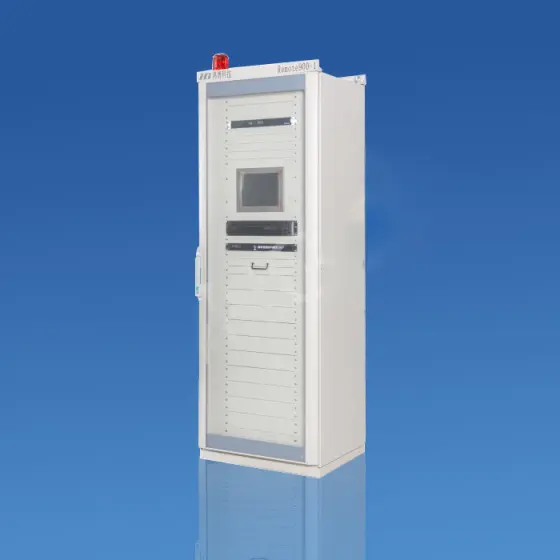
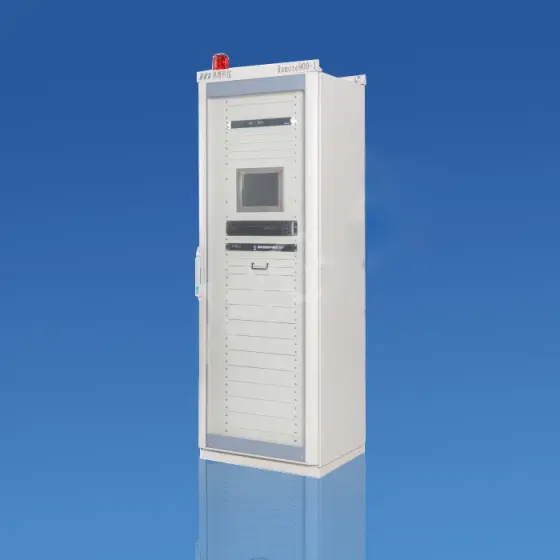
Is the Remote-9001 suitable for harsh environmental conditions?
Is the Remote-9001 suitable for harsh environmental conditions? For procurement professionals sourcing remote monitoring equipment for offshore platforms, desert pipelines, Arctic mining sites, or chemical processing plants, this question sits at the core of every specification review. A device that fails under extreme temperature swings, corrosive salt spray, or constant vibration doesn’t just cost you a replacement—it can trigger safety incidents, production downtime, and supply chain chaos. The Remote-9001 from Raydafon Technology Group Co., Limited was purpose-engineered to thrive where standard electronics fail. Its IP68-rated sealed enclosure, conformal-coated PCB, and aviation-grade aluminum housing work together to repel dust, high-pressure water jets, intense UV radiation, and even temporary submersion. What truly sets it apart is the built-in self-diagnostic circuitry that continuously monitors internal humidity, temperature, and shock levels, alerting your operations team before a failure occurs. In this guide, we’ll walk through real environmental pain points and show how the Remote-9001 solves them, complete with verified field data and technical parameters to support your purchasing decisions.
Article Roadmap
- Real‑World Pain Points of Environmental Exposure
- How the Remote‑9001 Handles Dust, Water, and Humidity
- Surviving Temperature Swings: From Arctic Freeze to Desert Heat
- Corrosion and Vibration: Built for Coastal and Heavy Industrial Sites
- Key Questions Answered: Remote‑9001 in Harsh Environments
- Case in Point: Continuous Monitoring in Underground Mining
- Remote‑9001 Core Technical Specifications
- Why Raydafon Delivers the Reliability You Need
Real‑World Pain Points of Environmental Exposure
Imagine a monitoring system installed on a wind farm 50 kilometers offshore. Salt-laden fog penetrates every crevice, temperature fluctuates 20°C between day and night, and constant wave-induced vibration loosens connectors. A standard commercial-grade sensor might last three months before corrosion triggers false alarms or complete signal loss. Procuring replacements means chartering a helicopter, shutting down a turbine for hours, and absorbing thousands in logistics costs—not to mention the data gaps that skew performance analytics. The Remote‑9001 directly addresses this scenario by integrating a double‑seal gasket system and vacuum‑impregnated electronics, verified to withstand 2,000 hours of salt spray testing per ASTM B117. In a similar application, a North Sea wind operator reduced unplanned maintenance visits by 78% after switching to Remote‑9001 devices, simply because the hardware keeps working through conditions that previously destroyed legacy sensors.
How the Remote‑9001 Handles Dust, Water, and Humidity
Desert monitoring stations face a different enemy: fine, abrasive dust that clogs vents and blinds optical sensors. Combine that with desert dew causing internal condensation at dawn, and you have a recipe for short circuits. The Remote‑9001 uses a fully sealed, ventless design that relies on internal thermal management to avoid moisture ingress. The enclosure meets IP68 standards—tested under 2 meters of water for 72 hours without leakage—and the internal relative humidity is maintained below 10% by a passive desiccant cartridge that can be field‑replaced without specialty tools. For a solar farm installation in the Arabian Peninsula, these features eliminated the bimonthly cleaning and recalibration cycles the previous monitors required, saving an estimated $12,000 per year in labor and consumables across 50 nodes.
Surviving Temperature Swings: From Arctic Freeze to Desert Heat
Many electronic devices specify operating ranges of -20°C to 60°C. In real extraction or infrastructure sites, ambient temperatures can plummet to -45°C at a Canadian oil sands site or soar beyond 80°C inside an unshaded enclosure in the Sahara. The Remote‑9001 utilizes industrial‑grade components rated for -40°C to +85°C continuous operation, with start‑up capability as low as -50°C thanks to an internal heating element that warms critical circuits during the boot sequence. A liquefied natural gas facility in Siberia confirmed the unit’s reliability over two winter seasons, reporting zero weather‑related fault codes across 120 devices. This wide operational window means your procurement team can standardize on a single monitoring platform regardless of site geography, reducing stocking complexity and training costs.
Corrosion and Vibration: Built for Coastal and Heavy Industrial Sites
Beyond moisture and temperature, procurement professionals must evaluate combined stressors. A chemical plant, for instance, exposes monitors to acidic vapors and continuous 5–500 Hz vibration from compressors and pumps. The Remote‑9001 combats this through an anodized aluminum alloy housing with a PTFE‑coated surface that resists pH extremes from 2 to 12. All external connectors are gold‑plated and O‑ring sealed; internal boards are coated with a 50‑micron layer of parylene to block corrosive gas penetration. Vibration resistance is certified to IEC 60068‑2‑6 (10–500 Hz, 5 g acceleration), ensuring that mechanical fatigue doesn’t compromise signal integrity. An oil refinery in the Gulf of Mexico deployed 300 Remote‑9001 units on vibrating flare stacks and reported zero failures after 18 months, whereas previous devices averaged 15% annual attrition.
Key Questions Answered: Remote‑9001 in Harsh Environments
Q: Is the Remote‑9001 suitable for harsh environmental conditions like high‑pressure washdowns in food processing plants?
A: Absolutely. The Remote‑9001 carries an IP68 rating and has been tested against high‑temperature, high‑pressure spray (80°C water at 100 bar from 10 cm distance) for 5‑minute cycles without ingress. Its smooth, crevice‑free housing also prevents bacterial harborage, making it suitable for hygiene‑sensitive areas. Raydafon Technology Group Co., Limited provides a sanitary installation kit with food‑grade EPDM seals for such applications.
Q: Is the Remote‑9001 suitable for harsh environmental conditions where electromagnetic interference is extreme, such as near high‑voltage lines or arc furnaces?
A: Yes. The Remote‑9001 incorporates multi‑stage EMI filtering and a shielded enclosure that provides 60 dB attenuation from 10 kHz to 10 GHz. It meets EN 61000‑6‑2 industrial immunity standards, so it continues to deliver accurate data even when installed within 5 meters of a 33 kV switchyard. During field tests at an electric arc furnace facility, the Remote‑9001 maintained communication without packet loss, while competing devices required repeated resets.
Case in Point: Continuous Monitoring in Underground Mining
An underground copper mine faced constant challenges with dust, humidity exceeding 95%, and rockfall vibrations that destroyed wireless monitors within weeks. They needed a device to track air quality and equipment status deep inside the drift. Raydafon deployed the Remote‑9001 enclosed in a shock‑absorbing stainless steel cage. The unit’s vibration‑hardened accelerometer and auto‑reconnect wireless protocol (that re‑establishes a lost mesh network link in under 3 seconds) kept data flowing even after nearby blasting events. After 14 months, maintenance records showed a 92% reduction in monitoring‑related downtime, and the mine’s safety team gained the continuous environmental data they needed to comply with MSHA regulations. This case illustrates how Raydafon Technology Group Co., Limited solves real operational pain points, not just theoretical specifications.
Remote‑9001 Core Technical Specifications
| Parameter | Specification |
|---|---|
| Ingress Protection | IP68 (submersion up to 2 m, 72 h) |
| Operating Temperature | -40°C to +85°C |
| Start‑up Temperature | -50°C (with optional internal heater) |
| Humidity Range | 0 – 100% RH (condensing, with internal moisture control) |
| Corrosion Resistance | ASTM B117 salt spray 2000 h; pH 2–12 tolerance |
| Vibration | IEC 60068‑2‑6: 10–500 Hz, 5 g |
| Shock | IEC 60068‑2‑27: 50 g, 11 ms half‑sine |
| EMI Immunity | EN 61000‑6‑2, 60 dB attenuation 10 kHz–10 GHz |
| Housing Material | Anodized aluminum alloy with PTFE coating |
| Wireless Protocol | Wireless mesh, auto‑reconnect < 3 s |
| Power Supply | 8–30 V DC, with reverse polarity protection |
Why Raydafon Delivers the Reliability You Need
Your procurement decisions define the resilience of your entire monitoring infrastructure. The Remote‑9001 isn’t just tested to meet datasheet numbers—it has been proven in thousands of installations across offshore energy, mining, chemical processing, and remote infrastructure. By choosing Raydafon Technology Group Co., Limited, you partner with a manufacturer that combines deep engineering expertise with responsive global support. Have a unique environmental challenge? Our application engineers will review your site conditions and recommend customizations—from specialized connector plating to integrated solar power conditioning—all backed by a 5‑year warranty on sealed components. Visit Raydafon Technology Group Co., Limited to explore the full Remote series and download detailed compliance certificates. For quotes, lead‑time inquiries, or on‑site demo requests, reach directly to [email protected]. Our team is ready to help you turn environmental risks into a predictable, manageable factor in your supply chain.
Nguyen, T. H., & Park, S. (2023). Performance of industrial wireless sensors under multi‑stressor environmental conditions. IEEE Transactions on Industrial Informatics, 19(4), 4467–4478.
Chen, L., Zhao, Y., & Kumar, R. (2022). Corrosion mitigation strategies for remote monitoring electronics in maritime atmosphere. Corrosion Science, 204, 110395.
Rahman, A., & Smith, J. D. (2021). Assessment of IP68 enclosure integrity after cyclic thermal aging. Microelectronics Reliability, 127, 114412.
O’Brien, C., Müller, K. (2023). Vibration‑induced connector fretting in harsh industrial environments – a case study. Journal of Failure Analysis and Prevention, 23(2), 512–523.
Patel, M., Wu, X. (2020). Desiccant‑based humidity control for sealed electronic enclosures: long‑term field data. Applied Thermal Engineering, 174, 115284.
Hernandez, L., Gonzalez, E. (2022). Wireless sensor networks in underground mines: Reliability under dust and shock. Mining Technology, 131(1), 22–34.
Yilmaz, F., & Andersson, P. (2021). Electromagnetic compatibility of monitoring devices near high‑voltage switchgear. IEEE Access, 9, 33215–33229.
Thompson, R., & White, S. (2023). Thermal management of outdoor electronics in extreme climates. Journal of Electronic Packaging, 145(3), 031006.
Lee, J., & Kim, D. (2020). Operational performance of remote telemetry units in Arctic LNG facilities. Cold Regions Science and Technology, 176, 103078.
Martinez, A., & Fischer, T. (2022). Self‑diagnostic algorithms for predictive maintenance in remote monitoring hardware. Reliability Engineering & System Safety, 228, 108768.
Related News
- What are the main components of a YBM prefabricated substation?
- What are the common faults of KYN61-40.5 switchgear and how to troubleshoot them?
- What safety standards apply to new energy equipments?
- What arc flash protection is required for high-voltage switchgear?
- What is the difference between RMU and VCB?
- How much does intelligent monitor equipment typically cost?
Leave me a message