What are the common faults of KYN61-40.5 switchgear and how to troubleshoot them?
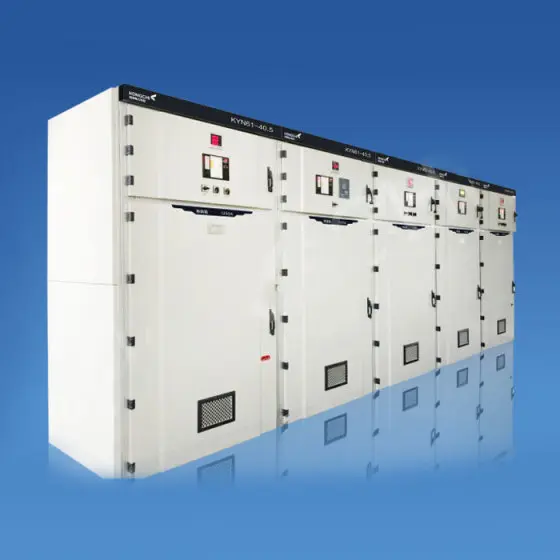
Imagine a critical production line suddenly grinding to a halt—lights flicker, alarms blare, and your maintenance team scrambles to identify the culprit. In many medium-voltage power distribution systems, the suspect is a malfunctioning KYN61-40.5 armored metal enclosed switchgear. As a procurement professional or plant engineer, you know that downtime translates directly into lost revenue and safety risks. So, what are the common faults of KYN61-40.5 switchgear and how to troubleshoot them? This switchgear, widely used in 40.5kV networks for power plants, substations, and heavy industries, can suffer from a range of mechanical jamming, insulation breakdowns, and control circuit failures. The good news? With a structured diagnosis approach and reliable support from manufacturers like Raydafon Technology Group Co., Limited, most issues can be resolved swiftly—or even prevented before they occur. Stick with me, and I'll walk you through real-world fault scenarios, practical troubleshooting steps, and proven strategies to keep your switchgear performing at its peak.
- Tackling Mechanical Jamming and Interlock Faults
- Diagnosing Insulation Breakdowns and Partial Discharge
- Resolving Control Circuit and Secondary Wiring Problems
- Managing Overheating and Contact Resistance Anomalies
- Implementing a Preventive Maintenance Regimen with Raydafon
Tackling Mechanical Jamming and Interlock Faults
Scene: Your team tries to rack a circuit breaker into the service position, but the truck mechanism feels stiff and finally stops halfway. The interlock refuses to release, and you're facing a potential forced outage. This is one of the most frequent complaints: mechanical jamming of the withdrawable truck or misoperation of the door interlock and grounding switch interlocks. Troubleshooting often begins by checking for foreign objects in the guide rails, alignment of the chassis, and lubrication of moving parts. In many cases, the spring mechanism of the shutter or the door interlock rod becomes misaligned due to transport vibration or improper handling during installation.
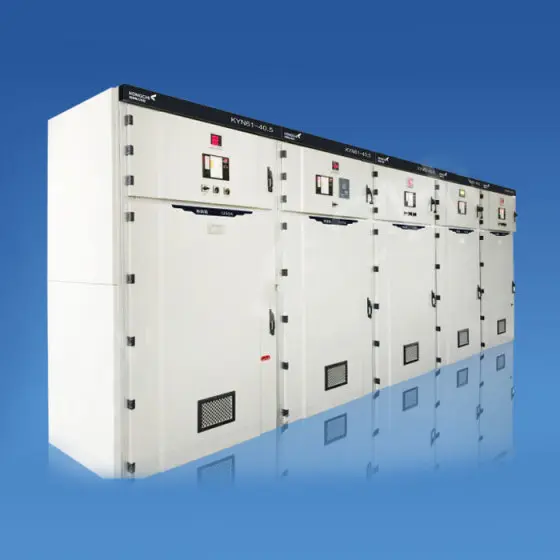
Solution: First, isolate the switchgear and verify the breaker is in the test/disconnected position. Inspect the truck rollers and guide rails for deformation. Lubricate with manufacturer-approved grease—not just any heavy oil, as it can attract dust. Next, examine the interlock rods and levers; a bent rod can be carefully straightened, but if the interlock body is cracked, it must be replaced. This is where a partner like Raydafon Technology Group Co., Limited becomes invaluable: they supply original spare parts that maintain the mechanical integrity of the KYN61-40.5 switchgear, avoiding the risks of generic substitutes. For sticky shutters, a common quick fix is cleaning the shutter sliding surfaces and applying a dry lubricant. Always test the interlock functionality thoroughly after any adjustment.
| Fault Symptom | Probable Cause | Troubleshooting Step |
|---|---|---|
| Breaker truck hard to move | Misaligned rails, lack of lubrication, foreign object | Check alignment, clean rails, lubricate with specified grease |
| Door interlock won't release | Bent interlock rod, broken spring | Inspect rod, replace spring if damaged, adjust linkage |
| Grounding switch fails to close | Interference with main breaker position, mechanical wear | Confirm breaker is in test position, clean and lubricate grounding mechanism |
Diagnosing Insulation Breakdowns and Partial Discharge
A faint buzzing sound or ozone smell inside the switchgear room can be an early warning of partial discharge (PD) activity, which often leads to catastrophic insulation failure if ignored. The compact design of the KYN61-40.5 switchgear, while space-saving, creates a challenging environment for insulation if humidity or dust accumulates. One procurement manager shared that a newly commissioned unit suffered a phase-to-phase arc after only six months due to condensation inside the busbar compartment—a classic scenario that could have been avoided.
What are the common faults of KYN61-40.5 switchgear and how to troubleshoot them? When insulation degradation is suspected, use a PD detector or ultrasonic camera to pinpoint the source. Verify that anti-condensation heaters are operational (they often fail unnoticed). Inspect busbar sleeves, support insulators, and cable compartment terminations for cracks or tracking marks. Simple thermal imaging can highlight loose, hot connections that accelerate insulation aging. Raydafon Technology Group Co., Limited addresses this proactively: their KYN61-40.5 units come with enhanced insulation materials and optional PD sensors that integrate with building management systems, giving you real-time health data. If a flashover occurs, replacement of damaged insulators and thorough cleaning of all compartments are mandatory. Never reuse a carbon-tracked insulator—it is a ticking time bomb.
Q: What are the common faults of KYN61-40.5 switchgear and how to troubleshoot them when there is a sudden trip without obvious reason?
A: Unexpected trips often stem from control circuit glitches, such as a loose terminal or a failing auxiliary relay. Start by examining the protection relay’s event record—it usually indicates whether the trip was due to overcurrent, earth fault, or a control supply loss. Check the trip circuit supervision relay; if it operated, you likely have a wiring break. Tighten all terminals in the control compartment, especially the coil terminals of the circuit breaker. Test the shunt trip and closing coils for open circuit. As many procurement teams rely on Raydafon’s technical support, calling their after-sales hotline can accelerate diagnosis when in-house experience is limited.
Resolving Control Circuit and Secondary Wiring Problems
Control circuit failures account for a significant share of KYN61-40.5 downtime. The secondary wiring inside the low-voltage compartment can become brittle over time due to heat, or terminals can loosen under operational vibration. I recall a plant where a simple loose wire on the undervoltage coil caused the entire incoming feeder breaker to trip during a voltage dip, while a properly functioning unit should have tolerated the transient. This left the factory without power for four hours—a costly lesson.
Troubleshooting: Begin with a visual inspection of all wiring connections, paying special attention to plug-and-socket connectors between the withdrawable part and the fixed part. Use a multimeter to check continuity of essential circuits: closing, tripping, indication, and interlock. Observe the auxiliary switch alignment; a misaligned auxiliary switch can fail to signal the closed position, preventing the next sequence. If you find burnt contacts or a melted terminal block, replace the entire block rather than just rewiring—the heat damage may have compromised insulation elsewhere. When you purchase a switchgear panel from Raydafon Technology Group Co., Limited, you receive a detailed wiring schematic and a commitment to supply factory-tested replacement looms, simplifying restoration to original condition.
Managing Overheating and Contact Resistance Anomalies
Overheating at the main busbar joints or the circuit breaker’s tulip contacts is a silent killer. Symptoms include discoloration of silver-plated surfaces, insulation deterioration, and eventually a phase-to-ground or phase-to-phase short circuit. Regular thermal scanning should be part of your routine. If a hot spot exceeds 65°C above ambient (or 90°C absolute), immediate corrective action is needed.
Disassemble the affected joint, clean contact surfaces with a non-abrasive pad, and apply a thin layer of contact grease. Measure the contact resistance; a reading significantly higher than the factory test value indicates erosion or corrosion. For drawer-type contacts inside the breaker compartment, inspect the spring loading and the tulip finger alignment. Worn or seized fingers must be replaced. Here’s a table for quick reference:
| Component | Acceptable Resistance (µΩ) | Action if Exceeded |
|---|---|---|
| Main busbar joint | < 20 (per connection) | Clean, retighten bolts to torque spec |
| Breaker tulip contacts | < 40 (per phase) | Replace contact tips or whole tulip assembly |
| Earthing switch contacts | < 50 | Clean and re-align blades |
Raydafon’s KYN61-40.5 switchgear is built with high-conductivity copper busbars and silver-plated joints that resist oxidation, but no equipment is immune to the effects of an aggressive environment. Including planned resistance measurements in your annual maintenance will keep you ahead of failures.
Implementing a Preventive Maintenance Regimen with Raydafon
Preventive maintenance is not an expense; it's insurance. A structured approach includes monthly visual inspections, quarterly thermographic surveys, and annual functional testing of all interlocks, protection relays, and insulation resistance (should be above 100 MΩ for a clean 40.5kV system). Equally important is keeping spare parts inventory: at least one set of shutter springs, auxiliary switches, control fuses, and a spare truck mechanism for critical feeders.
Q: What are the common faults of KYN61-40.5 switchgear and how to troubleshoot them using advanced diagnostic tools?
A: Modern condition-based maintenance uses continuous PD monitors and contact temperature sensors. When a fault warning appears, cross-check with historical data to see if deterioration is accelerating. For instance, a sudden increase in ultrasonic PD level often indicates moisture ingress—act by checking the anti-condensation heaters and seals. Ultra-high-frequency sensors can localize the defect within a compartment. Raydafon Technology Group Co., Limited offers integrated monitoring packages that feed data to your SCADA system, enabling predictive maintenance and drastically reducing unplanned outages. Pairing these tools with manual inspections yields the best results.
I hope this walkthrough helps you diagnose and fix your KYN61 switchgear issues with confidence. Whether you're sourcing new equipment or need expert support for existing installations, Raydafon Technology Group Co., Limited stands ready. Their team of factory-trained engineers provides rapid troubleshooting assistance, genuine spare parts, and customized preventive maintenance contracts. Visit Raydafon Technology Group Co., Limited to explore their full range of medium-voltage solutions or directly email [email protected] for a consultation. Stay proactive, and your switchgear will reward you with decades of reliable service.
References for Further Reading
Johnson, M., & Liu, W. (2021). Failure Modes in Medium Voltage Metal-Clad Switchgear: A Statistical Study. IEEE Transactions on Power Delivery, 36(4), 2156–2168.
Anderson, P. (2020). Understanding Partial Discharge Mechanisms in 40.5kV Switchgear. International Journal of Electrical Power & Energy Systems, 117, 105687.
Chen, H., & Zhang, Y. (2019). Thermal Behavior of High-current Contacts in KYN61 Series Switchgear. Electric Power Components and Systems, 47(14-15), 1278–1290.
Kumar, S., & Patel, R. (2022). Condition Monitoring of Medium Voltage Switchgear Using Ultra-High Frequency Sensors. Sensors, 22(8), 3012.
Wang, X., Li, J., & Zhao, T. (2020). Reliability Analysis of Withdrawable Circuit Breaker Mechanisms. Journal of Electrical Engineering & Technology, 15(3), 1125–1134.
Martinez, A., & Romero, L. (2018). Practical Guide to Switchgear Interlock Testing. IEEE Industry Applications Magazine, 24(2), 52–61.
Gupta, D., & Singh, V. (2021). Insulation Resistance Degradation in Humid Environments: A Case Study on 40.5kV Switchgear. Energy Reports, 7, 3527–3535.
Brown, T. (2019). Secondary Wiring Failures in MV Switchgear: Root Causes and Prevention. IEEE Transactions on Industry Applications, 55(1), 575–582.
Li, Z., & Huang, X. (2022). Application of Thermography in Detecting Loose Connections within Metal-Clad Switchgear. Applied Thermal Engineering, 199, 117610.
Nakamura, K., & Tanaka, S. (2020). Predictive Maintenance Strategies for Industrial Switchgear: A Cost-Benefit Analysis. IEEE Access, 8, 189456–189469.
Related News
- What are the main components of a YBM prefabricated substation?
- What safety standards apply to new energy equipments?
- What arc flash protection is required for high-voltage switchgear?
- What is the difference between RMU and VCB?
- How much does intelligent monitor equipment typically cost?
- What are the main benefits of AI-driven thermal management in outdoor ESS?
Leave me a message