Top Manufacturers in China Providing Reliable Prefabricated Substations for Global Power Projects
For utilities, industrial plants, mining operations, and commercial infrastructure projects, Prefabricated Substations deliver a compact and fully tested alternative to conventional on-site substation construction. Raydafon Group designs and manufactures these units as integrated power distribution systems that combine medium-voltage switchgear, transformers, low-voltage distribution panels, protection relays, and auxiliary systems inside a robust enclosure. Each prefabricated substation is assembled, wired, and tested at the factory before shipping, which reduces site labor, shortens project schedules, and ensures consistent quality under controlled production conditions.
What Is a Prefabricated Substation
A prefabricated substation, also called a compact substation, package substation, or skid-mounted substation, is a factory-built electrical enclosure that houses all primary and secondary distribution equipment. Unlike traditional brick-and-mortar substations, this solution arrives on site as a single or multi-module unit that only requires lifting, positioning, connection of incoming and outgoing cables, and final commissioning. Raydafon Group builds these systems for both indoor and outdoor installation, using weatherproof enclosures that protect equipment from dust, moisture, corrosion, and unauthorized access.
The main advantage of a prefabricated substation is the integration of multiple functions into one tested package. Instead of coordinating separate suppliers for switchgear, transformers, protection panels, cables, and enclosures, project owners receive one engineered solution with clear interface points. This reduces procurement complexity and improves long-term operational reliability because the entire assembly is verified as a system before it leaves the factory.
Key Product Parameters of Raydafon Group Prefabricated Substations
Raydafon Group offers prefabricated substations in a wide range of electrical ratings and mechanical configurations. The following list summarizes the main parameters that define a standard unit. Actual values can be adjusted according to project specifications, local grid codes, and environmental conditions.
- Rated high-voltage side: 6 kV, 10 kV, 11 kV, 20 kV, 22 kV, 33 kV, 35 kV, 66 kV, 110 kV, 132 kV
- Rated low-voltage side: 0.4 kV, 0.69 kV, 1 kV, 3.3 kV, 6.6 kV, 11 kV
- Transformer capacity range: 50 kVA to 40 MVA depending on voltage class and cooling method
- Frequency: 50 Hz or 60 Hz
- Short-time withstand current: 16 kA, 20 kA, 25 kA, 31.5 kA, 40 kA for 1 to 3 seconds
- Internal arc classification: IAC A FLR, IAC B FLR, or IAC A FL per IEC 62271-202
- Enclosure protection rating: IP43, IP44, IP54, IP55, or IP56
- Enclosure material: hot-dip galvanized steel, stainless steel 304/316, aluminum alloy, or marine-grade composite panels
- Paint finish: epoxy polyester powder coating with minimum dry film thickness of 60 µm to 120 µm
- Operating ambient temperature: -40 °C to +55 °C standard, wider range available on request
- Relative humidity: up to 100% condensing with anti-condensation heaters
- Seismic withstand: designed to meet IEC 60068-3-3 or project-specific seismic requirements
- Standards compliance: IEC 62271-202, IEC 60076, IEC 61439, IEC 61869, IEC 60529, IEEE C57.12.28, and applicable local standards
Technical Specification Table
The table below provides representative configurations for Raydafon Group prefabricated substations. These are standard reference models; each unit can be customized in terms of layout, equipment brand, protection scheme, and auxiliary systems.
| Model Reference | Voltage Class | Transformer Capacity | Enclosure Dimensions (L × W × H) | Approx. Weight | Enclosure Rating |
|---|---|---|---|---|---|
| RDF-PS-11/0.4 | 11 kV / 0.4 kV | 50–1600 kVA | 2400 × 1800 × 2200 mm | 2,800–5,500 kg | IP54 |
| RDF-PS-33/0.4 | 33 kV / 0.4 kV | 200–3150 kVA | 3600 × 2200 × 2600 mm | 5,000–9,000 kg | IP55 |
| RDF-PS-66/11 | 66 kV / 11 kV | 2–10 MVA | 6000 × 3000 × 3500 mm | 12,000–22,000 kg | IP55 |
| RDF-PS-110/33 | 110 kV / 33 kV | 5–31.5 MVA | 8000 × 3500 × 4000 mm | 20,000–38,000 kg | IP55 |
| RDF-PS-132/33 | 132 kV / 33 kV | 10–40 MVA | 9000 × 3800 × 4200 mm | 28,000–50,000 kg | IP55 |
High-Voltage and Low-Voltage Configuration Options
The electrical arrangement inside a prefabricated substation is selected based on the network topology and protection requirements. Raydafon Group supplies various high-voltage switching configurations, including ring main unit topology, single busbar with circuit breaker, load break switch with fuse protection, and double incoming feeder arrangement. The choice depends on whether the substation operates in a radial network, ring network, or spot network.
- High-voltage side options: gas-insulated ring main unit, air-insulated switchgear, vacuum circuit breaker panel, SF6 load break switch, disconnector, earthing switch, surge arrester, voltage transformer, current transformer
- Transformer options: oil-immersed hermetically sealed transformer, cast-resin dry-type transformer, mineral oil or ester fluid filled transformer, ONAN/ONAF cooling, vector group Dyn11 or Yyn0, off-circuit or on-load tap changer
- Low-voltage side options: main air circuit breaker, molded case circuit breakers, fused switch disconnectors, automatic transfer switch, capacitor bank for power factor correction, intelligent metering, residual current monitoring
- Protection and control: overcurrent protection, earth fault protection, restricted earth fault, transformer differential protection, Buchholz relay, winding temperature indicator, oil level monitoring, pressure relief device, remote terminal unit, SCADA interface
Enclosure and Structural Design
The enclosure of a prefabricated substation is more than a simple housing. It must manage thermal load, prevent condensation, reduce noise, and withstand mechanical stress during transport and operation. Raydafon Group constructs enclosures with a self-supporting steel frame, removable roof panels, cable entry plates, and reinforced lifting points. Ventilation is provided through louvered panels with filters, and forced ventilation fans are added when the transformer heat loss requires active cooling.
For coastal or industrial environments, the enclosure can be fabricated from stainless steel or coated with a marine-grade finish. Double-wall panels with rock wool insulation reduce solar heat gain and attenuate transformer noise. Doors are equipped with padlockable handles, viewing windows, and safety interlocks. Internal lighting, emergency lighting, and anti-condensation heaters are included as standard auxiliary circuits.
Standards and Testing
Raydafon Group manufactures prefabricated substations in accordance with international standards and performs routine tests before dispatch. Each unit undergoes visual inspection, mechanical operation checks, dielectric tests, wiring continuity checks, protection relay injection tests, and enclosure ingress protection verification. The following standards are commonly applied:
- IEC 62271-202 for high-voltage/low-voltage prefabricated substations
- IEC 60076 series for power transformers
- IEC 61439 series for low-voltage switchgear and controlgear assemblies
- IEC 60529 for degrees of protection provided by enclosures
- IEC 61869 for instrument transformers
- IEC 60255 for measuring relays and protection equipment
- IEEE C57.12.28 for pad-mounted equipment enclosure integrity
Type test certificates, routine test reports, and material traceability documents are available for each project. For special applications such as solar farms, wind farms, data centers, or mining sites, Raydafon Group can arrange additional tests for seismic qualification, internal arc classification, and environmental endurance.
Applications of Prefabricated Substations
Prefabricated substations are used wherever electrical distribution must be installed quickly and reliably. Typical applications include temporary construction power, permanent distribution for residential and commercial developments, industrial process plants, oil and gas facilities, mining operations, railway auxiliary power, EV charging hubs, and renewable energy grid connection. Raydafon Group has supplied compact substations to projects on every continent, adapting designs to tropical humidity, desert heat, arctic cold, and high-altitude conditions.
In mining and tunneling projects, the substation is often mounted on skids or wheels for easy relocation as the work face advances. In renewable energy projects, the unit serves as the interface between the inverter or generator and the grid, stepping up voltage and providing protection. In urban areas, a prefabricated substation can be placed on a concrete pad or inside a building basement, reducing the visual impact compared to traditional open-air switchyards.
Why Choose Raydafon Group Prefabricated Substations
Raydafon Group provides complete in-house engineering for prefabricated substations, including electrical single-line diagrams, mechanical layout drawings, protection coordination studies, and factory acceptance test plans. The company uses certified components from leading global manufacturers and can also integrate customer-specified equipment brands when required. Project management covers design review, production scheduling, inspection, packaging, shipping, and site supervision.
Each unit is delivered with a full documentation package, including operation manuals, wiring diagrams, test reports, and spare parts lists. After-sales support includes remote diagnostics, commissioning assistance, and training for operators. Because the entire substation is assembled before shipping, the risk of missing components or interface errors is minimized, and the on-site installation time is often reduced from weeks to just a few days.
Optional Features and Customization
- Automatic fire detection and suppression system
- Air conditioning or heat exchanger cooling for control compartments
- Uninterruptible power supply for protection and communication equipment
- Partial discharge monitoring sensors
- Transformer oil level and dissolved gas monitoring
- Anti-vibration mounts for seismic zones
- Solar-powered auxiliary supply panel
- Remote monitoring via GSM, fiber optic, or Ethernet
- Bollard or crash barrier protection
- Custom paint color and branding
Frequently Asked Questions About Prefabricated Substations
Q: What is the difference between a prefabricated substation and a conventional substation?
A: A prefabricated substation is factory-built, pre-wired, and tested as one integrated unit, while a conventional substation requires civil works, separate equipment installation, on-site cabling, and extensive commissioning. The prefabricated approach saves space, reduces construction time, and provides consistent quality because all components are assembled under controlled factory conditions. Raydafon Group delivers these units ready for cable connection, which is especially valuable for remote sites or projects with short deadlines.
Q: What transformer types can be installed inside a prefabricated substation?
A: Both oil-immersed transformers and cast-resin dry-type transformers can be installed. Oil-immersed units are usually preferred for outdoor applications and higher capacities because they have lower initial cost and better overload capability. Dry-type transformers are often selected for indoor installations, fire-sensitive areas, or locations with strict environmental regulations. Raydafon Group can supply mineral oil, synthetic ester, or natural ester filled transformers depending on fire safety and environmental requirements.
Q: How is the prefabricated substation protected against harsh weather?
A: The enclosure is designed with an IP54 or IP55 protection rating as standard, with higher ratings available. All doors and cable entry points are gasketed, and ventilation openings include filters or louvers that prevent rain and dust ingress. Anti-condensation heaters maintain internal temperature above dew point, while corrosion-resistant materials and coating systems protect the structure in coastal or industrial atmospheres. Raydafon Group also offers double-wall insulated panels for extreme heat or cold conditions.
Q: Can the prefabricated substation be relocated after installation?
A: Yes. Skid-mounted and trailer-mounted designs allow the entire substation to be lifted, transported, and repositioned. The internal equipment remains connected, so only external cables need to be disconnected and re-terminated. This mobility is useful for mining operations, construction sites, and temporary grid support. Raydafon Group reinforces the base frame and lifting points to withstand repeated handling without structural deformation.
Q: What information is needed to design a prefabricated substation for my project?
A: The basic information includes system voltage levels, transformer capacity, short-circuit level, incoming and outgoing feeder quantities, protection requirements, site altitude, ambient temperature range, and available space. A preliminary single-line diagram is also helpful. Raydafon Group engineers review this data and prepare a technical proposal with layout drawings, equipment specifications, and a compliance statement against the applicable standards.
Q: How long does it take to manufacture and deliver a prefabricated substation?
A: Standard models can be delivered within 8 to 14 weeks after design approval, depending on equipment lead times and factory workload. Customized units with special transformer specifications or complex protection schemes may take longer. Raydafon Group maintains a production schedule with regular progress updates and can expedite delivery for urgent projects through its network of component suppliers.
Q: What maintenance does a prefabricated substation require?
A: Routine maintenance includes visual inspection of the enclosure, checking door seals and ventilation filters, verifying protection relay settings, testing transformer oil or winding insulation, and cleaning busbar connections. The frequency depends on the operating environment and duty cycle. Raydafon Group provides a maintenance manual with a detailed schedule and can arrange on-site service visits or remote monitoring support to detect potential issues before they cause outages.
- View as
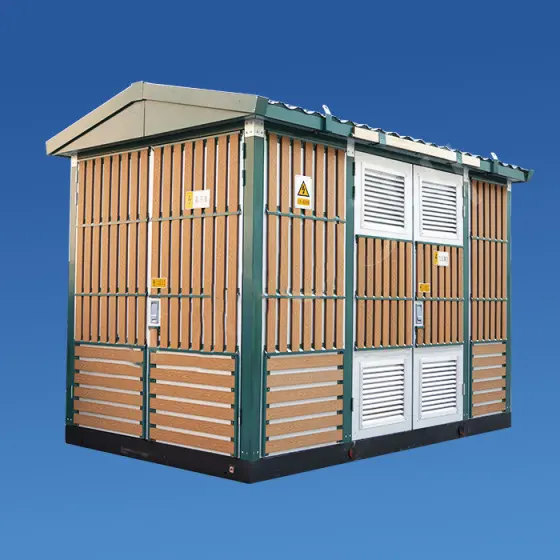
YBM Prefabricated Substation (12kV/24kV/40.5kV)
Raydafon Group's YBM Prefabricated Substation (12kV/24kV/40.5kV) delivers compact, reliable power distribution for industrial and commercial sites. Its modular, weatherproof design ensures rapid installation, superior safety, and low maintenance, making it the smart choice for modern energy infrastructure.