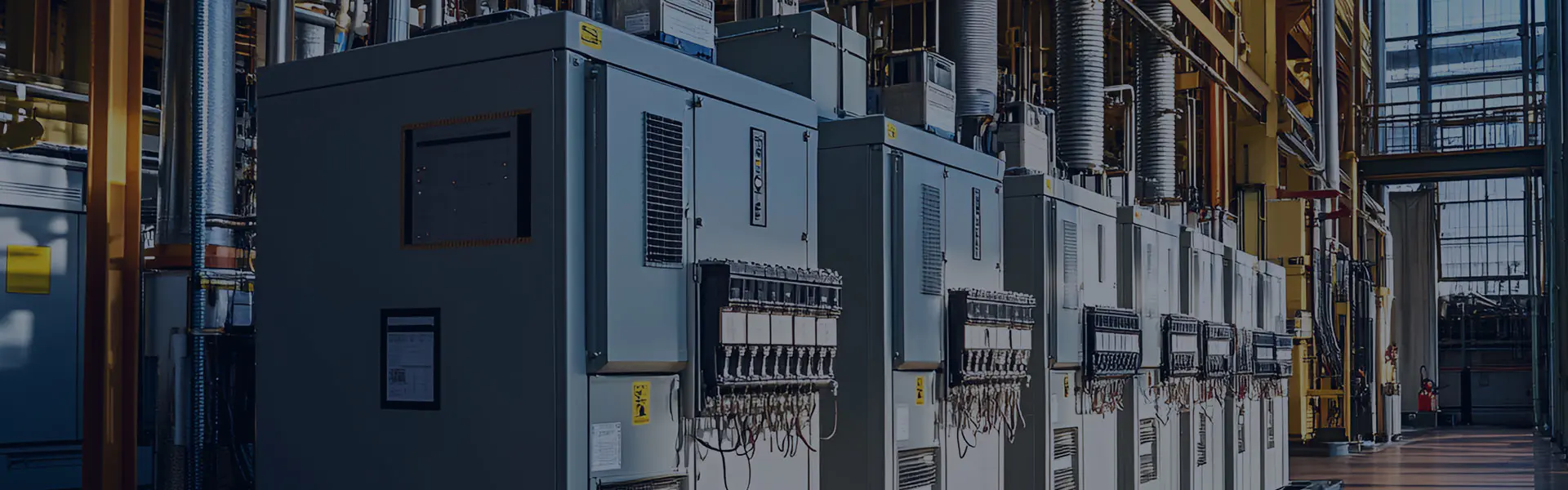
Smart Monitoring and Control Solutions from a Leading China Manufacturer for Industrial Automation and Process Control
Smart Monitoring & Control Solutions by Raydafon Group
Real-time operational visibility has moved from a competitive advantage to a baseline requirement across industrial, commercial, and utility environments. Smart Monitoring & Control combines distributed sensing, edge processing, secure communications, and automated actuation into a unified platform that enables teams to detect anomalies early, optimize energy consumption, and respond to field conditions without manual intervention. Raydafon Group designs and manufactures monitoring and control hardware and software for facilities that demand high availability, precise measurement, and interoperability with existing infrastructure.
Raydafon Group’s Smart Monitoring & Control portfolio is engineered for mission-critical environments where data accuracy and control reliability directly affect safety, uptime, and operating cost. The platform supports modular input/output expansion, multi-protocol connectivity, and local decision-making capabilities that continue operating even during network interruptions. This approach reduces the total cost of ownership while giving operators granular control over assets spread across a single building or multiple remote sites.
Understanding the Core of Smart Monitoring & Control
Smart Monitoring & Control systems provide a closed loop between sensing, analysis, and action. Environmental sensors, electrical meters, flow transmitters, and condition-monitoring devices collect data at high sampling rates. That data is processed locally by a controller capable of threshold comparison, scheduling, and interlocking logic. When a measurement exceeds a predefined setpoint or a device reports a fault, the controller can activate relays, adjust analog outputs, send notifications, or escalate the event to a supervisory control and data acquisition platform. Raydafon Group builds this entire chain into a single integrated architecture that minimizes integration risk and accelerates deployment.
The platform from Raydafon Group supports both greenfield installations and brownfield retrofits. Existing analog sensors, dry contacts, and legacy PLCs can be integrated through isolated inputs and standard industrial protocols. This flexibility makes Smart Monitoring & Control practical for upgrading aging infrastructure without replacing every field device.
Core Functional Modules
The Raydafon Group Smart Monitoring & Control system consists of the following functional modules:
- Data acquisition engine: High-resolution analog and digital input channels capture temperature, humidity, pressure, current, voltage, vibration, air quality, and custom transducer signals.
- Edge control processor: A real-time controller executes local logic, PID loops, time schedules, alarm deadbands, and interlock sequences without depending on cloud connectivity.
- Communication gateway: Multiple Ethernet, serial, and wireless interfaces convert field data into Modbus RTU/TCP, BACnet MSTP/IP, MQTT, OPC UA, and SNMP formats for upstream systems.
- Local visualization: An optional touchscreen interface displays real-time trends, alarm status, energy dashboards, and control setpoints at the equipment room or control panel.
- Remote management portal: A browser-based interface allows authorized users to configure devices, acknowledge alarms, view historical data, and push firmware updates from a central location.
- Alarm and event management: Multi-level alarm routing supports email, SMS, voice calls, and SNMP traps. Alarms can be delayed, deadbanded, and grouped to reduce nuisance notifications.
- Data logging and export: Onboard storage retains time-series data locally. Users can export CSV files or stream data to external databases via MQTT or OPC UA.
- Security enforcement: Encrypted communications, certificate management, role-based access control, and signed firmware updates protect the system from unauthorized access.
Hardware Architecture and Modular Design
Raydafon Group controllers use a modular architecture that separates the main processing unit from input/output expansion slices. This allows a small system to start with a compact DIN-rail controller and scale to hundreds of points by adding digital, analog, relay, and communication modules. Each expansion slice is hot-swappable and automatically recognized by the main processor, reducing downtime during configuration changes.
The main controller features a 32-bit ARM Cortex-M7 processor running at 480 MHz, with 8 MB of flash memory and 1 MB of SRAM. For larger logging requirements, an SD card slot supports up to 32 GB of removable storage. The unit is designed for continuous operation in harsh electrical environments, with galvanic isolation on all input and output channels and reverse polarity protection on the power supply.
Detailed Technical Specifications
The following table lists the primary controller specifications for the Raydafon Group RFC-3200 series used in Smart Monitoring & Control deployments.
| Parameter | Detail |
|---|---|
| Model series | Raydafon RFC-3200, RFC-3200-EX |
| Processor | 32-bit ARM Cortex-M7 @ 480 MHz |
| Memory | 8 MB flash, 1 MB SRAM, optional 32 GB SD card |
| Analog inputs | 8 differential, 16-bit resolution, 0–10 V, 4–20 mA, RTD, thermocouple |
| Digital inputs | 12 isolated, 5–36 V DC, dry contact compatible |
| Digital outputs | 8 relay outputs, 250 V AC / 5 A, plus 4 PWM/analog outputs |
| Communication ports | 2 × RS-485, 1 × RS-232, 2 × Ethernet 10/100 Mbps |
| Wireless options | Wi-Fi 802.11 b/g/n, 4G LTE CAT-1, LoRaWAN 868/915 MHz |
| Protocol support | Modbus RTU/TCP, BACnet MSTP/IP, MQTT, OPC UA, SNMP |
| Operating temperature | -25 °C to +70 °C |
| Storage temperature | -40 °C to +85 °C |
| Humidity | 5% to 95% RH non-condensing |
| Power supply | 9–36 V DC, reverse polarity protection, 2 kV isolation |
| Enclosure | IP30 DIN rail mount, optional IP65 wall mount |
| Certifications | CE, FCC, RoHS, UL listed optional |
Sensor Integration and Measurement Accuracy
The value of a Smart Monitoring & Control installation depends on the quality of sensor data. Raydafon Group supports a broad range of wired and wireless sensors with tight accuracy specifications. The table below summarizes typical sensor integration parameters for environmental, electrical, and mechanical monitoring.
| Sensor type | Range | Accuracy | Interface |
|---|---|---|---|
| Temperature | -40 to 125 °C | ±0.2 °C | 1-Wire, RTD, thermocouple |
| Humidity | 0–100% RH | ±2.0% RH | I2C, analog |
| Pressure | 0–10 bar / 0–40 bar | ±0.1% FS | 4–20 mA, I2C, RS-485 |
| Current | 0–100 A / 0–600 A | ±0.5% FS | CT, Rogowski coil |
| Voltage | 0–600 V AC/DC | ±0.5% FS | Direct or transformer |
| Power quality | THD, harmonics up to 31st | Class A per IEC 61000-4-30 | Modbus/TCP |
| Air quality | PM1.0, PM2.5, PM10, VOC, CO2 | ±5% FS | UART, RS-485 |
| Vibration | 0–25 mm/s RMS | ±5% FS | IEPE, 4–20 mA |
Communication and Cybersecurity Parameters
Secure connectivity is essential for any modern Smart Monitoring & Control implementation. Raydafon Group embeds multiple layers of defense to protect data in transit and at rest. The table below outlines the communication and cybersecurity specifications for the platform.
| Parameter | Detail |
|---|---|
| Ethernet | 10/100 Mbps, RJ45, static or DHCP |
| Serial | RS-485 half duplex, RS-232 full duplex |
| Wireless options | Wi-Fi 802.11 b/g/n, 4G LTE CAT-1, LoRaWAN 868/915 MHz |
| VPN | IPsec, OpenVPN, WireGuard |
| TLS | TLS 1.3 with certificate management |
| Authentication | Local, RADIUS, LDAP, Active Directory |
| Firewall | Stateful inspection, IP/MAC filtering |
| Firmware updates | Signed OTA and USB, rollback protection |
| Data logging | Local circular buffer up to 10 million records, CSV export |
Typical Application Scenarios
Smart Monitoring & Control technology from Raydafon Group is deployed across many sectors where reliability and precision are non-negotiable. The following use cases illustrate how the same core platform addresses different operational challenges.
- Data centers and server rooms: Continuous monitoring of temperature, humidity, water leaks, power distribution, and UPS status. The controller can trigger backup cooling, isolate faulty circuits, and send immediate alerts when conditions approach critical thresholds.
- Industrial manufacturing: Condition monitoring for motors, pumps, compressors, and conveyors. Vibration and current data are used to schedule predictive maintenance and avoid unplanned production stops.
- Commercial buildings: HVAC, lighting, and energy metering integrated into a single control layer. Time schedules and occupancy-based setpoints reduce energy waste while maintaining tenant comfort.
- Water and wastewater facilities: Pump control, tank level monitoring, flow measurement, and chemical dosing logic. The system supports fully autonomous control with redundant communication paths to the central SCADA.
- Renewable energy sites: Solar inverter monitoring, wind turbine performance tracking, battery state-of-charge monitoring, and grid export control.
- Cold chain and food storage: Multi-zone temperature monitoring with alarm deadbands, door open detection, and defrost control for walk-in freezers and refrigerated warehouses.
- Remote infrastructure: Telecom shelters, pipeline stations, and wellheads that operate unattended. The platform uses 4G or LoRaWAN to report status and accept commands from a central operations center.
Deployment and Integration Considerations
When planning a Smart Monitoring & Control installation, system integrators and facility engineers should evaluate several factors to ensure reliable long-term operation. Raydafon Group provides configuration guides and factory support for each phase of deployment.
First, input and output point counts should be confirmed with at least 15% spare capacity for future expansion. Second, the communication backbone must be selected based on site conditions. For buildings with existing Ethernet infrastructure, a wired LAN connection provides the highest throughput and deterministic behavior. For remote sites without wired connectivity, cellular or LoRaWAN options are recommended. Third, power supply sizing should account for all sensors, relays, and communication modules, including inrush current and brownout conditions. Fourth, cybersecurity policies should be implemented before the system is connected to a corporate network. This includes disabling unused ports, installing certificates, and assigning role-based accounts.
Raydafon Group controllers support staged commissioning. Technicians can bench-test all logic and alarm rules before field installation, then load the configuration via USB or secure file transfer. After installation, the local touchscreen or web interface provides live status for each input, output, and communication link, reducing startup time and simplifying handover to the operations team.
Maintenance, Diagnostics, and Remote Support
Ongoing maintenance for Smart Monitoring & Control systems includes periodic verification of sensor calibration, firmware updates, and review of alarm routing rules. Raydafon Group devices maintain an internal event log that records power cycles, configuration changes, communication failures, and alarm acknowledgments. This log helps maintenance teams identify root causes without relying on memory or paper records.
Remote diagnostics are built into the platform. Authorized users can view real-time I/O states, read raw sensor values, and force outputs for testing purposes after entering a secured maintenance mode. Network diagnostics include ping, traceroute, and Modbus polling statistics. When a firmware update is released, the controller can download it over an encrypted connection, verify the digital signature, and install it with an automatic rollback if the update fails. This approach keeps distributed assets current without dispatching a technician to every site.
Raydafon Group also offers extended service plans that include proactive monitoring of controller health, quarterly configuration reviews, and priority access to firmware releases. These services are intended for operators who manage large portfolios of equipment and need a consistent maintenance standard across all locations.
Frequently Asked Questions
What is Smart Monitoring & Control and how does it work?
Smart Monitoring & Control is an integrated system that collects data from sensors and field devices, processes that data using local or cloud-based logic, and automatically sends commands to actuators, relays, or connected equipment. The process begins with analog and digital inputs that measure physical parameters such as temperature, pressure, current, and vibration. A controller compares the measured values against user-defined setpoints and time schedules. When a condition requires action, the controller activates digital or analog outputs, sends a message to a building management system, or notifies personnel. Raydafon Group designs these systems to work reliably even when the network connection is interrupted, because the core control logic runs locally on the edge controller rather than depending entirely on a remote server.
Which industries benefit most from Raydafon Group Smart Monitoring & Control solutions?
Industries with distributed assets, strict environmental tolerances, or high energy costs gain the greatest benefit. Data centers use the platform to monitor thermal conditions and power quality. Manufacturers apply it for vibration and current monitoring on rotating equipment. Commercial building operators use it to coordinate HVAC, lighting, and energy meters. Water utilities rely on it for autonomous pump control and tank level management. Renewable energy operators track inverter performance and battery storage systems. Food storage and logistics companies use it to maintain cold chain integrity. The common thread in all these industries is the need for reliable remote oversight and automated response, which Raydafon Group delivers through standardized hardware and open communication protocols.
Can the system operate without cloud connectivity?
Yes. Raydafon Group controllers are designed for edge autonomy. All configuration, alarm rules, time schedules, and data logging functions reside on the local controller. If the cloud connection or central SCADA link is lost, the controller continues to monitor inputs, evaluate logic, and drive outputs based on the last valid configuration. When connectivity is restored, the controller automatically synchronizes buffered historical data and alarm events with the remote system. This capability is essential for remote sites such as pump stations, telecom shelters, and unmanned substations where network availability cannot be guaranteed.
What sensor types are supported by the platform?
The platform supports a wide range of industrial and environmental sensors. Analog inputs accept 0–10 V, 4–20 mA, RTD, and thermocouple signals. Digital inputs accept dry contacts, pulse outputs from utility meters, and 5–36 V DC signals. Serial interfaces support Modbus RTU sensors, including power meters, flow transmitters, and air quality monitors. The system can also interface with wireless sensors using LoRaWAN or Wi-Fi. Common sensor types include temperature probes, humidity sensors, pressure transmitters, current transformers, voltage transducers, vibration sensors, water leak detectors, and CO2 or particulate sensors. Raydafon Group provides preconfigured sensor templates to reduce commissioning time, and custom scaling is available for non-standard transducers.
How does Raydafon Group ensure data security?
Data security is implemented at multiple layers. All Ethernet and wireless communications can be encrypted using TLS 1.3 or VPN tunnels such as IPsec, OpenVPN, or WireGuard. The controller includes a stateful firewall with IP and MAC filtering, which limits access to authorized devices. User authentication supports local accounts as well as integration with RADIUS, LDAP, and Active Directory. Firmware updates are digitally signed and verified before installation, preventing unauthorized code from being loaded. Configuration changes are logged with user identification and timestamps. Unused communication ports and services can be disabled to reduce the attack surface. Raydafon Group follows secure development practices and releases security patches in coordination with industry vulnerability disclosure standards.
Is the platform scalable for multiple sites?
Yes. Raydafon Group Smart Monitoring & Control systems are designed for multi-site scalability. Each controller operates independently at its local site while reporting to a central management portal or SCADA system using MQTT, OPC UA, Modbus TCP, or SNMP. The central system can manage hundreds or thousands of controllers across different locations. Configuration templates can be created once and deployed to multiple sites, with only site-specific parameters adjusted during commissioning. User access can be segmented by site, region, or role, so a facility manager can view only their assigned equipment while a central operations team maintains full visibility. This scalability makes the platform suitable for both single-building installations and large distributed portfolios.
What installation and maintenance support does Raydafon Group provide?
Raydafon Group offers comprehensive support throughout the equipment lifecycle. Before installation, application engineers review I/O point lists, communication architecture, and control logic to ensure the selected hardware matches the project requirements. During installation, the company provides wiring diagrams, Modbus register maps, and remote commissioning assistance. After startup, the support team can perform remote health checks and assist with configuration changes. Maintenance support includes firmware updates, calibration guidance, and access to spare parts. Extended service plans can include proactive monitoring of controller health, quarterly configuration reviews, and priority response for critical alarms. Documentation is available in English and includes user manuals, application notes, and protocol implementation guides.
How can existing legacy equipment be integrated?
Legacy equipment can be integrated using the controller’s isolated digital inputs, analog inputs, and serial ports. Dry contact outputs from existing relays, thermostats, or alarm panels can be wired directly to digital inputs. Older sensors with 4–20 mA or 0–10 V outputs connect to analog inputs with software-configurable scaling. Legacy devices that communicate via Modbus RTU over RS-485 can be polled directly by the Raydafon Group controller, which then converts the data to modern protocols such as MQTT or OPC UA for the central system. For equipment without any signal output, external current transformers or clamp sensors can be added without interrupting the existing circuit. This approach allows facilities to modernize their monitoring and control capabilities without replacing functioning machinery, reducing capital expense and operational risk.
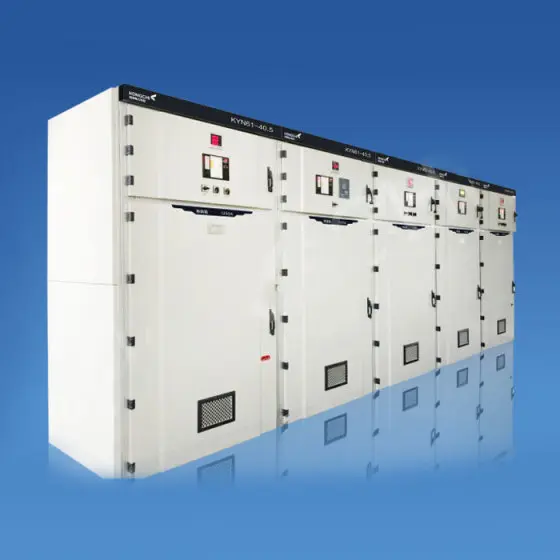
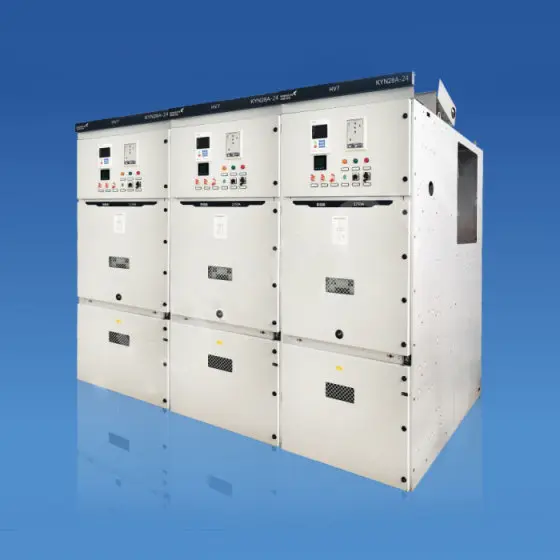
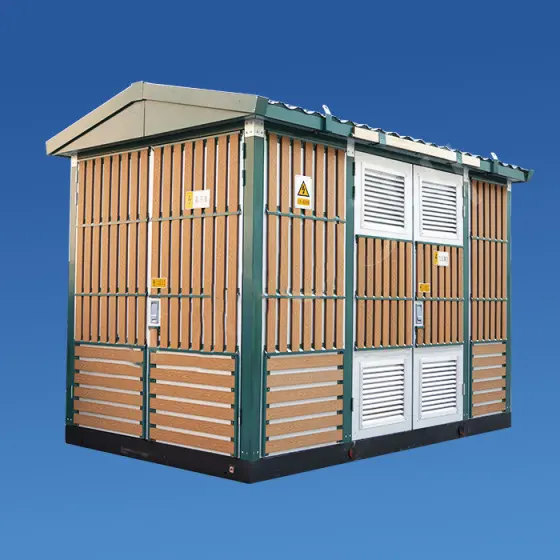
- View as
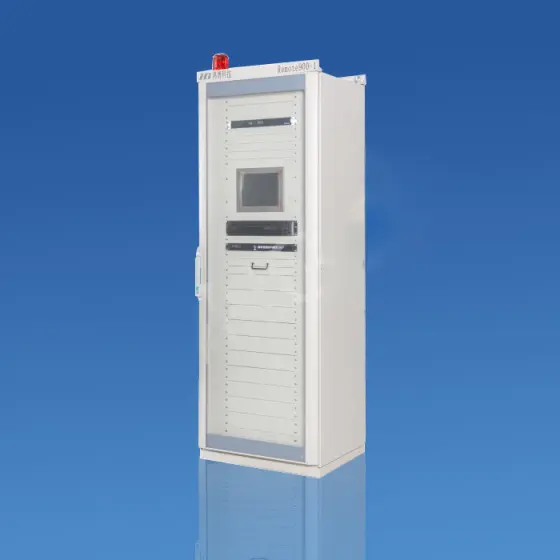
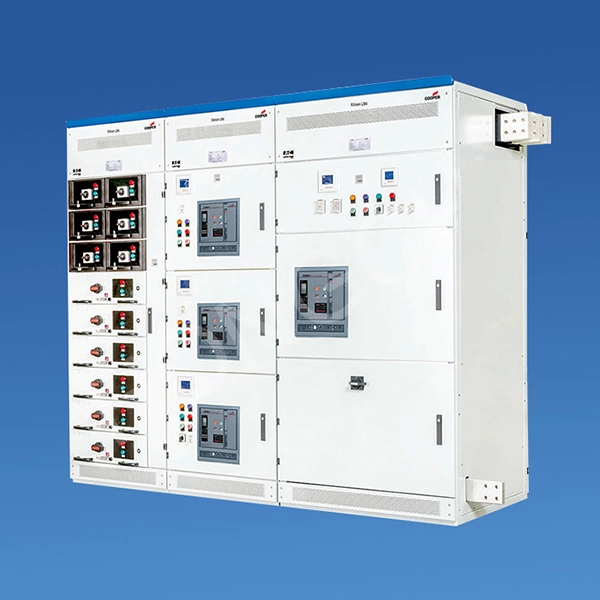
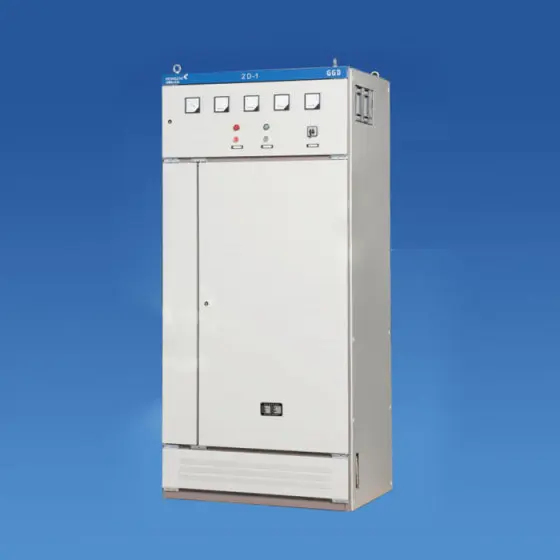
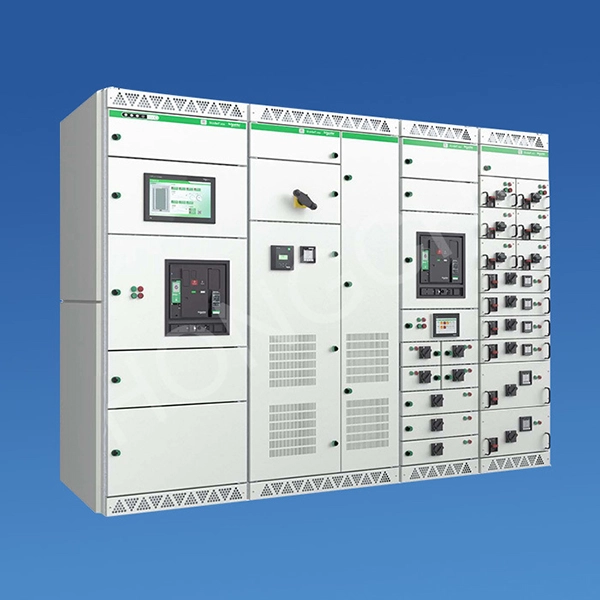
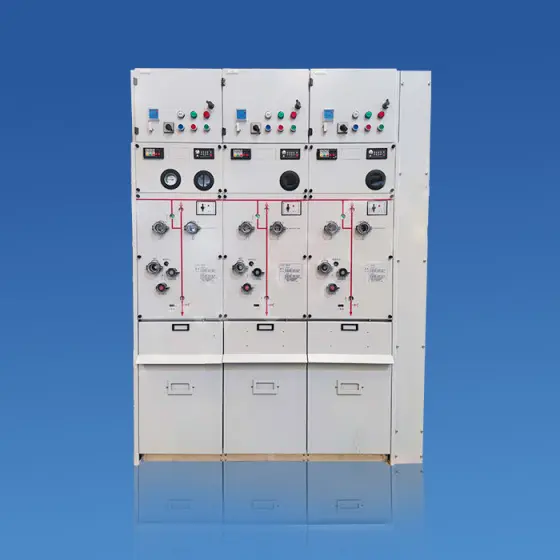
Remote-9001 Remote Monitoring Unit for Switchgear
Raydafon Group's Remote-9001 Remote Monitoring Unit for Switchgear offers smart switchgear protection.