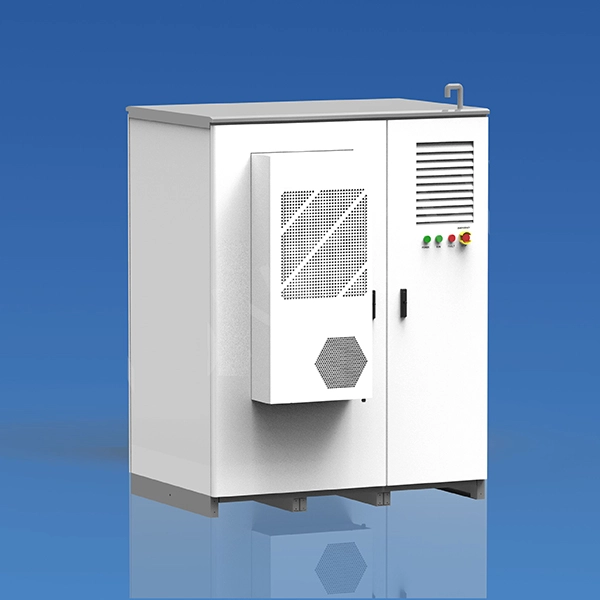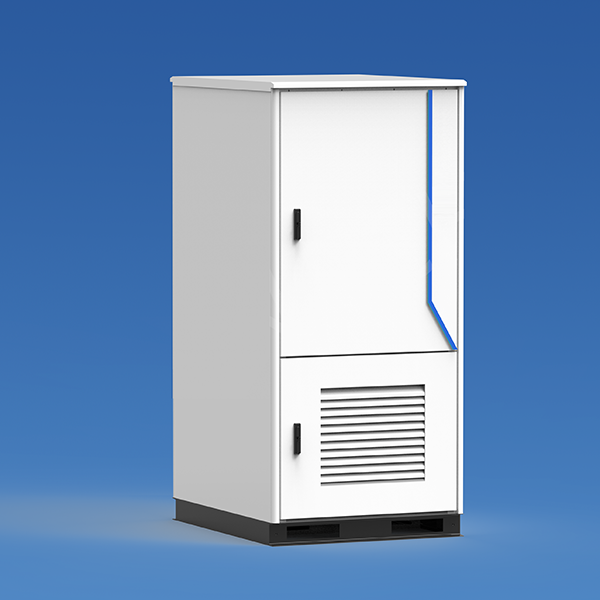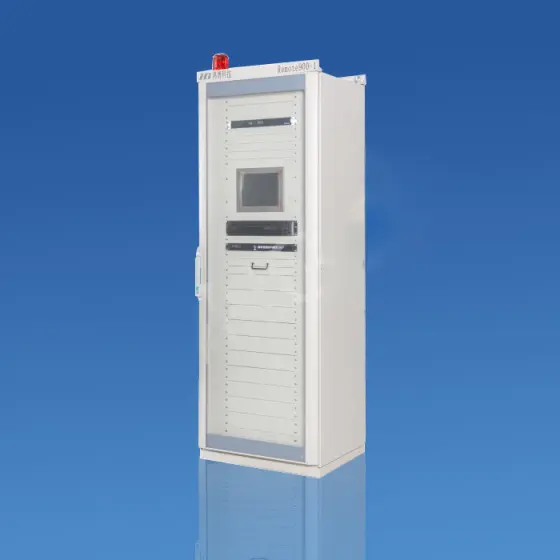

China Factory Direct Low Voltage Switchgear for Reliable Power Distribution Solutions
Low Voltage Switchgear is a centralized assembly of circuit breakers, busbars, protection relays, metering instruments, and control devices used to distribute electrical power at voltages up to 1,000V AC or 1,500V DC. Raydafon Group engineers this equipment for industrial plants, commercial buildings, data centers, water treatment facilities, and large infrastructure projects where reliable power distribution and personnel safety are critical. The design of Raydafon low voltage switchgear balances operational flexibility with strict compliance to international standards, allowing consultants and contractors to specify the right configuration for any low voltage network.
Understanding the Role of Low Voltage Switchgear
Low voltage switchgear serves as the backbone of secondary power distribution. It receives electrical energy from transformers or generators and routes it through multiple outgoing feeders to motors, lighting panels, HVAC systems, and production lines. The assembly must interrupt fault currents, isolate circuits for maintenance, and provide continuous monitoring without interrupting supply to critical loads. Raydafon Group builds each panel with selective coordination in mind, so upstream and downstream protective devices operate in the correct sequence during abnormal conditions.
The main functional units inside low voltage switchgear include main incoming circuit breakers, busbar systems, outgoing feeder modules, control power transformers, and intelligent metering compartments. Depending on project specifications, Raydafon can supply fixed-type, withdrawable, or hybrid configurations. Fixed-type designs offer cost efficiency and simple operation, while withdrawable modules reduce downtime by allowing breaker replacement or testing without de-energizing the entire switchgear line-up.
Core Technical Parameters of Raydafon Low Voltage Switchgear
The following parameters define the performance envelope of Raydafon low voltage switchgear. These values are verified through type tests and routine tests according to IEC 61439 and related standards.
- Rated operational voltage: 400V, 690V AC; 750V, 1000V DC depending on configuration
- Rated insulation voltage: 1000V AC; 1500V DC
- Rated frequency: 50Hz or 60Hz
- Main busbar rated current: 630A to 6300A
- Rated short-time withstand current: up to 100kA for 1 second
- Rated peak withstand current: up to 220kA
- Degree of protection: IP30, IP31, IP40, IP42, IP54
- Internal separation form: Form 1, Form 2, Form 3, Form 4
- Busbar material: high-conductivity copper or tin-plated aluminum
- Control voltage: 110V DC, 220V DC, 230V AC, 24V DC for smart monitoring
- Operating ambient temperature: -5°C to +40°C standard; extended ranges available
- Maximum altitude: 2000m without derating
- Color and finish: RAL 7035 powder coating standard, custom RAL colors available
Model Comparison Table
| Parameter | RDF-GCK | RDF-MNS | RDF-GGD | RDF-XL-21 |
|---|---|---|---|---|
| Configuration | Withdrawable | Withdrawable/Modular | Fixed | Fixed/Motor Control |
| Rated operational voltage | 400V/690V | 400V/690V | 400V/690V | 400V |
| Main busbar current | 1000A to 5000A | 1000A to 6300A | 630A to 4000A | 630A to 3150A |
| Short-time withstand current | 50kA/65kA/80kA | 50kA to 100kA | 30kA/50kA/65kA | 30kA/50kA |
| Peak withstand current | 105kA/143kA/176kA | 105kA to 220kA | 63kA/105kA/143kA | 63kA/105kA |
| Internal separation | Form 3b/4b | Form 3b/4b | Form 1/2b | Form 1/2b |
| Protection degree | IP30 to IP54 | IP30 to IP54 | IP30 to IP42 | IP30 to IP42 |
| Typical application | Power plants, heavy industry | Data centers, semiconductor labs | Commercial distribution | Motor control centers |
Detailed Electrical and Mechanical Data
| Item | Standard Value | Optional Value |
|---|---|---|
| Main busbar cross-section | 25x3 mm to 120x10 mm per phase | Multiple conductors per phase |
| Neutral busbar rating | 50% to 100% of phase busbar | 200% for harmonic-heavy loads |
| Protective earth busbar | Minimum 25x3 mm copper | Calculated per fault current |
| Enclosure thickness | 1.5mm to 2.0mm cold-rolled steel | 2.5mm for seismic zones |
| Surface treatment | Degreasing, phosphating, powder coating | Epoxy polyester anti-corrosion |
| Cable entry | Bottom or top gland plate | Removable cable entry plate |
| Internal arc classification | Not standard for all models | IAC A-FLR up to 100kA |
| Seismic withstand | Standard floor mounting | UBC/IEC seismic qualification |
Construction and Component Overview
Raydafon Group uses a modular frame construction for low voltage switchgear. The main enclosure is made of folded steel profiles with removable panels, allowing front or rear access depending on installation layout. Internal partitions are built from sheet steel or insulation boards to create busbar compartments, breaker compartments, and cable chambers. This separation prevents accidental contact with live parts and limits the spread of internal arc faults.
Key components installed in Raydafon low voltage switchgear include:
- Air circuit breakers: ACB units from 630A to 6300A, with electronic trip units for overload, short-circuit, and earth-fault protection
- Molded case circuit breakers: MCCB feeders from 16A to 1600A for outgoing distribution
- Miniature circuit breakers: MCB modules for control circuits and small loads
- Residual current devices: RCD modules for earth leakage protection where required by local codes
- Busbar system: Tin-plated copper or aluminum bars with heat-shrink insulation and epoxy supports
- Power meters: Multifunction digital meters for voltage, current, frequency, PF, and energy data
- Protection relays: Overcurrent, undervoltage, phase sequence, and synchronizing relays
- Programmable logic controllers: PLC modules for automatic transfer switching and load shedding
- Communication gateways: Modbus RTU, Modbus TCP, IEC 61850, Profibus DP
- Cable compartments: Dedicated vertical and horizontal cable ways with cable supports
The withdrawable modules in RDF-GCK and RDF-MNS models have three positions: connected, test, and isolated. A mechanical interlock prevents the module from being withdrawn while the breaker is closed. This design allows maintenance teams to test protection circuits without removing the module from the switchgear line-up.
Safety and Compliance Standards
Raydafon low voltage switchgear is designed and tested according to the latest edition of these standards:
- IEC 61439-1: Low-voltage switchgear and controlgear assemblies – General rules
- IEC 61439-2: Power switchgear and controlgear assemblies
- IEC 60947-1 and IEC 60947-2: Low-voltage switchgear and controlgear – circuit breakers
- GB/T 7251.1 and GB/T 7251.12: Chinese national standards equivalent to IEC 61439
- IEC 61641: Internal arc fault testing for enclosed low-voltage switchgear
- IEC 60529: Degrees of protection provided by enclosures
- IEC 60068: Environmental testing for temperature, humidity, and vibration
Type tests performed on Raydafon low voltage switchgear include temperature rise verification, short-circuit withstand strength, dielectric properties, creepage and clearance distances, mechanical operation, and protection circuit continuity. Routine tests are conducted on every panel before shipment, covering wiring continuity, insulation resistance, power frequency withstand voltage, and functional operation of all switching devices.
Typical Applications of Raydafon Low Voltage Switchgear
- Industrial manufacturing plants: Motor control centers, production line feeders, and process control power distribution
- Data centers: Dual-bus power distribution for UPS input and output, static transfer switch feeds, and cooling systems
- Commercial high-rise buildings: Tenant sub-distribution, HVAC loads, elevator power, and fire pump supplies
- Water and wastewater treatment: Pump starters, blower control panels, and backup generator synchronization
- Rail and metro infrastructure: Signaling power, station auxiliary loads, and tunnel ventilation feeders
- Oil and gas facilities: Hazardous area feeder panels with interlocking and remote control
- Mining operations: Ruggedized enclosures for dust and vibration, with high short-circuit ratings
- Renewable energy plants: Solar inverter AC distribution, battery energy storage system coupling, and auxiliary power distribution
Frequently Asked Questions About Low Voltage Switchgear
Q: What is the difference between Form 3b and Form 4b internal separation in low voltage switchgear?
A: Form 3b separation uses physical partitions to separate busbars from all functional units, with terminals for external conductors separated from busbars but not necessarily from other terminals. Form 4b provides a higher level of segregation by placing busbars, functional units, and terminals for external conductors in separate compartments with dedicated barriers. Raydafon Group recommends Form 3b for most industrial applications and Form 4b for data centers, hospitals, or installations where maintenance must be performed on one outgoing circuit without de-energizing adjacent feeders.
Q: How do I select the correct short-circuit withstand rating for Raydafon low voltage switchgear?
A: The short-circuit withstand rating must exceed the maximum prospective fault current at the point of installation. Calculate this value from the upstream transformer kVA rating, transformer impedance, and cable impedance. For example, a 2000kVA transformer with 6% impedance produces a prospective fault current near 48kA at 400V. In this case, select a switchgear rating of 50kA or 65kA for safety margin. Raydafon technical engineers can perform short-circuit calculations and recommend the correct busbar bracing and breaker interrupting capacity for each project.
Q: Can Raydafon low voltage switchgear operate at 690V AC instead of 400V AC?
A: Yes. RDF-GCK and RDF-MNS models are available with 690V AC rated operational voltage. The insulation level, creepage distances, and contactor coil ratings are adjusted for 690V systems. This is common in mining, heavy industry, and wind turbine auxiliary circuits. When specifying 690V, it is important to verify that all control devices, meters, and surge arresters are rated for the higher voltage. Raydafon Group pre-tests all 690V configurations with dielectric tests and temperature rise verification.
Q: What degree of protection should I choose for low voltage switchgear installed in a dusty or wet environment?
A: For indoor installations in clean electrical rooms, IP30 or IP31 is generally sufficient. In dusty production areas or locations subject to water spray, specify IP42 or IP54. IP54 enclosures include gasketed doors and cable glands to prevent dust ingress and splash water. Raydafon Group also offers vented enclosures with IP42 filters for heat dissipation. Keep in mind that higher protection degrees may require derating of busbar current or forced ventilation to maintain temperature rise limits.
Q: How does Raydafon Group handle customized busbar configurations and non-standard feeder arrangements?
A: Raydafon engineers work from single-line diagrams, cable schedules, and load lists to develop a custom panel layout. Non-standard options include double-busbar systems, tie-breaker configurations, generator synchronizing panels, automatic transfer switches, harmonic filtering compartments, and communication-enabled metering. Before manufacturing, the engineering team submits general arrangement drawings, busbar sizing calculations, and heat dissipation reports for customer approval. This ensures the final switchgear matches site constraints and operational needs.
Q: What maintenance is required for Raydafon low voltage switchgear?
A: Recommended maintenance includes annual visual inspection of busbar joints, cable terminations, and breaker contacts. Use an infrared thermal imaging camera to detect hot spots while the switchgear is energized under load. Clean internal surfaces with dry compressed air and verify that ventilation openings are not blocked. Exercise circuit breakers every six to twelve months to ensure mechanical operation. Re-torque busbar and cable connection bolts according to the maintenance schedule, typically at 12 months after initial energization and every two to three years thereafter. Raydafon provides commissioning, training, and spare parts support for all delivered switchgear.
Q: Can Raydafon low voltage switchgear be integrated with building management systems or SCADA platforms?
A: Yes. Communication interfaces can be supplied for Modbus RTU, Modbus TCP, IEC 61850, Profibus DP, and BACnet. Digital power meters and protection relays transmit voltage, current, power, energy, trip events, and breaker status to the supervisory system. The switchgear can include local HMI touchscreens for operator control and remote I/O modules for automatic load transfer. Raydafon Group can provide point lists and communication registers to system integrators during the design stage.
Installation and Commissioning Considerations
Proper installation directly affects the performance and safety of low voltage switchgear. Raydafon Group provides detailed installation manuals with each shipment. Key considerations include floor flatness, cable entry alignment, ventilation clearance, and busbar connection torque. The switchgear should be installed on a level concrete pad or steel channel base. Maintain minimum clearance distances in front of and behind the panels as specified in the general arrangement drawing. For rear access panels, leave at least 800mm of service space.
Before energization, commissioning engineers must verify insulation resistance between phases and between phase and earth, check phase sequence, test all interlocks, and calibrate protection relay settings. Raydafon commissioning services include cold commissioning checks, functional tests, and load bank verification where required.
Customization and Ordering Data for Raydafon Low Voltage Switchgear
When requesting a quotation, the following information helps Raydafon Group prepare an accurate technical and commercial offer:
- Single-line diagram with incoming and outgoing feeder ratings
- System voltage, frequency, and earthing arrangement
- Short-circuit current at the switchgear busbar
- Required internal separation form
- Degree of protection and ingress conditions
- Ambient temperature and altitude of the installation site
- Type of load for each outgoing feeder, including starting method for motors
- Communication protocol and metering requirements
- Color, dimensions, and cable entry preferences
- Special certifications or witness tests required
Raydafon Group manufacturers all low voltage switchgear under factory quality control procedures, with final inspection records, routine test certificates, and material traceability documents included in the delivery package. Each panel carries a durable nameplate indicating model, rated parameters, serial number, and date of manufacture.
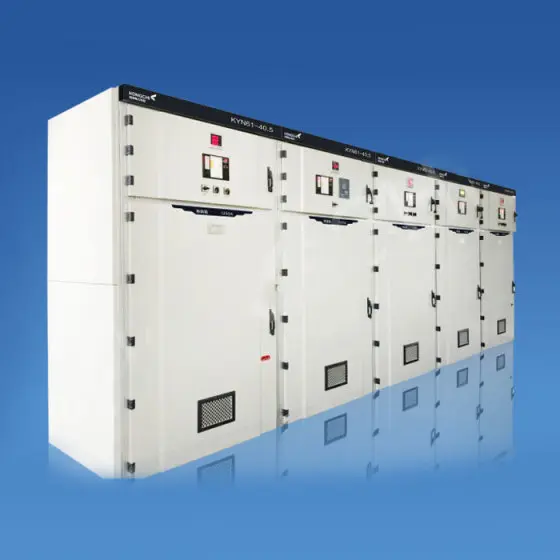
- View as
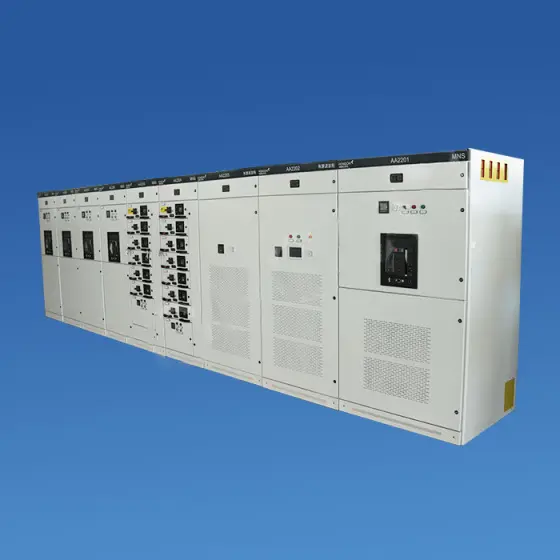
MNS Low Voltage Draw-Out Switchgear (up to 6300A)
Raydafon Group MNS Low Voltage Draw-Out Switchgear (up to 6300A) delivers reliable low-voltage control.
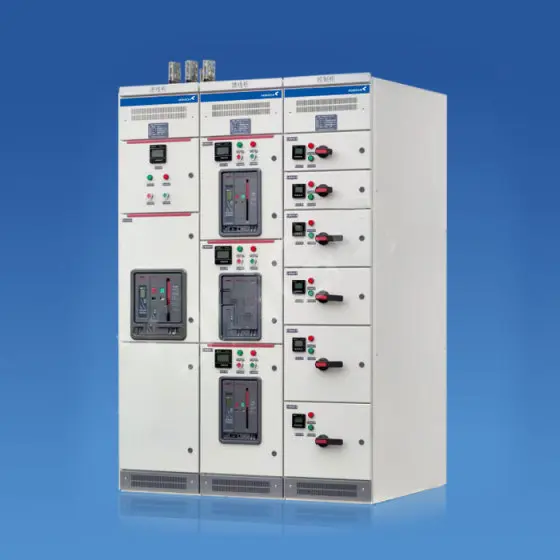
GCS Low Voltage Draw-Out Switchgear (up to 4000A)
Raydafon Group's GCS Low Voltage Draw-Out Switchgear (up to 4000A) delivers safe power distribution.
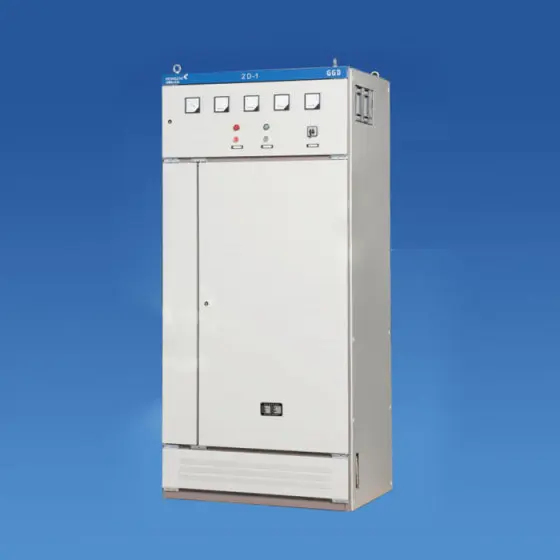
GGD Low Voltage Fixed Switchgear
Raydafon Group's GGD Low Voltage Fixed Switchgear delivers reliable power distribution with robust construction and easy maintenance, ensuring safe operation for industrial and commercial facilities.
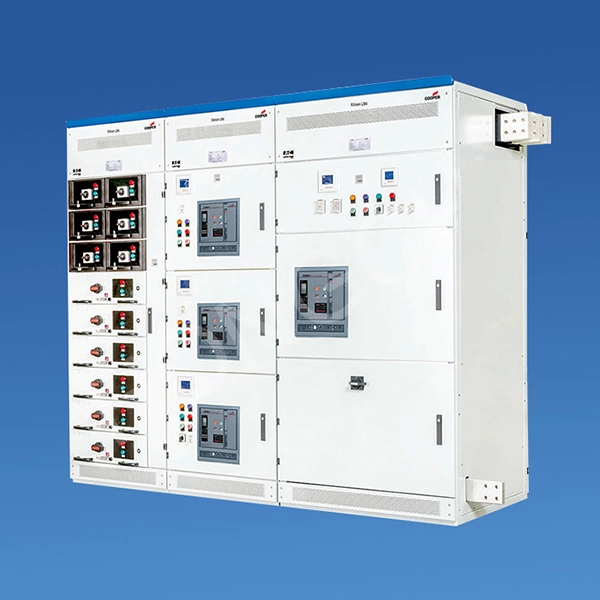
Cooper Edison LSN Low Voltage Switchgear (up to 6300A)
Raydafon Group's Cooper Edison LSN Low Voltage Switchgear (6300A) for reliable industrial power.
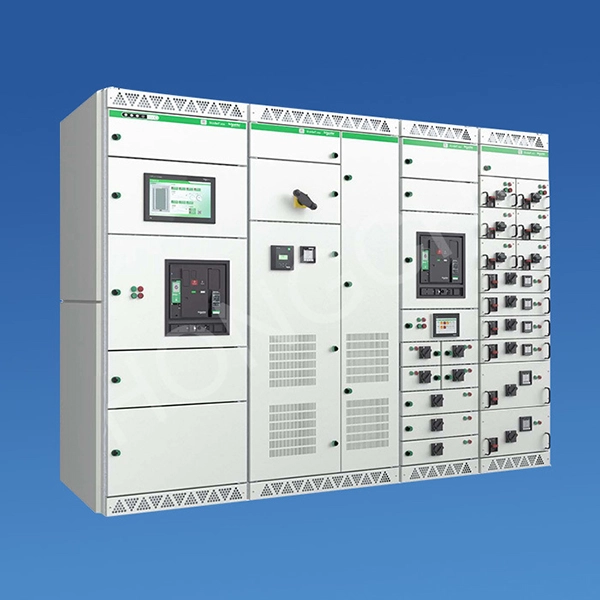
Schneider BlokSet 5000 Low Voltage Switchgear (up to 6300A)
Secure your industrial power with Raydafon Group's Schneider BlokSet 5000 Low Voltage Switchgear (up to 6300A): compact, reliable, high-performance.