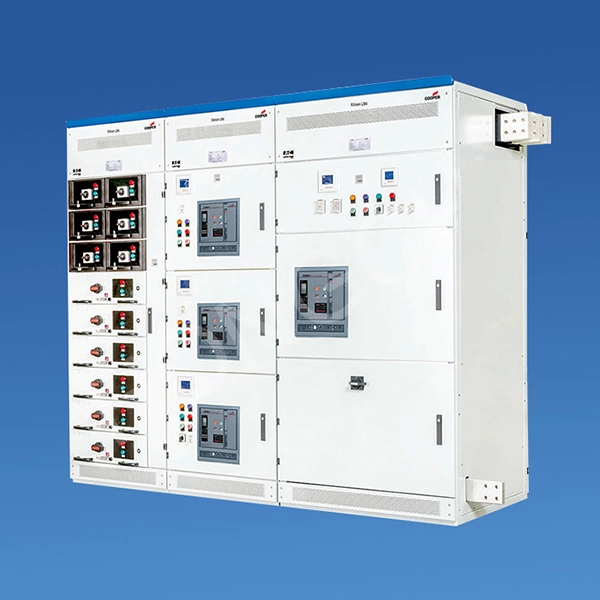
Liquid-Cooling ESS Cabinets from Top Manufacturers in China for Reliable Grid-Scale Energy Storage
As energy storage deployments accelerate across utility-scale, commercial, and industrial segments, thermal management has become a decisive factor for system longevity, safety, and round-trip efficiency. Liquid-Cooling ESS Cabinets from Raydafon Group address these challenges with precision-engineered liquid thermal management, modular battery integration, and a rugged outdoor enclosure. This page provides a detailed technical reference for project developers, EPC contractors, and asset owners who need to evaluate liquid-cooled energy storage systems for grid support, peak shaving, renewable firming, and backup power applications.
Understanding Liquid-Cooling ESS Cabinets
Liquid-cooling ESS cabinets use a closed-loop coolant circuit to remove heat directly from battery cells, modules, or cold plates. Unlike conventional forced-air systems, liquid cooling achieves significantly higher heat transfer coefficients, which means tighter temperature control across the entire battery pack. The thermal management system typically consists of a pump, integrated chiller or heat exchanger, coolant distribution lines, temperature sensors, and a supervisory controller. Raydafon Group designs these cabinets so that the cooling loop, battery management system, power conversion interface, and fire suppression work together as one integrated unit.
The primary reason for adopting liquid cooling in energy storage is the preservation of battery health. Lithium iron phosphate cells, which dominate grid-scale storage, degrade faster when exposed to uneven temperatures or sustained high temperatures. A liquid-cooled design keeps the maximum cell-to-cell temperature difference within a narrow window, often below 3 degrees Celsius. This allows the battery pack to be charged and discharged at higher sustained rates without accelerating capacity fade. It also supports higher pack density because less space is required for airflow channels.
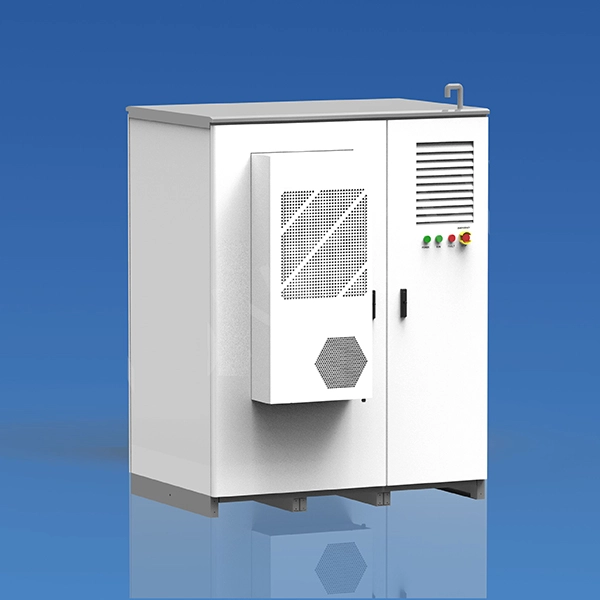
Raydafon Group builds Liquid-Cooling ESS Cabinets with a modular architecture. Each cabinet contains several battery clusters, a liquid cooling distribution unit, a dedicated battery management system, and optional DC/AC conversion components. The cabinet enclosure is engineered for outdoor installation with an IP55 or higher rating, anti-corrosion coating, and integrated thermal insulation. This makes the system suitable for harsh environments ranging from coastal salt spray to high-desert temperature swings.
Key Advantages of Liquid-Cooling ESS Cabinets
- Superior temperature uniformity: Liquid coolant extracts heat directly from cell surfaces or cooling plates, keeping cell-to-cell temperature variation below 3 degrees Celsius. This uniformity reduces the risk of localized hot spots and extends the useful life of the battery modules.
- Higher energy density: Because liquid cooling does not require large air ducts or generous spacing between modules, the cabinet can accommodate more battery capacity in the same footprint. This reduces land use and installation cost per kilowatt-hour.
- Lower auxiliary energy consumption: The cooling circuit is highly effective at moving heat, so the chiller and pump operate at lower average power than the fans in an air-cooled system of comparable capacity. The result is improved round-trip efficiency and lower parasitic losses.
- Reduced acoustic noise: Liquid-cooled cabinets produce significantly less noise than forced-air systems with multiple high-speed fans. This is particularly valuable near residential areas, office parks, and noise-sensitive infrastructure.
- Wider operating temperature range: The integrated coolant loop can include heating and cooling modes. Raydafon Group cabinets operate reliably from -30 degrees Celsius to +55 degrees Celsius, with automatic glycol mixture adjustment for extreme cold.
- Longer cycle life and warranty confidence: Precise thermal management slows the chemical degradation of LFP cells. Under normal operating conditions, Raydafon Group Liquid-Cooling ESS Cabinets deliver more than 6,000 cycles at 80% depth of discharge, supporting a 10-year service life or longer.
- Faster system response: Stable cell temperatures allow battery management algorithms to command higher charge and discharge power without derating. This is critical for frequency regulation and other fast-response grid services.
- Simplified maintenance: The sealed liquid cooling loop requires less frequent cleaning than air filters. Modular battery clusters can be exchanged without draining the entire cooling circuit when Raydafon Group’s quick-connect fittings are specified.
Technical Specifications of Raydafon Group Liquid-Cooling ESS Cabinets
The tables below summarize the primary electrical, mechanical, thermal, and environmental parameters for Raydafon Group’s standard outdoor liquid-cooling ESS cabinet platform. Custom configurations are available for specific project voltages, power ratings, and enclosure requirements.
Main Electrical and Battery Parameters
| Parameter | Value |
|---|---|
| Battery chemistry | Lithium iron phosphate (LFP) |
| Nominal system capacity | 215 kWh (standard) / 258 kWh (high-density option) |
| Nominal voltage | 768 V DC |
| Operating voltage range | 672 V DC to 864 V DC |
| Maximum continuous charge power | 0.5C / 0.5C (standard); 1C available with enhanced cooling |
| Maximum continuous discharge power | 0.5C / 0.5C (standard); 1C available with enhanced cooling |
| Round-trip efficiency | Up to 95% at 0.5C, including cooling system losses |
| Battery configuration | 1P240S per cluster, multiple clusters in parallel |
| Cell type | 3.2 V prismatic LFP cells, A-grade automotive quality |
| Cycle life | 6,000+ cycles at 0.5C, 80% DOD, 25 degrees Celsius |
| Design life | 15 years under typical grid-connected operation |
Cooling and Environmental Parameters
| Parameter | Value |
|---|---|
| Cooling method | Active liquid cooling with integrated chiller and coolant distribution |
| Coolant type | Ethylene glycol-water mixture, pre-mixed and factory filled |
| Cell temperature uniformity | ≤3 degrees Celsius between any two cells |
| Operating temperature range | -30 degrees Celsius to +55 degrees Celsius |
| Storage temperature range | -40 degrees Celsius to +60 degrees Celsius |
| Relative humidity | 5% to 95% non-condensing |
| Maximum altitude | 2,000 meters without derating; higher altitudes available on request |
| Noise level | ≤70 dB(A) at 1 meter |
| Ingress protection | IP55 (outdoor); IP56 optional |
| Corrosion protection | C4 or C5 anti-corrosion coating based on project location |
Mechanical and System Integration Parameters
| Parameter | Value |
|---|---|
| Cabinet dimensions (W x D x H) | 1,400 mm x 1,400 mm x 2,300 mm (standard) |
| Cabinet weight | 2,800 kg for 215 kWh model |
| Enclosure material | Galvanized steel with powder-coated finish and thermal insulation |
| Fire suppression | Dedicated aerosol fire suppression with multi-level detection |
| Battery management system | Raydafon Group BMS with cell voltage, temperature, and current monitoring |
| Communication protocols | Modbus TCP/RTU, CAN, optional IEC 61850 |
| Energy management interface | Open protocol for SCADA, EMS, and power plant controller integration |
| Grid connection | DC cabinet with optional integrated PCS; AC output on request |
| Certifications | IEC 62619, UL 9540A, UN 38.3, CE, GB/T 36276 |
| Warranty | 10-year performance warranty with optional extended coverage |
Series Line-Up
Raydafon Group offers multiple standard sizes to match the needs of different project scales. The modular design allows up to 20 cabinets to be connected in parallel to form larger energy storage blocks.
| Model | DC Capacity | Dimensions (W x D x H) | Weight | Cooling | IP Rating |
|---|---|---|---|---|---|
| RFL-ESS-172LC | 172 kWh | 1,200 mm x 1,300 mm x 2,200 mm | 2,350 kg | Liquid | IP55 |
| RFL-ESS-215LC | 215 kWh | 1,400 mm x 1,400 mm x 2,300 mm | 2,800 kg | Liquid | IP55 |
| RFL-ESS-258LC | 258 kWh | 1,500 mm x 1,500 mm x 2,400 mm | 3,250 kg | Liquid | IP55 |
| RFL-ESS-344LC | 344 kWh | 1,600 mm x 1,600 mm x 2,500 mm | 3,850 kg | Liquid | IP55 |
The information above represents typical values at the time of publication. Raydafon Group continuously improves thermal management algorithms and battery module formats. Project-specific datasheets are available through the engineering team for front-end engineering design, permitting, and interconnection studies.
Application Scenarios for Liquid-Cooling ESS Cabinets
Liquid-Cooling ESS Cabinets deliver consistent performance in a wide range of applications. The cabinet form factor is especially useful where space is limited, ambient noise must be controlled, or ambient temperatures are extreme. Common deployment scenarios include the following:
- Commercial and industrial peak shaving: Businesses can charge the cabinet during off-peak periods and discharge during demand peaks to reduce demand charges. Liquid cooling allows quiet operation near office buildings and industrial facilities.
- Renewable energy firming: Solar and wind plants use the cabinets to smooth intermittent output and shift energy to evening or morning periods. The wide operating temperature range supports installations in deserts and high-altitude locations.
- Grid ancillary services: Frequency regulation and spinning reserve require rapid charge and discharge cycles. Liquid-cooled battery modules maintain stable temperatures even under frequent high-power pulses.
- Microgrid and island systems: The cabinet can serve as the primary storage asset in hybrid microgrids with diesel generators or renewable sources. Its modular design allows phased expansion as load grows.
- EV charging infrastructure support: Fast-charging stations can use the cabinets to buffer grid demand and avoid costly utility upgrades. The high-power capability with liquid cooling is suitable for multiple DC fast chargers.
- Transmission and distribution deferral: Utilities can place cabinets at constrained substations to absorb excess renewable generation and reduce peak loading on transformers and feeders.
Engineering and Safety Features
Raydafon Group integrates multiple layers of protection into the cabinet architecture. The battery management system monitors every cell voltage and temperature at the module level. It actively balances cells, limits current under abnormal conditions, and communicates with the cooling controller to adjust coolant flow and chiller output. If the coolant loop experiences a leak or pressure loss, the system derates or disconnects according to a predefined safety matrix. The enclosure includes a drip tray and leak detection sensors to prevent coolant from contacting electrical components.
Fire safety is a central design requirement. The cabinet uses aerosol fire suppression with multi-level detection including temperature rise rate, smoke, and gas sensors. The battery modules are separated by thermal barriers to slow propagation. The enclosure is designed to vent pressure in a controlled direction, reducing risk to adjacent equipment. These features help meet UL 9540A test requirements for large-scale fire propagation resistance.
The integrated liquid cooling loop is factory filled and pressure tested before shipment. Quick-connect couplings allow individual battery clusters to be isolated for service without draining the entire cooling circuit. A dedicated coolant fill and drain port simplifies maintenance over the lifespan of the asset. The chiller can be accessed from the front of the cabinet, reducing the clearance required on side and rear faces.
Why Choose Raydafon Group for Liquid-Cooling ESS Cabinets
Raydafon Group brings more than two decades of engineering experience in energy storage, power conversion, and thermal management. The company’s liquid-cooling ESS cabinets are designed, assembled, and tested under strict quality control processes. Every cabinet undergoes factory acceptance testing that includes insulation resistance, dielectric withstand, cooling loop leak check, battery capacity verification, and communication interface testing. Third-party witness testing is available for project owners and lenders.
Raydafon Group supports the full project lifecycle, beginning with system sizing and layout drawings, through commissioning, remote monitoring, and long-term service. The company provides open communication interfaces that simplify integration with SCADA, EMS, and virtual power plant platforms. Regional service hubs carry spare battery modules, coolant, power electronics, and BMS components to reduce downtime. This level of support reduces technical risk for owners and financiers.
In addition to standard cabinets, Raydafon Group manufactures custom voltage variants, dual-cooling hybrid designs for extremely hot climates, and cabinets with integrated PCS for AC-coupled projects. The in-house battery module line ensures consistent cell sourcing, traceability, and quality. The company maintains ISO 9001, ISO 14001, and ISO 45001 certifications across its manufacturing and service operations.
Frequently Asked Questions About Liquid-Cooling ESS Cabinets
Q: What is a liquid-cooling ESS cabinet and how does it differ from an air-cooled energy storage system?
A: A liquid-cooling ESS cabinet uses a closed-loop coolant circuit to remove heat directly from battery cells or conductive cold plates. Compared with air-cooled systems that rely on fans and ducted airflow, liquid cooling offers much higher heat transfer efficiency. This means the cabinet can maintain a tighter temperature band across all cells, typically within 3 degrees Celsius. It also enables higher energy density because modules can be packed closely together without large air gaps. As a result, liquid-cooled systems often achieve longer cycle life, reduced fan noise, and lower auxiliary power consumption per kilowatt-hour of capacity.
Q: What battery chemistry is used in Raydafon Group Liquid-Cooling ESS Cabinets?
A: Raydafon Group uses lithium iron phosphate, or LFP, cells in its liquid-cooled energy storage cabinets. LFP chemistry provides a strong combination of safety, cycle life, and thermal stability. The cells are manufactured with automotive-grade quality control and are fully traceable through the battery management system. LFP cells have a lower risk of thermal runaway compared with other lithium-ion chemistries and are well suited for outdoor stationary storage applications with daily cycling.
Q: Can multiple Liquid-Cooling ESS Cabinets be connected in parallel for larger projects?
A: Yes. Raydafon Group’s cabinets are designed for parallel operation. Up to 20 cabinets can be connected on a common DC bus or individual AC strings depending on the project topology. The battery management system and energy management interface support coordinated charge and discharge control across the entire string. When connecting cabinets in parallel, Raydafon Group recommends a dedicated EMS or power plant controller to distribute power commands evenly and manage state-of-charge balancing. The company provides single-line diagrams and communication point lists to support integration.
Q: What certifications do Raydafon Group Liquid-Cooling ESS Cabinets meet?
A: The standard cabinet platform is certified to IEC 62619, UL 9540A, UN 38.3, CE, and GB/T 36276. Additional project-specific certifications such as local grid code compliance, fire code reviews, and seismic ratings can be provided on request. UL 9540A testing demonstrates that the cabinet meets fire propagation resistance requirements for large-scale battery storage installations. Documentation packages for permitting agencies are available for each model and configuration.
Q: How is maintenance performed on a liquid-cooling ESS cabinet?
A: The cabinet uses a modular battery cluster design. Each cluster can be isolated and disconnected using quick-connect fittings without draining the entire cooling loop. The BMS continuously monitors cell voltages, temperatures, and state of health. The chiller, pump, and coolant filters are located behind a front access panel for routine service. Raydafon Group recommends annual preventive maintenance that includes coolant sampling, insulation testing, torque verification, and firmware updates. Remote monitoring enables early detection of cooling pressure anomalies, unbalanced cells, or communication faults.
Q: What is the expected cycle life and warranty for Raydafon Group Liquid-Cooling ESS Cabinets?
A: Under standard operating conditions of 0.5C charge and discharge rates, 80% depth of discharge, and 25 degrees Celsius ambient temperature, the battery system delivers more than 6,000 cycles before reaching 70% remaining capacity. The standard warranty covers 10 years of operation with a guaranteed minimum energy throughput. The warranty terms include repair or replacement of defective battery modules, cooling components, and power electronics. Extended warranty packages are available for projects requiring bankability support or longer service periods.
Q: Are Liquid-Cooling ESS Cabinets suitable for cold climates?
A: Yes. Raydafon Group’s liquid-cooled cabinets are designed for operation in ambient temperatures as low as -30 degrees Celsius. The cooling system includes an integrated heating function that warms the coolant before charging begins. The coolant is a pre-mixed ethylene glycol-water solution that resists freezing. Battery modules are enclosed in thermal insulation with additional compartment heating if necessary. In extremely cold environments, the system may reduce charge power until cells reach a safe minimum temperature, but it still provides reliable discharge performance for critical loads.
Q: What type of coolant is used and how often does it need to be replaced?
A: Raydafon Group uses a factory-filled ethylene glycol-water mixture with corrosion inhibitors designed for long service life. Under normal operating conditions, the coolant does not require replacement for at least five years. Annual testing is recommended to monitor pH, glycol concentration, and contamination levels. If coolant replacement is needed, the system includes dedicated fill and drain ports, and the process can be completed without removing battery modules. Raydafon Group service engineers can perform coolant changes during scheduled maintenance visits.
Q: Can the Liquid-Cooling ESS Cabinet be installed indoors as well as outdoors?
A: The cabinet is primarily designed for outdoor installation with an IP55 or IP56 enclosure rating. It can also be installed indoors if the building provides adequate ventilation for the chiller exhaust and any battery off-gas venting. Indoor installations may require additional fire suppression and clearance from combustible materials according to local codes. Raydafon Group provides installation manuals that cover both outdoor pad-mounted and indoor mechanical room configurations. The front-access design reduces the total footprint required for service.
Q: How does the liquid cooling system affect the overall energy consumption of the storage cabinet?
A: The liquid cooling loop consumes auxiliary power for the chiller compressor, coolant pump, and controller electronics. At the standard 0.5C operating rate, the combined auxiliary load is typically between 2% and 4% of the cabinet’s rated power. Because liquid cooling maintains lower and more uniform cell temperatures, the battery itself often achieves slightly higher coulombic efficiency. The net effect is a round-trip efficiency of up to 95% at 0.5C when cooling losses are included. In cold climates, the integrated heater consumes additional energy only during startup and low-temperature charging events.
- View as
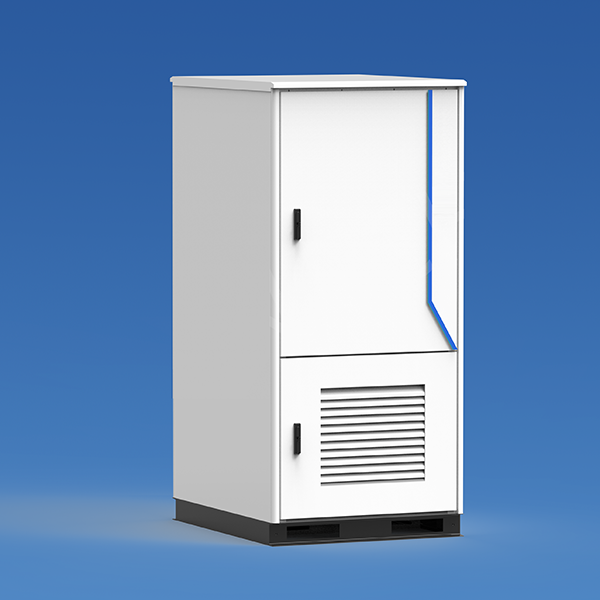
AI Liquid-Cooling Outdoor ESS Cabinet
Raydafon Group's AI Liquid-Cooling Outdoor ESS Cabinet: smart liquid cooling, efficient energy storage.