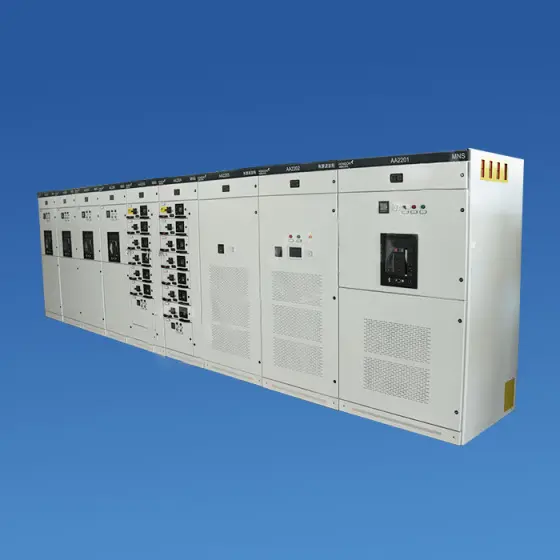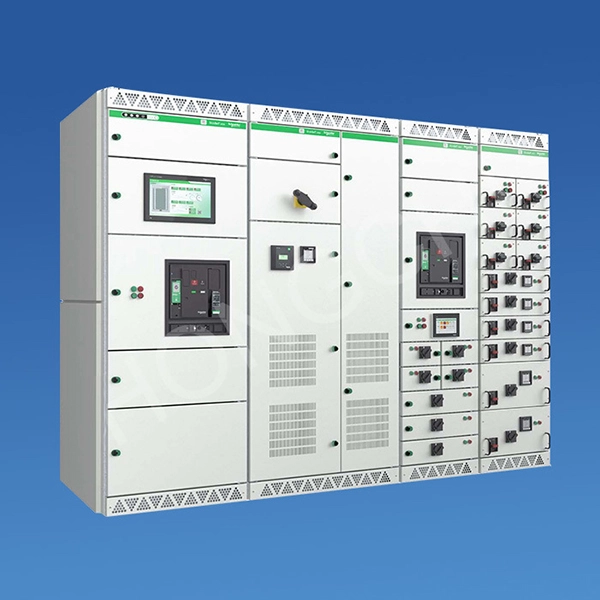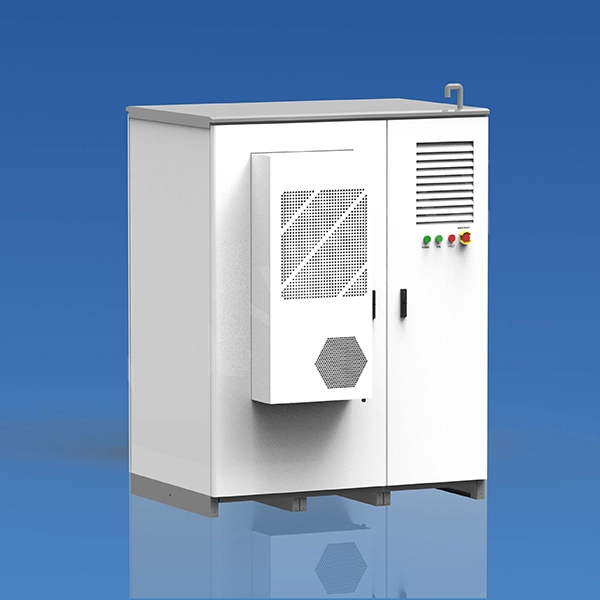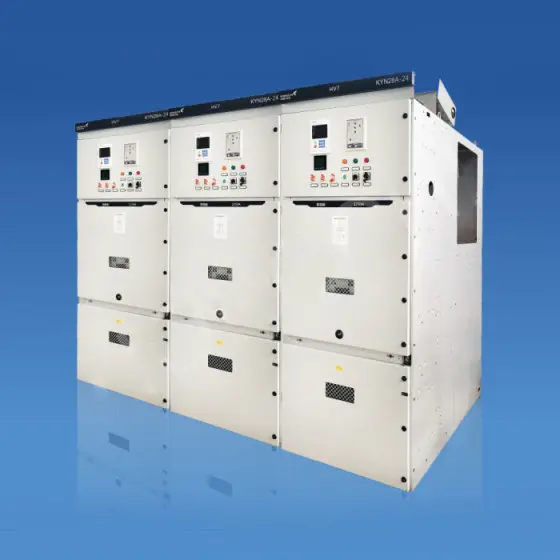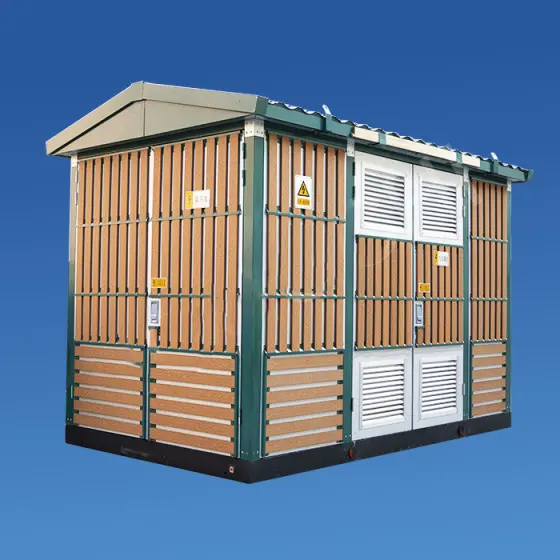

What are the standard dimensions of a prefabricated substation?
Imagine reviewing a vendor drawing for a 33 kV prefabricated substation two weeks before installation. Your civil contractor has already poured the pad foundation based on an earlier layout, but the new GA drawing shows the enclosure is 400 mm wider than the pad and the cable entry points no longer align. The site team asks you a simple question that is not simple at all: What are the standard dimensions of a prefabricated substation? If you do not have a fast, accurate answer, the project eats delay costs and your procurement credibility takes a hit. The truth is that no single universal dimension exists. Standard dimensions depend on voltage class, transformer capacity, switchgear type, local standards, transport limits, and maintenance clearances. However, there are common industry ranges that can help you validate drawings before foundations are poured. Most compact units fall into predictable footprints, and knowing those ranges puts you back in control. Raydafon Technology Group Co., Limited supports procurement teams with early-stage GA drawings and dimension control, helping you avoid exactly this kind of site-level mismatch. This guide breaks down those ranges and the practical controls that matter for procurement professionals.
- Why Prefabricated Substation Dimensions Matter in Procurement
- Standard Dimension Ranges by Voltage Class and Configuration
- Common Sizing Pain Points and How Raydafon Solves Them
- A Practical Specification Checklist for Dimensions
- FAQ: What Are the Standard Dimensions of a Prefabricated Substation?
- Conclusion and Next Steps
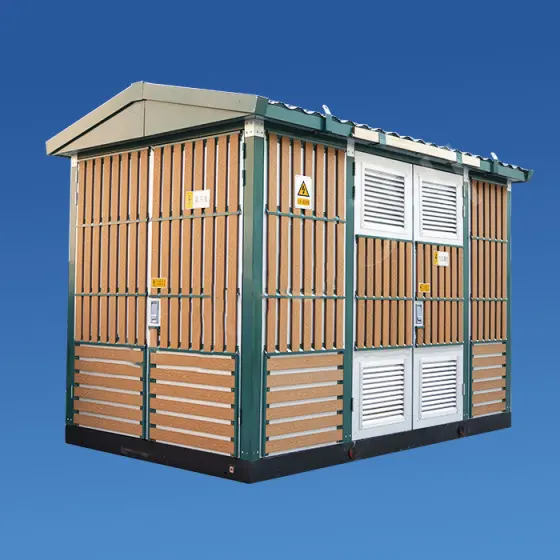
Why Prefabricated Substation Dimensions Matter in Procurement
Every prefabricated substation sits at the intersection of civil works, electrical equipment, logistics, and safety clearances. A procurement professional who treats dimensions as a supplier-only detail risks discovering late that the enclosure does not fit the pad, the cable basement, or the transporter. Picture a typical site in Southeast Asia: the access road allows only a 2.6 m wide trailer, but the quoted enclosure is 3.0 m wide. The supplier says it is “standard,” yet the project now needs special permits, a crane, or a redesign. That delay can cost more than the substation itself.
Raydafon Technology Group Co., Limited addresses this pain point by issuing preliminary general arrangement drawings before contract finalization. The team checks the footprint, height, cable entry direction, and door swing against your site constraints. Instead of forcing a catalog size onto your project, Raydafon adjusts the enclosure layout within standard ranges or proposes a transport-friendly split structure when required.
Below is a typical reference table for compact Prefabricated Substations used in distribution networks. These values are not universal but give you a fast validation window.
| Configuration | Voltage Class | Typical Footprint (L × W) | Typical Height | Weight Range |
|---|---|---|---|---|
| LV distribution kiosk | 0.4 kV | 1,800 × 1,200 mm | 1,600 – 2,000 mm | 800 – 1,500 kg |
| Compact secondary substation | 11 kV / 0.4 kV | 2,400 × 2,000 mm | 2,200 – 2,600 mm | 3,000 – 6,000 kg |
| Ring main unit substation | 33 kV | 3,000 – 4,500 × 2,400 – 2,800 mm | 2,800 – 3,200 mm | 6,000 – 12,000 kg |
| Containerized substation | Up to 66 kV | 6,058 × 2,438 mm or 9,125 × 2,438 mm | 2,591 – 2,896 mm | 10,000 – 25,000 kg |
Standard Dimension Ranges by Voltage Class and Configuration
If you search for a single answer to “What are the standard dimensions of a prefabricated substation?”, you will quickly find conflicting numbers. That is because standards such as IEC 62271-202, GB/T 17467, and IEEE C57.12.28 define performance, safety, and test requirements rather than fixed external dimensions. However, manufacturers have converged on practical ranges that align with road transport limits, ISO container dimensions, and common switchgear footprints.
A low-voltage distribution enclosure can be small enough to fit on a sidewalk, while a medium-voltage containerized unit may occupy the footprint of a 20 ft or 40 ft ISO container. For procurement, the most useful approach is to classify the substation by voltage class and transformer rating. For example, a 1,000 kVA 11 kV compact substation typically requires an enclosure around 3,000 mm long, 2,400 mm wide, and 2,800 mm high. A 33 kV unit with multiple ring main unit panels may extend to 4,500 mm or more.
The table below shows common standard ranges. Use it as a first-pass filter, but always confirm the final GA drawing with your supplier before civil works begin.
| Application | Transformer Capacity | Typical Footprint (L × W) | Typical Height | Enclosure Type |
|---|---|---|---|---|
| 0.4 kV low-voltage distribution | Up to 630 kVA | 1,500 – 2,500 × 1,200 – 1,800 mm | 1,600 – 2,200 mm | Solid or ventilated steel enclosure |
| 11 kV compact substation | 315 – 1,600 kVA | 2,200 – 3,500 × 2,000 – 2,600 mm | 2,200 – 2,800 mm | Non-walk-in or walk-in |
| 33 kV prefabricated substation | Up to 5,000 kVA | 3,000 – 5,000 × 2,400 – 3,200 mm | 2,800 – 3,500 mm | Walk-in or containerized |
| 66 kV containerized substation | Up to 20 MVA | 6,058 – 12,192 × 2,438 mm | 2,591 – 2,896 mm | ISO-based or split structure |
Common Sizing Pain Points and How Raydafon Solves Them
Procurement teams often face three recurring sizing risks. First, the foundation is poured before the substation vendor is approved, freezing a footprint that may not match the final GA drawing. Second, the transport route imposes a width or height restriction that the quoted enclosure exceeds. Third, the cable entry direction or internal maintenance clearance does not match the site layout, forcing expensive field modifications.
Raydafon Technology Group Co., Limited removes these risks by treating dimension control as a procurement deliverable, not an afterthought. During the quotation stage, the engineering team requests site access width, height clearance, foundation type, and cable entry direction. If a standard enclosure cannot fit, Raydafon proposes a modular or split arrangement. This keeps the project on schedule without compromising safety or maintainability.
A practical way to evaluate quotes is to compare the supplier’s dimensions against your site constraint envelope. The table below gives a simple transport and foundation reference.
| Site Constraint | Common Limit | What to Check |
|---|---|---|
| Road width | 2,500 – 3,000 mm | Enclosure width must be below the narrowest bridge or gate. |
| Height clearance | 3,500 – 4,200 mm | Include lifting lugs and roof-mounted accessories. |
| Pad foundation tolerance | ±10 – 20 mm | Confirm anchor bolt positions and cable opening coordinates. |
| Maintenance walkway | ≥ 800 mm inside | Verify door swing and aisle clearance around switchgear. |
A Practical Specification Checklist for Dimensions
To avoid the classic “standard dimension” trap, build your enquiry around the following checklist. This will help suppliers respond with accurate GA drawings and reduce back-and-forth before contract award.
- Rated voltage and transformer capacity: State the primary and secondary voltage, kVA rating, and vector group. These values drive the internal equipment footprint.
- Switchgear configuration: Confirm the number of ring main unit panels, circuit breaker panels, and metering compartments.
- Cable entry direction: Specify bottom, side, or rear entry and the required cable basement depth.
- Site access and transport limits: Share the maximum width, height, and weight allowed on the delivery route.
- Foundation details: Provide the pad drawing or at least the available footprint and anchor bolt layout.
- Maintenance clearances: State whether the unit must be walk-in or non-walk-in and the required aisle width.
- Environmental conditions: Include ambient temperature, humidity, and altitude if they affect cooling and enclosure size.
When you send this information to Raydafon Technology Group Co., Limited, the engineering team returns a dimensioned proposal, including plan view, side view, and cable entry coordinates. This turns the vague question “What are the standard dimensions of a prefabricated substation?” into an actionable procurement document.
The following table summarizes how each input affects the external dimensions and why it matters for cost control.
| Input | Dimension Impact | Cost Risk if Ignored |
|---|---|---|
| Transformer kVA | Length and weight increase with rating | Foundation overload and larger pad cost |
| RMU panel count | Width and internal aisle change | Enclosure too small, field modification |
| Cable entry direction | Base opening and foundation depth change | Mismatched cable trench and rework |
| Transport limits | Split structure or reduced width may be needed | Special permits and delivery delays |
| Maintenance access | Door position and internal clearance | Safety violations and difficult servicing |
FAQ: What Are the Standard Dimensions of a Prefabricated Substation?
Q: What are the standard dimensions of a prefabricated substation for a 1,000 kVA 11 kV unit?
A: A typical 1,000 kVA 11 kV compact prefabricated substation has a footprint of approximately 3,000 mm by 2,400 mm and a height of 2,600 mm to 2,800 mm. Exact dimensions vary with the ring main unit configuration, transformer type, and cable entry method. Raydafon Technology Group Co., Limited provides a preliminary GA drawing at the enquiry stage so you can verify the footprint before foundation works begin.
Q: What are the standard dimensions of a prefabricated substation under IEC 62271-202?
A: IEC 62271-202 does not fix a single external dimension. It specifies safety, internal arc, and test requirements. In practice, manufacturers align dimensions with transport and maintenance needs. Common compact units range from 2,200 mm to 5,000 mm in length, 2,000 mm to 3,200 mm in width, and 2,200 mm to 3,500 mm in height. Always confirm the final outline drawing with your supplier because “standard” can vary by manufacturer.
Conclusion and Next Steps
Getting the dimensions right early is one of the highest-leverage decisions in prefabricated substation procurement. A well-checked footprint prevents foundation rework, transport delays, and safety clearance problems. If you are comparing quotes, do not accept a one-line dimension in an email. Ask for a dimensioned GA drawing, verify it against the site envelope, and challenge any supplier that cannot explain why a dimension is “standard.”
Have a substation project in the specification phase? Share your voltage class, kVA rating, and site constraints in the comments or contact the engineering team directly.
Raydafon Technology Group Co., Limited is a specialized supplier of prefabricated substations, compact substations, and containerized power distribution solutions. The company helps procurement teams and EPC contractors resolve dimensional, transport, and interface challenges with early-stage GA drawings, modular design options, and responsive engineering support. Visit https://www.raydafonequipments.com to review product ranges, or email [email protected] for a dimensioned proposal.
Selected Research References
Li, J., Zhang, Y., & Chen, W. (2021). Thermal performance analysis of prefabricated substation enclosures under high ambient temperature. IEEE Transactions on Power Delivery, 36(4), 2154–2163.
Kumar, R., & Singh, A. (2020). Compact prefabricated substations for urban distribution networks: a review of design criteria. International Journal of Electrical Power & Energy Systems, 118, 105789.
Martinez, L., & Gomez, P. (2019). Standardization of modular substation dimensions for rapid deployment. CIGRE Science & Engineering, 15, 87–96.
Okafor, C., & Nwosu, E. (2022). Effect of enclosure dimensions on internal arc fault pressure in prefabricated substations. Electric Power Systems Research, 205, 107773.
Zhang, H., Liu, T., & Wang, X. (2018). A comparative study of foundation interface designs for containerized substations. Journal of Construction Engineering and Management, 144(9), 04018084.
Rahman, M., & Hassan, K. (2021). Transportation-induced vibration and structural integrity of prefabricated substation enclosures. Engineering Structures, 238, 112231.
Silva, D., & Ferreira, J. (2020). Optimal layout planning for modular substations under road transport constraints. IEEE Access, 8, 104522–104534.
Bauer, F., & Keller, M. (2019). Prefabricated substations for renewable energy integration: dimensional and safety considerations. Renewable Energy, 142, 1120–1132.
Zhao, L., & Hu, S. (2023). User-centric dimensioning of compact secondary substations based on maintenance access and thermal clearance. Energy Reports, 9, 3456–3465.
Tanaka, Y., & Suzuki, H. (2022). Standardized shipping-friendly dimensions for prefabricated substations: a logistics-driven approach. Journal of International Logistics and Trade, 20(3), 178–190.
Next :
-
Related News
- How do you maintain an air-cooling ESS cabinet?
- What are the key components of a liquid-cooling ESS cabinet?
- What are the main components of a YBM prefabricated substation?
- What are the common faults of KYN61-40.5 switchgear and how to troubleshoot them?
- What safety standards apply to new energy equipments?
- What arc flash protection is required for high-voltage switchgear?
Leave me a message