What are the key components of a liquid-cooling ESS cabinet?
Imagine a procurement team in Dammam reviewing two energy storage quotes for a 40 MW solar-plus-storage site. One supplier promotes an air-cooled cabinet with a lower upfront cost. Another promotes a liquid-cooled unit that is 18% more expensive but claims lower auxiliary consumption and longer battery life. The discussion stalls because the team cannot evaluate the technical difference. They keep returning to the same question: What are the key components of a liquid-cooling ESS cabinet? If you are responsible for sourcing energy storage systems, this is not an academic question. Liquid cooling affects cell temperature uniformity, fire safety, noise, energy density, and long-term operating cost. A liquid-cooling ESS cabinet is made up of battery modules, a cooling distribution unit (CDU), cold plates, coolant circulation loops, pumps, a heat exchanger, an expansion tank, filters, pressure and temperature sensors, leak detection, a battery management system (BMS), and safety devices such as pressure relief valves and smoke detectors. The value is not in any single part; it is in how these parts are matched to the battery chemistry, C-rate, ambient temperature, and enclosure rating. At Raydafon Technology Group Co., Limited, we help buyers turn this component list into a clear comparison framework. This guide explains the components that matter, the parameters to check, and the questions to ask before you commit to a supplier.
In this article:
1. Core Components of a Liquid-Cooling ESS Cabinet
2. Cooling Loop and Thermal Uniformity
3. Procurement Pain Points and Parameter Table
4. How Raydafon Technology Group Co., Limited Supports Component Validation
5. FAQs: What Are the Key Components of a Liquid-Cooling ESS Cabinet?
1. Core Components of a Liquid-Cooling ESS Cabinet
Many procurement teams first see a liquid-cooling ESS cabinet as a long list of parts on a datasheet. The pain point is that some suppliers bundle critical components while others list them as optional add-ons. This makes like-for-like comparison difficult. The solution is to group the system into four functional layers: battery and electrical, thermal management, control and safety, and enclosure protection.
The battery and electrical layer includes lithium-iron-phosphate or other battery modules, busbars, DC fuses, contactors, and often a power conversion system. The thermal management layer includes a cooling distribution unit, cold plates, coolant hoses, pumps, a heat exchanger, an expansion tank, filters, and coolant. The control and safety layer includes the BMS, temperature sensors, pressure sensors, leak detection, smoke detection, and pressure relief valves. The enclosure protection layer includes the cabinet shell, IP-rated gaskets, insulation, and optional anti-corrosion coating.
Understanding what are the key components of a liquid-cooling ESS cabinet helps you separate standard engineering from supplier-specific advantages. For example, cold plates may be flat tube type or micro-channel type. A micro-channel cold plate can offer lower thermal resistance, but it may require stricter coolant filtration. That detail changes maintenance schedules and total cost of ownership.
2. Cooling Loop and Thermal Uniformity
Picture a containerized energy storage system in southern Spain. The cell temperature at the top of one rack is 42°C while a cell at the bottom of another rack is 35°C. That 7°C spread accelerates degradation in the warmer module and triggers BMS derating across the entire string. The pain point is uneven heat rejection. The solution is a properly designed closed-loop liquid cooling circuit with calibrated flow distribution, cold plates placed on the battery module surface, and a CDU that adjusts coolant temperature and flow rate based on real-time sensor data.
The cooling loop usually contains a water-glycol mixture. The CDU uses a pump to circulate the coolant through cold plates, where heat from the cells transfers into the fluid. The heated coolant then flows to a heat exchanger. Depending on the site, the heat exchanger rejects heat to ambient air or to an external chilled water loop. An expansion tank absorbs volume changes, while filters protect the cold plate channels from particles. Pressure and temperature sensors provide feedback to the BMS. A leak detection kit is often installed in the cabinet drip tray to trigger an alarm before coolant reaches electrical connections.
Suppliers may report different thermal performance values. The most useful parameters for comparison are maximum cooling capacity in kW, cell temperature spread in degrees Celsius, coolant inlet and outlet temperature range, pump power consumption, and rated coolant flow rate.
3. Procurement Pain Points and Parameter Table
A common procurement pain point is relying on nominal system efficiency without checking the thermal design point. A cabinet may perform well at 25°C ambient temperature but start derating above 40°C. In the Middle East, Southeast Asia, or parts of Australia, that becomes a hidden availability cost. The solution is to require suppliers to provide a thermal derating curve and to confirm the CDU cooling capacity at the project’s maximum design ambient temperature.
Another pain point is unclear responsibility for integration. If the battery module supplier, CDU supplier, and enclosure supplier are different, the buyer may face interface risks. A better approach is to select an integrated ESS cabinet supplier such as Raydafon Technology Group Co., Limited, where the thermal loop, BMS communication, and safety devices are tested as one system before shipment.
| Component | Function | Procurement parameters to check |
|---|---|---|
| Cooling distribution unit | Circulates and cools the coolant | Cooling capacity, ambient range, pump power, noise level |
| Cold plates | Remove heat from battery modules | Thermal resistance, material, pressure drop, coolant compatibility |
| Coolant circulation loop | Connects components and maintains flow | Pipe material, leak detection, filtration level, expansion tank volume |
| Battery modules | Store and release electrical energy | Cell chemistry, cycle life, C-rate, operating voltage range |
| BMS and thermal sensors | Monitor and control cell and coolant conditions | Communication protocol, sensor accuracy, alarm thresholds |
| Safety devices | Protect against overpressure, fire, and leakage | Pressure relief valve setting, fire suppression type, leak detection coverage |
4. How Raydafon Technology Group Co., Limited Supports Component Validation
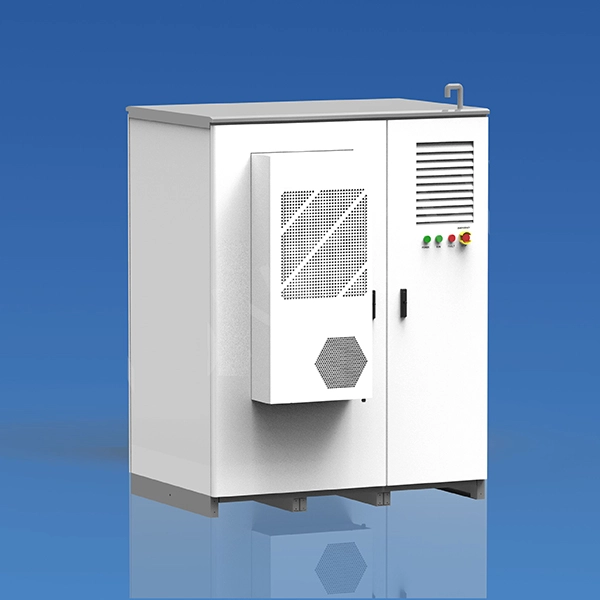
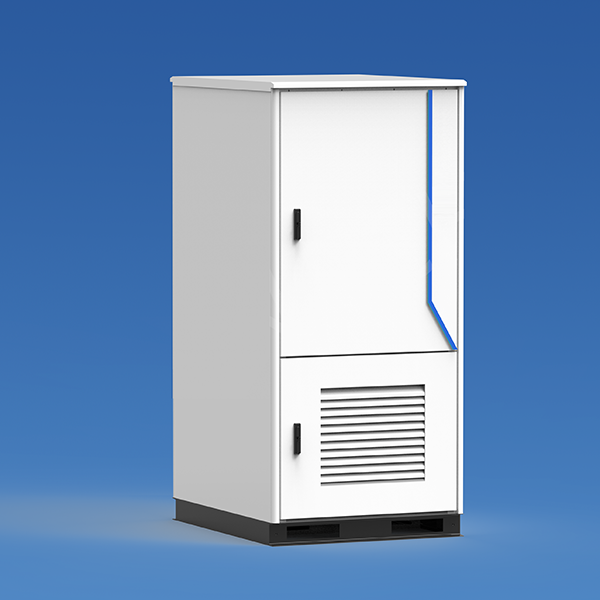
For buyers, the biggest issue is not finding a datasheet, but knowing whether the stated thermal performance is credible. Raydafon Technology Group Co., Limited addresses this by providing integrated outdoor Liquid-Cooling ESS Cabinets with factory-tested cooling loops, matched cold plates, and documented derating curves. The company focuses on complete system validation rather than assembling components from multiple uncoordinated vendors.
This matters when you evaluate what are the key components of a liquid-cooling ESS cabinet. The same CDU and cold plates can perform differently depending on pipe routing, coolant flow rate, and BMS control strategy. A supplier that owns the integration process can show you consistent test results, including cell temperature spread at rated power and maximum ambient temperature. Raydafon Technology Group Co., Limited also supports buyers with pre-sales component documentation, inspection checklists, and technical clarification for tenders.
For procurement teams, this reduces the risk of receiving a cabinet that meets the datasheet on paper but fails during site commissioning. It also shortens the evaluation period because the supplier can provide clear answers about cooling capacity, safety interlocks, and spare parts availability.
5. FAQs: What Are the Key Components of a Liquid-Cooling ESS Cabinet?
Q1: What are the key components of a liquid-cooling ESS cabinet that have the biggest impact on total cost of ownership?
The CDU, cold plates, and coolant circulation loop affect total cost of ownership most. The CDU determines auxiliary power consumption and cooling capacity. Cold plates influence cell temperature uniformity, which directly affects battery cycle life. The circulation loop affects maintenance requirements, coolant replacement intervals, and leak risk. A lower-cost cabinet with an undersized CDU may derate more often and degrade faster than a properly sized system, erasing the initial savings.
Q2: What are the key components of a liquid-cooling ESS cabinet that determine whether the system can operate in coastal or high-humidity environments?
The enclosure sealing system, cold plate material, pipe connections, and leak detection components are the most important. Coastal environments can introduce salt-laden air that accelerates corrosion on exposed metal parts. High humidity increases condensation risk inside the cabinet. Buyers should check the cabinet IP rating, anti-corrosion coating, coolant pipe material, and whether the leak detection system can distinguish between condensation and coolant leakage. Raydafon Technology Group Co., Limited can provide corrosion protection options and sealing test reports for these conditions.
6. Final Checklist for Buyers
Before you finalize a liquid-cooling ESS cabinet purchase, use this short checklist. First, confirm the CDU cooling capacity at your maximum design ambient temperature. Second, ask for the guaranteed cell temperature spread at 0.5C or 1C operation. Third, verify that the cabinet includes leak detection, pressure relief valves, and fire suppression as standard. Fourth, check whether the supplier provides a factory thermal test report. Fifth, confirm the coolant type and replacement cycle. Sixth, compare the total auxiliary energy consumption, not just the battery efficiency.
If your team is comparing multiple suppliers, request the same format for each quote. This prevents hidden differences in thermal design, safety scope, or warranty conditions. A clear component list and performance table will help you move from technical confusion to a confident purchasing decision.
Are you evaluating liquid-cooling ESS cabinets for an upcoming project? Share your site conditions, required capacity, and ambient temperature range, and our procurement support team can help you compare the thermal design and long-term operating costs.
Raydafon Technology Group Co., Limited is an energy storage equipment supplier focused on integrated liquid-cooling ESS cabinets, outdoor battery enclosures, and thermal management solutions. The company supports procurement teams with product selection, component documentation, factory testing, and after-sales technical service. For more information, visit https://www.raydafonequipments.com or contact the sales team at [email protected].
Pesaran, A., Kim, G. H., & Smith, K. (2016). Thermal management for lithium-ion battery systems. Journal of Electrochemical Energy Conversion and Storage, 13(2), 021001.
Deng, Y., Feng, C., E, J., Zhu, H., Chen, J., Wen, M., & Yin, H. (2018). Effects of different coolants and cooling strategies on the cooling performance of the power battery system: A review. Applied Thermal Engineering, 142, 10-29.
Rao, Z., & Wang, S. (2011). A review of power battery thermal energy management. Renewable and Sustainable Energy Reviews, 15(9), 4554-4571.
Zhang, T., Gao, Q., Wang, G., Gu, Y., Wang, Y., Bao, W., & Zhang, D. (2019). Investigation on the promotion of temperature uniformity for batteries in a battery pack by liquid cooling. Applied Thermal Engineering, 152, 283-293.
Chen, D., Jiang, J., Kim, G. H., Yang, C., & Pesaran, A. (2016). Comparison of different cooling methods for lithium ion battery cells. Applied Thermal Engineering, 94, 846-854.
Jilte, R. D., Kumar, R., Ahmadi, M. H., & Chen, L. (2019). Battery thermal management system employing phase change material with cell-to-cell air cooling. Applied Thermal Engineering, 161, 114199.
Xia, G., Cao, L., & Bi, G. (2017). A review on battery thermal management in electric vehicle application. Journal of Power Sources, 367, 90-105.
Saw, L. H., Ye, Y., Tay, A. A. O., Chong, W. T., Kuan, S. H., & Yew, M. C. (2016). Computational fluid dynamic and thermal analysis of lithium-ion battery pack with air cooling. Applied Energy, 177, 783-792.
Wang, Q., Jiang, B., Li, B., & Yan, Y. (2016). A critical review of thermal management models and solutions of lithium-ion batteries for the development of pure electric vehicles. Renewable and Sustainable Energy Reviews, 64, 106-128.
Panchal, S., Dincer, I., Agelin-Chaab, M., Fraser, R., & Fowler, M. (2017). Thermal modeling and validation of temperature distributions in a prismatic lithium-ion battery at different discharge rates and varying boundary conditions. Applied Thermal Engineering, 96, 190-199.
Next :
-
Related News
- What are the main components of a YBM prefabricated substation?
- What are the common faults of KYN61-40.5 switchgear and how to troubleshoot them?
- What safety standards apply to new energy equipments?
- What arc flash protection is required for high-voltage switchgear?
- What is the difference between RMU and VCB?
- How much does intelligent monitor equipment typically cost?
Leave me a message