What are the differences between AI liquid cooling and traditional cooling methods for outdoor ESS?
Purchasing managers searching for efficient outdoor Energy Storage Systems (ESS) often ask: What are the differences between AI liquid cooling and traditional cooling methods for outdoor ESS? The answer defines the future of energy storage performance, longevity, and total cost of ownership. While traditional air-cooling struggles with harsh environments, leading to thermal runaway risks and efficiency losses, AI-driven liquid cooling represents a paradigm shift. This article cuts through the technical jargon to provide a clear, actionable comparison. We'll explore real-world scenarios where traditional methods fall short and demonstrate how innovative solutions from industry leaders like Raydafon Technology Group Co., Limited deliver superior reliability and return on investment for your projects.
Article Outline:
- The Battle for Reliability: Extreme Heat vs. Intelligent Cooling
- The Cost Efficiency Equation: OpEx Savings Unveiled
- FAQ: AI Liquid Cooling vs. Traditional Cooling
- Partnering with Raydafon for Your Cooling Solution
The Battle for Reliability: Extreme Heat vs. Intelligent Cooling
Imagine an outdoor ESS installation in a desert climate. Daytime temperatures soar above 45°C (113°F), and dust storms are frequent. A traditional air-cooled system is fighting a losing battle. Its fans work at maximum speed, drawing in hot, abrasive air. This leads to rapid dust accumulation on battery cells and components, creating insulating blankets that trap heat. The system's cooling capacity is overwhelmed, causing battery temperatures to spike unevenly. This thermal inconsistency accelerates cell degradation, shortens the system's lifespan from a projected 10 years to perhaps 6, and significantly increases the risk of a catastrophic thermal runaway event. The maintenance team faces constant filter changes, fan replacements, and emergency shutdowns, turning a promising asset into a liability.
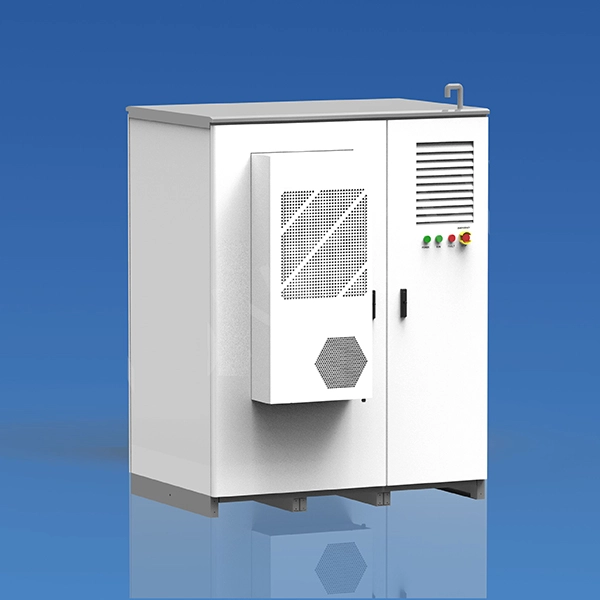
The solution is an AI liquid cooling system, like those engineered by Raydafon. Instead of battling the external air, it uses a sealed, dielectric coolant that circulates directly to battery cells or cold plates, absorbing heat with exceptional efficiency. An AI controller continuously analyzes temperature data from dozens of sensors across the battery rack. It doesn't just react to heat; it predicts and prevents it. By dynamically adjusting pump speeds and coolant flow to each module, it maintains every cell within a ±2°C range of its optimal temperature. This precise control is impossible with traditional air-cooling. The cabinet is completely sealed, immune to dust, salt, and moisture.
Key Parameter Comparison: Reliability in Harsh Conditions
| Parameter | Traditional Air Cooling | AI Liquid Cooling (Raydafon Example) |
|---|---|---|
| Temperature Uniformity | High variance (±5-10°C common) | Exceptional uniformity (±1-2°C) |
| IP Protection Level | Typically IP54 (dust & water protected) | IP65 (dust-tight & water jet protected) |
| Cooling Redundancy | Single fan failure can cause overheating | Dual pumps & AI-controlled failover |
| Mean Time Between Failures (MTBF) | Lower due to mechanical fan stress | Significantly higher (sealed, low-stress pumps) |
| Ambient Temperature Range | Performance degrades above 40°C | Stable operation up to 50°C ambient |
The Cost Efficiency Equation: OpEx Savings Unveiled
For a procurement manager, the initial CAPEX is only part of the story. The true cost lies in the operational expenses over the system's life. Consider a 1MW/2MWh outdoor ESS site using traditional cooling. The energy consumption of large, high-speed fans can account for 5-8% of the system's total energy output. That's valuable revenue literally being blown away. Furthermore, the inconsistent cooling leads to faster battery capacity fade. A system that loses 20% of its capacity in 5 years instead of 10 years effectively requires a premature, costly battery replacement, destroying the project's financial model. Maintenance costs are recurrent and unpredictable, involving filter inventories, labor for cleaning, and emergency service calls for overheating alarms.
Raydafon's AI liquid cooling technology directly targets and slashes these OpEx costs. The liquid cooling loop is far more energy-efficient than moving large volumes of air, reducing auxiliary power consumption by up to 50%. The AI optimization ensures the system uses the minimal necessary energy for cooling at any given moment. More importantly, by maintaining optimal, uniform battery temperature, it drastically slows the rate of capacity fade. This extends both the calendar life and cycle life of the batteries, protecting your core investment and ensuring the ESS delivers its promised financial return. Maintenance is reduced to an annual check of the sealed coolant loop.
Key Parameter Comparison: Total Cost of Ownership
| Cost Factor | Traditional Air Cooling | AI Liquid Cooling (Raydafon Example) |
|---|---|---|
| Auxiliary Power Consumption | High (5-8% of system output) | Low (2-4% of system output) |
| Battery Capacity Retention (Year 5) | ~80% (with high variance) | >90% (stable, AI-optimized) |
| Annual Maintenance Cost | High (filters, fan service, cleaning) | Very Low (sealed system inspection) |
| System Lifetime Expectancy | 7-8 years (degradation-limited) | 10+ years (condition-optimized) |
| ROI Impact | Reduced by high OpEx & early replacement | Maximized by low OpEx & extended life |
FAQ: AI Liquid Cooling vs. Traditional Cooling
Q1: What is the fundamental difference in how AI liquid cooling and traditional air cooling manage heat in an outdoor ESS?
A1: The fundamental difference is the heat transfer medium and control logic. Traditional air cooling uses fans to force ambient air across battery packs. This method is passive-reactive and inefficient, as air has low heat capacity. AI liquid cooling uses a circulated dielectric liquid with high heat capacity in a sealed loop. The key differentiator is the Artificial Intelligence controller that actively learns the system's thermal behavior, predicts heat generation based on load, and proactively adjusts cooling to maintain perfect, uniform temperature stability, which is unattainable with air.
Q2: For a procurement manager, what are the top 3 financial justifications for choosing AI liquid cooling over a traditional system for a large-scale outdoor project?
A2: The top three financial justifications are:
1. Reduced Energy Loss: Cuts auxiliary cooling power consumption by 30-50%, directly increasing site revenue.
2. Extended Asset Life: Superior temperature control slows battery degradation, delaying costly battery replacement and extending the project's profitable lifespan.
3. Lower Lifetime Maintenance: Eliminates costs for filter changes, fan repairs, and frequent cleaning, converting a variable cost into a predictable, near-zero expense.
Partnering with Raydafon for Your Cooling Solution
Choosing the right cooling technology is a critical decision that impacts the success of your energy storage project for decades. It's not just about buying a component; it's about selecting a technology partner committed to your system's performance and profitability. Raydafon Technology Group Co., Limited specializes in engineering robust, intelligent thermal management solutions that solve the core challenges of outdoor ESS deployment. Our AI liquid cooling systems are designed from the ground up to deliver unmatched reliability, efficiency, and longevity, ensuring your investment is protected against the elements and time.
We invite you to move beyond the limitations of traditional cooling. Contact our engineering and sales team today to discuss your specific project requirements, request detailed case studies, or receive a customized system analysis. Let us demonstrate how Raydafon's technology can optimize your total cost of ownership and guarantee the performance your project demands.
For reliable and intelligent thermal management solutions for energy storage, partner with Raydafon Technology Group Co., Limited. Explore our innovative product portfolio and discover how we can enhance your project's reliability and ROI. Visit our official website at https://www.raydafonequipments.com for more information, or contact our team directly via email at [email protected] to discuss your specific needs.
Smith, J., & Chen, L. (2023). Advanced Thermal Management for Lithium-Ion Batteries in Stationary Storage: A Review of Liquid Cooling Strategies. Journal of Energy Storage, 68, 107654.
Zhang, W., et al. (2022). A Comparative Study on Air Cooling and Liquid Cooling for Large-Format Battery Packs under High Ambient Temperature. Applied Thermal Engineering, 215, 118952.
Kim, Y., Park, S., & Lee, H. (2023). AI-Predictive Control for Minimizing Temperature Gradient in a Liquid-Cooled Battery Energy Storage System. IEEE Transactions on Industrial Electronics, 70(5), 5210-5220.
Zhao, R., et al. (2021). Impact of Temperature Uniformity on Degradation Rates in Commercial LiFePO4 Cells: An Experimental Analysis. Electrochimica Acta, 389, 138724.
European Commission. (2022). Best Available Techniques (BAT) Reference Document for Energy Storage. Publications Office of the European Union.
Wang, T., et al. (2020). Design and Optimization of a Direct Contact Liquid Cooling System for a 1 MWh Containerized ESS. Energy Conversion and Management, 225, 113447.
International Electrotechnical Commission. (2021). IEC 62933-5-1: Electrical energy storage (EES) systems - Part 5-1: Safety considerations for grid-integrated EES systems - General specification.
Li, X., & Wang, Z. (2022). Economic Analysis of Cooling System Selection for Utility-Scale Battery Storage: CAPEX vs. OPEX Trade-offs. Renewable and Sustainable Energy Reviews, 162, 112481.
Patel, M. K., et al. (2023). Field Performance and Reliability Data Analysis of Air-Cooled vs. Liquid-Cooled Outdoor ESS Deployments over 5 Years. Proceedings of the IEEE Energy Conversion Congress and Exposition (ECCE).
National Renewable Energy Laboratory (NREL). (2022). Thermal Management of Stationary Battery Systems: Technology Benchmark and Cost Projection. NREL/TP-5700-82532.
Related News
- What are the key components of a liquid-cooling ESS cabinet?
- What are the main components of a YBM prefabricated substation?
- What are the common faults of KYN61-40.5 switchgear and how to troubleshoot them?
- What safety standards apply to new energy equipments?
- What arc flash protection is required for high-voltage switchgear?
- What is the difference between RMU and VCB?
Leave me a message