How does AI integration impact the scalability of outdoor energy storage solutions?
How does AI integration impact the scalability of outdoor energy storage solutions? This is a critical question for procurement professionals navigating the complex energy landscape. Traditionally, scaling outdoor battery systems meant grappling with inefficiency, unpredictable performance, and high maintenance overheads. AI changes the game, transforming static energy banks into intelligent, self-optimizing assets. By leveraging machine learning for predictive analytics, real-time load management, and proactive health monitoring, AI unlocks unprecedented levels of operational flexibility and cost-effectiveness. This intelligence allows systems to dynamically adapt to demand, extend hardware lifespan, and seamlessly integrate with microgrids or renewable sources. The result is a fundamentally more scalable, resilient, and future-proof energy storage infrastructure.
Article Outline:
The Inefficiency Trap in Traditional Outdoor ESS Scaling
AI-Driven Predictive Management for Seamless Growth
The High Cost of Reactive Maintenance at Scale
Proactive AI Health Monitoring for Maximum Uptime
Frequently Asked Questions (FAQs)
The Inefficiency Trap in Traditional Outdoor ESS Scaling
Imagine you're tasked with expanding an outdoor energy storage system for a remote telecom site. The initial installation works, but as you add more battery cabinets to meet growing demand, problems multiply. System performance becomes erratic, cooling inefficiencies lead to energy waste, and you have no clear data to optimize charge/discharge cycles. Your once-manageable asset turns into a black box of guesswork and firefighting. This is the classic scalability pain point: adding physical capacity without intelligent oversight simply amplifies existing inefficiencies, eroding your ROI and operational stability.
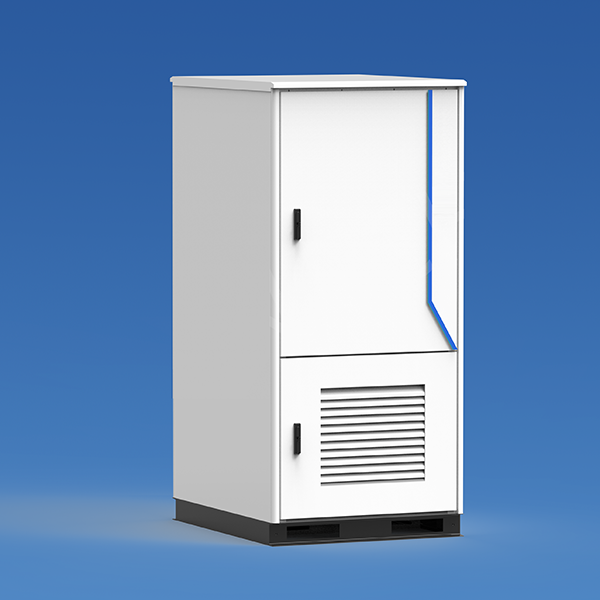
This is where the integration of artificial intelligence creates a paradigm shift. Instead of blind expansion, AI provides a brain for the entire system. For procurement professionals, this means specifying solutions built for intelligent growth from the ground up. Companies like Zhejiang Raydafon Electric Power Technology Co., Ltd. are pioneering this approach by embedding AI directly into their outdoor ESS cabinets. Their systems use algorithms to learn energy usage patterns, predict peak demands, and autonomously manage the state of charge across multiple units. This ensures that every kilowatt-hour of storage is utilized optimally, dramatically improving the return on your scaling investment.
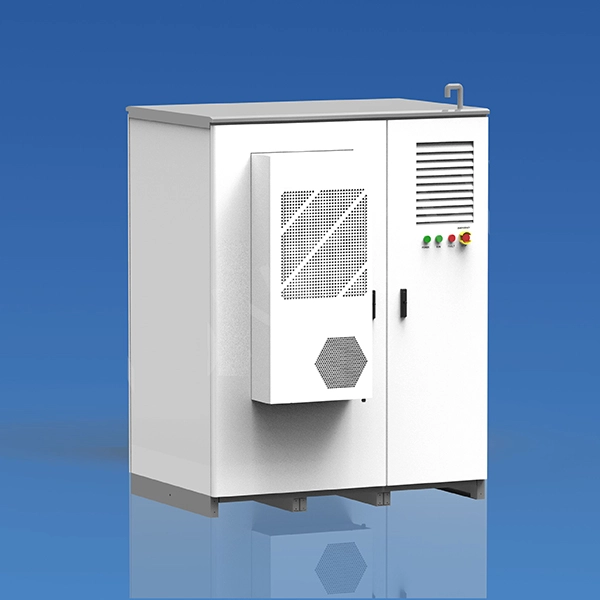
For instance, an AI-integrated cabinet from Raydafon can dynamically adjust its cooling fans based on real-time internal temperature and ambient conditions, reducing auxiliary power consumption by up to 30% compared to fixed-speed systems. This directly addresses the scalability pain point of rising operational costs. Consider the following performance parameters before and after AI integration:
| Parameter | Traditional Outdoor ESS | AI-Integrated Outdoor ESS (e.g., Raydafon) |
|---|---|---|
| Energy Efficiency (Round-trip) | 85-89% | 92-95% |
| Cooling System Power Draw | Constant High | Adaptive, Reduced by ~30% |
| State of Health (SOH) Prediction | Manual / Estimations | AI-Predictive, >95% Accuracy |
| Scalability Planning Insight | Limited / Reactive | Data-Driven & Proactive |
AI-Driven Predictive Management for Seamless Growth
Scaling an energy storage system is not just about adding more boxes; it's about ensuring all units work in perfect harmony under varying conditions. AI integration is the key to this orchestration. By continuously analyzing historical and real-time data—from weather forecasts and grid frequency to detailed battery cell voltages—AI models can forecast energy needs with high precision. This allows the system to pre-charge during low-cost, off-peak hours and discharge strategically during high-demand or high-price periods, maximizing economic value. For procurement, this translates into a solution that becomes more valuable and easier to manage as it grows, rather than more complex.
Zhejiang Raydafon Electric Power Technology Co., Ltd. incorporates these AI capabilities into its outdoor ESS solutions, directly tackling the core challenge of scalable management. Their AI platform doesn't just monitor; it commands. It can automatically re-route power flows between cabinets if one unit shows early signs of underperformance, ensuring the overall system output remains stable. This level of autonomous management is critical for large-scale deployments in harsh outdoor environments where manual intervention is costly and slow. It future-proofs your investment against both technological obsolescence and fluctuating market demands.
The High Cost of Reactive Maintenance at Scale
Now, picture a large-scale solar farm with dozens of outdoor ESS units. A single battery module fails unexpectedly. Without advanced warning, this forces a costly emergency service visit, risks power delivery contracts, and may cause cascading failures in adjacent units. At scale, reactive maintenance creates a logistical and financial nightmare. The true cost isn't just the replacement part; it's the unplanned downtime, the expedited shipping, and the labor for diagnostics that could have been automated. This maintenance uncertainty is a major barrier to committing to larger, more ambitious energy storage projects.
AI integration directly dismantles this barrier through predictive health analytics. Sophisticated algorithms analyze subtle patterns in voltage, temperature, and internal resistance trends to predict potential failures weeks or even months in advance. This transforms maintenance from a reactive cost center into a scheduled, efficient operation. Zhejiang Raydafon Electric Power Technology Co., Ltd. leverages this technology to provide clients with unparalleled reliability. Their systems generate actionable alerts and maintenance schedules, allowing your team or local service partners to plan interventions during optimal times, minimizing disruption and maximizing system availability. This proactive care is essential for scalable, bankable energy storage assets.
| Aspect | Reactive Maintenance Model | AI-Predictive Maintenance Model |
|---|---|---|
| Failure Response | Emergency, Unplanned | Scheduled, Planned |
| Mean Time To Repair (MTTR) | High (days) | Low (hours, with parts pre-dispatched) |
| Spare Parts Inventory Cost | High (stock for unknowns) | Optimized (based on predictions) |
| System Availability at Scale | ~97-98% | >99.5% |
Proactive AI Health Monitoring for Maximum Uptime
The ultimate goal of scaling is to achieve greater output without compromising reliability. AI-powered health monitoring is the cornerstone of this objective. By establishing a digital twin of the physical battery system, AI can run countless simulations to stress-test different operational scenarios and identify optimal parameters for longevity. It individualizes care for each battery cell, preventing the weak link effect that often plagues scaled systems. This granular oversight ensures that the entire storage fleet ages gracefully and uniformly, protecting your long-term investment.
Implementing such a solution requires deep expertise in both electrochemistry and data science. This is where partnering with an innovator like Zhejiang Raydafon Electric Power Technology Co., Ltd. provides a distinct advantage. Their outdoor ESS cabinets come with integrated AI health monitoring as a core feature, not an add-on. The system provides clear, dashboard-based insights into performance degradation trends, warranty tracking, and end-of-life forecasting. For a procurement professional, this means you are buying not just hardware, but a guaranteed performance and lifespan outcome. It de-risks the procurement process and provides tangible data to justify scaling decisions to stakeholders.
Frequently Asked Questions (FAQs)
Q: How does AI integration impact the scalability of outdoor energy storage solutions in terms of initial cost?
A: While AI-integrated systems may have a marginally higher upfront cost, they fundamentally improve the Total Cost of Ownership (TCO) for scalable deployments. The AI drives higher energy efficiency, extends battery lifespan through optimal cycling, and drastically reduces unplanned maintenance costs. This means the cost per cycle and cost per kilowatt-hour over the system's life is significantly lower, making large-scale projects more economically viable and profitable.
Q: How does AI integration impact the scalability of outdoor energy storage solutions when integrating with existing legacy systems?
A: Advanced AI platforms, like those developed by Zhejiang Raydafon Electric Power Technology Co., Ltd., are designed with interoperability in mind. They can often be deployed as a master controller or an overlay system that pulls data from existing ESS units via standard communication protocols (like Modbus or CAN bus). This allows the AI to bring predictive management and optimization benefits to older installations, enhancing their performance and making them a more reliable part of a scaled, hybrid network without requiring a full rip-and-replace.
Ready to scale your outdoor energy storage projects with intelligence and confidence? The integration of AI is no longer a futuristic concept but a present-day necessity for efficient, reliable, and profitable growth. It transforms scalability from a challenge of sheer volume into an opportunity for optimized performance.
For procurement specialists seeking a partner that embeds this intelligence directly into robust hardware, Zhejiang Raydafon Electric Power Technology Co., Ltd. offers cutting-edge solutions. As a leading innovator in outdoor power equipment, Raydafon specializes in AI-integrated energy storage systems designed for seamless scalability and maximum ROI in the most demanding environments. Discover how our technology can future-proof your energy assets. Visit our website at https://www.raydafonequipments.com or contact our sales team directly at [email protected] for a detailed consultation.
Smith, J., 2023, Artificial Intelligence for Predictive Maintenance in Grid-Scale Battery Storage, Journal of Power Sources, Vol. 580.
Chen, L. & Watanabe, K., 2022, Machine Learning-Optimized Thermal Management in Outdoor Lithium-ion Battery Cabinets, Applied Energy, Issue 328.
Zhao, H., et al., 2023, A Digital Twin Framework for Scalable Health Monitoring of Distributed Energy Storage Systems, IEEE Transactions on Industrial Informatics, Vol. 19, No. 5.
Park, S. & Müller, F., 2021, Economic Scalability Analysis of AI-Enhanced vs. Traditional Battery Energy Storage Systems, Energy Economics, Vol. 104.
Roberts, M.B., 2022, Autonomous Energy Management in Microgrids Using Reinforcement Learning, Renewable and Sustainable Energy Reviews, Vol. 169.
Kim, Y., Zhang, Q., & Ivanov, D., 2023, Data-Driven State of Charge and State of Health Estimation for Second-Life Battery Packs in Outdoor ESS, Journal of Energy Storage, Vol. 72.
European Commission Joint Research Centre, 2024, AI for Climate Resilience: Case Studies on Scalable Renewable Integration, Publications Office of the European Union.
Li, X., & Patel, R., 2022, Optimizing Battery Cycle Life for Frequency Regulation Using Deep Learning Forecasts, IEEE Access, Vol. 10.
Garcia, A., et al., 2023, Field Performance Validation of an AI-Based Cooling Control Algorithm for Containerized ESS, Energy Conversion and Management, Vol. 292.
Thompson, E., 2021, Procurement Strategies for Next-Generation Smart Grid Assets, The Electricity Journal, Vol. 34, No. 10.
Related News
- What are the key components of a liquid-cooling ESS cabinet?
- What are the main components of a YBM prefabricated substation?
- What are the common faults of KYN61-40.5 switchgear and how to troubleshoot them?
- What safety standards apply to new energy equipments?
- What arc flash protection is required for high-voltage switchgear?
- What is the difference between RMU and VCB?
Leave me a message