Reliable Remote Monitoring Units from Top Manufacturers in China
Remote Monitoring Units: Industrial-Grade Visibility for Critical Assets
In today’s interconnected industrial and commercial environments, Remote Monitoring Units are no longer a luxury but a foundational component of operational resilience. They allow plant managers, facility engineers, and asset owners to track equipment status, environmental conditions, and power quality from a central dashboard or mobile device. Raydafon Group has built a strong reputation in this space by engineering Remote Monitoring Units that combine rugged hardware, multi-protocol communication, and user-friendly data delivery. Whether you oversee a water treatment plant, a telecom tower, a cold storage facility, or a solar farm, the right remote monitoring hardware eliminates blind spots and reduces costly site visits.
What Are Remote Monitoring Units?
Remote Monitoring Units, often abbreviated as RMUs, are compact electronic devices that collect data from sensors, meters, controllers, or directly from machinery, then transmit that data to a supervisory system using wired or wireless communication networks. They typically feature a mix of analog inputs, digital inputs, relay outputs, and serial interfaces. Unlike simple data loggers, modern Remote Monitoring Units support bidirectional communication, meaning they can not only report conditions but also receive commands to reset alarms, toggle outputs, or adjust setpoints. Raydafon Group designs its RMUs with modular input configurations and wide protocol support, making them adaptable to both legacy infrastructure and modern IoT platforms.
Core Functional Highlights
Raydafon Group Remote Monitoring Units are built to address real operational pain points. The following capabilities are standard across most of the product line:
- Real-time data acquisition from up to 64 physical input points, depending on model
- Support for Modbus RTU, Modbus TCP, SNMP, MQTT, and HTTP/HTTPS protocols
- Internal non-volatile memory for storing up to 250,000 time-stamped records during network outages
- Dual SIM 4G LTE cellular connectivity with automatic failover to Ethernet or Wi-Fi
- Built-in web server for direct configuration without proprietary software
- Push alerts via email, SMS, or mobile app notifications based on user-defined thresholds
- Wide operating temperature range from -40°C to +75°C for outdoor and harsh environments
- IP65 or IP67 rated enclosures for dust and water resistance
- Battery backup option sustaining operation for up to 8 hours after primary power loss
- Transient voltage protection on all inputs and communication ports
Typical Application Scenarios
Remote Monitoring Units from Raydafon Group are deployed across a wide range of sectors. Each scenario places different demands on input types, sampling rates, and alerting logic. The product family is designed to handle these variations without requiring custom hardware changes.
- Power distribution and substations: Monitoring voltage, current, frequency, transformer temperature, and breaker status
- Telecom base stations and towers: Tracking battery bank health, generator start/stop events, door intrusion, and fuel levels
- Water and wastewater facilities: Pump runtime, flow rate, tank level, pH, turbidity, and pressure readings
- Cold chain and food storage: Temperature and humidity logging with rapid alerting for refrigeration failures
- Renewable energy sites: Solar irradiance, panel temperature, inverter status, and wind speed for performance analysis
- Oil and gas wellheads: Casing pressure, flow rate, valve position, and gas detection alarms
- Building management systems: HVAC equipment status, energy consumption, air quality, and occupancy sensors
Detailed Product Parameters
The technical specifications below represent the standard configuration of the Raydafon Group RMU-3000 series. Please note that custom input combinations and enclosure types are available for OEM and large-scale projects. The engineering team can also pre-load specific protocol mappings and threshold values before shipment.
Electrical and Input Specifications
| Parameter | Standard Configuration | Optional / Extended |
|---|---|---|
| Analog inputs | 8 channels, 4-20 mA or 0-10 VDC, 16-bit resolution | Up to 32 channels with isolated inputs |
| Digital inputs | 12 channels, dry contact or pulse counting up to 10 kHz | Up to 48 channels, configurable as NPN/PNP |
| Relay outputs | 4 channels, Form C, 5 A at 250 VAC / 30 VDC | 8 channels with latching or momentary modes |
| Serial ports | 2x RS-485, 1x RS-232, 1x USB-C for local configuration | Additional RS-485 or CAN bus port |
| Power supply input | 9-36 VDC, reverse polarity protection | 88-264 VAC with internal power module |
| Power consumption | Typical 3 W, maximum 8 W with all relays energized | Low-power mode 1.2 W with sleep scheduling |
| Isolation | 1,500 VDC between I/O and logic, 3,000 VDC surge protection | Per-channel isolation available |
| Battery backup | Lithium-ion, 2,000 mAh, 8-hour typical backup | 20,000 mAh pack for 48-hour autonomy |
Communication and Network Parameters
| Parameter | Standard Configuration | Optional / Extended |
|---|---|---|
| Ethernet | 1x 10/100 Mbps RJ45, static or DHCP IP | Dual Ethernet with network redundancy |
| Cellular | 4G LTE Cat-1, dual SIM slot, automatic carrier selection | 5G-ready module with global band support |
| Wi-Fi | 802.11 b/g/n, client and access point modes | Dual-band 2.4/5 GHz, WPA3 support |
| Antenna connectors | 2x SMA for LTE, 1x RP-SMA for Wi-Fi | External antenna extension kits up to 15 m |
| VPN support | OpenVPN, IPsec, WireGuard client | Site-to-site VPN with certificate authentication |
| Data protocols | Modbus RTU/TCP, SNMP v1/v2c/v3, MQTT 3.1.1, HTTP/HTTPS | OPC UA, DNP3, IEC 61850 |
| Cloud integration | AWS IoT Core, Azure IoT Hub, generic MQTT broker | Private MQTT or REST API with token-based auth |
| Local storage | 32 GB industrial microSD card, 250,000 records circular buffer | 128 GB microSD, file-based CSV export via USB |
Environmental and Physical Parameters
| Parameter | Standard Configuration | Optional / Extended |
|---|---|---|
| Operating temperature | -40°C to +75°C | -55°C to +85°C with wide-temp components |
| Storage temperature | -50°C to +90°C | No change |
| Relative humidity | 5% to 95% non-condensing | Conformal coating for 100% condensing environments |
| Ingress protection | IP65 aluminum enclosure | IP67 stainless steel or polycarbonate enclosure |
| Mounting | DIN rail, wall mount, or pole mount brackets included | 19-inch rack mount with front panel access |
| Dimensions | 180 x 140 x 65 mm | Compact model 110 x 85 x 45 mm |
| Weight | 0.9 kg without battery | 1.4 kg with battery backup and stainless steel enclosure |
| Certifications | CE, FCC, IC, RoHS | UL/cUL listed, ATEX Zone 2 for hazardous areas |
Data Processing and Alerting Capabilities
| Parameter | Standard Configuration | Optional / Extended |
|---|---|---|
| Sampling interval | 1 second per channel minimum, configurable | 100 ms high-speed sampling for transient capture |
| Data logging rate | User-selectable from 1 second to 24 hours | Event-driven logging with pre-trigger buffer |
| Alert channels | Email, SMS, mobile push, relay activation | Voice call via cellular module, SNMP trap to NMS |
| Threshold types | High, low, rate-of-change, deadband | Multi-condition logic with AND/OR/NOT operators |
| Remote control | Relay toggling, counter reset, setpoint adjustment | Firmware update over the air, configuration rollback |
| Data visualization | Built-in web dashboard with trend charts | SCADA integration via OPC UA or DNP3 |
| Time synchronization | NTP client, GPS input option | PTP (IEEE 1588) for power utility applications |
Why Choose Raydafon Group Remote Monitoring Units
Raydafon Group has spent two decades refining remote monitoring hardware for demanding industrial users. The company’s RMUs are not repurposed consumer electronics; they are purpose-built devices tested against surge, vibration, extreme temperature, and electromagnetic interference. Here are the main reasons system integrators and end users specify Raydafon Group products:
- Protocol flexibility: No proprietary lock-in. The units speak standard industrial languages, so they can feed data into existing SCADA, BMS, or cloud platforms without middleware.
- True edge intelligence: On-device alarming, local data logging, and basic control logic keep the system functional even when the network is down.
- Fast deployment: Pre-wired terminal blocks, automatic network detection, and a browser-based setup wizard reduce commissioning time from hours to minutes.
- Long lifecycle support: Raydafon Group maintains firmware updates for at least 10 years after product launch. Spare parts and technical documentation remain available long after competitors discontinue models.
- Custom I/O mapping: For projects with unusual sensor types or legacy protocols, the engineering team provides free pre-sales consultation and can deliver custom-configured units in small batch quantities.
- Security by design: TLS 1.3 encryption, certificate-based authentication, VPN client, and a hardware secure element protect against unauthorized access and data interception.
- Cost transparency: Pricing includes the configuration software, mobile app access, and basic cloud connectivity. There are no hidden subscription fees for standard data push functions.
Integration with Existing Infrastructure
One of the most common concerns when adding Remote Monitoring Units to an existing facility is compatibility. Raydafon Group addresses this by including legacy protocol translation in the firmware. An RMU can poll Modbus RTU meters on the serial port and simultaneously publish the same data as MQTT topics to a cloud broker. It can also act as a Modbus TCP gateway for older RS-485 devices, bringing them onto an IP network without replacing field hardware. For sites with poor cellular coverage, the RMU can use store-and-forward mode: data is logged locally and automatically uploaded when the connection is restored, with no gap in the time-stamped record.
Remote Monitoring Units FAQ
How do Remote Monitoring Units differ from a standard data logger?
Remote Monitoring Units provide bidirectional communication and active control functions, while a basic data logger typically only records values for later retrieval. A Raydafon Group RMU can poll sensors on a schedule, evaluate alarm conditions locally, send real-time notifications, and actuate relay outputs. It also supports multiple simultaneous communication protocols, so the same unit can report to a cloud dashboard while also serving a local SCADA system. Data loggers usually lack these networking and control capabilities, requiring additional hardware or software to achieve similar results.
Can I use Raydafon Group Remote Monitoring Units in areas without cellular coverage?
Yes. The standard RMU includes Ethernet and Wi-Fi in addition to 4G LTE. If no IP network is available at the site, you can use the RS-485 or RS-232 ports to connect the RMU to a local radio modem or satellite terminal. The RMU does not require a specific transport layer; it can send MQTT or Modbus TCP data over any IP connection provided by the external modem. Additionally, the internal microSD card holds up to 250,000 records, so data can be collected for days or weeks and then retrieved manually via USB or local Wi-Fi access point.
How secure is the remote access and data transmission?
Security is handled at multiple layers. All IP-based communication uses TLS 1.3 by default, with certificate-based mutual authentication available. The RMU includes a hardware secure element for storing private keys, so credentials cannot be extracted by physical tampering. For remote configuration, operators can use OpenVPN, IPsec, or WireGuard to establish an encrypted tunnel. The built-in firewall restricts access to configured IP addresses or subnets. Firmware updates are digitally signed, and the device verifies the signature before applying any update, preventing unauthorized code execution.
What is the typical installation time for one RMU?
For a site with existing sensors and a stable power supply, a single technician can install and commission a Raydafon Group RMU in under 60 minutes. The process involves mounting the unit, landing sensor wires on the removable terminal blocks, applying power, and opening the web-based setup page. The setup wizard automatically detects the connected input types and scans for available networks. If the unit is pre-configured at the factory, installation can be as short as 15 minutes. For sites with many analog sensors requiring calibration, allow an additional 2 to 4 hours for full verification.
Can the Remote Monitoring Units send alerts to multiple people at once?
Yes. The alert engine supports up to 64 recipients across email, SMS, and mobile push channels. Each alarm condition can be assigned a different recipient group and escalation schedule. For example, a high-temperature alarm might first notify the on-duty technician by SMS, then escalate to the facility manager by phone call if the condition persists for 30 minutes. The RMU can also activate a local siren or beacon through its relay outputs. All alert events are logged with timestamps for later audit and compliance reporting.
Do I need to pay a monthly subscription to use the cloud features?
No. Raydafon Group Remote Monitoring Units include basic cloud connectivity at no extra cost. The device can publish MQTT messages to any public or private broker, including AWS IoT Core, Azure IoT Hub, or a customer-managed Mosquitto server. The built-in web dashboard and mobile app work over local network or VPN without any subscription. If you choose to use the optional Raydafon Cloud platform for easy multi-site management, there is a per-device data retention fee, but it is not required for core functionality. Many customers operate entirely with their own private infrastructure.
What happens if the RMU loses main power?
When primary power is lost, the RMU immediately switches to its internal lithium-ion battery. The standard battery provides up to 8 hours of continued operation with normal communication and data logging. If the unit has a low-power mode enabled, it can extend that time by reducing cellular transmission frequency and turning off non-essential LEDs. The RMU will send a power-loss alert as soon as the outage occurs. If both main power and battery are exhausted, the RMU saves the current configuration and logged data to non-volatile memory, so no information is lost. Upon power restoration, it reboots automatically and resumes normal operation.
Are Raydafon Group RMUs suitable for explosion-proof or hazardous area installations?
Certain models in the RMU-3000 series are available with ATEX Zone 2 certification for use in areas where flammable gases or vapors may be present under abnormal conditions. These units feature a sealed stainless steel enclosure, intrinsically safe input barriers for connection to sensors in hazardous zones, and special cable glands. For Zone 1 or Zone 0 locations, the RMU itself must be installed in a safe area, while approved intrinsically safe barriers or isolators are used between the RMU and the field devices. Raydafon Group provides detailed installation drawings and hazardous area documentation with each certified unit.
Raydafon Group Product Support and Customization
Raydafon Group maintains a dedicated application engineering team to assist with RFQ specifications, protocol integration, and on-site commissioning support. Custom I/O configurations, pre-loaded sensor calibration tables, and branded enclosures are available for volume orders. Every Remote Monitoring Unit undergoes a 48-hour burn-in test before shipping, and units are delivered with full documentation, wiring diagrams, and a quick-start guide. For system integrators, Raydafon Group offers a free SDK and REST API documentation to accelerate integration with existing software platforms.
- View as
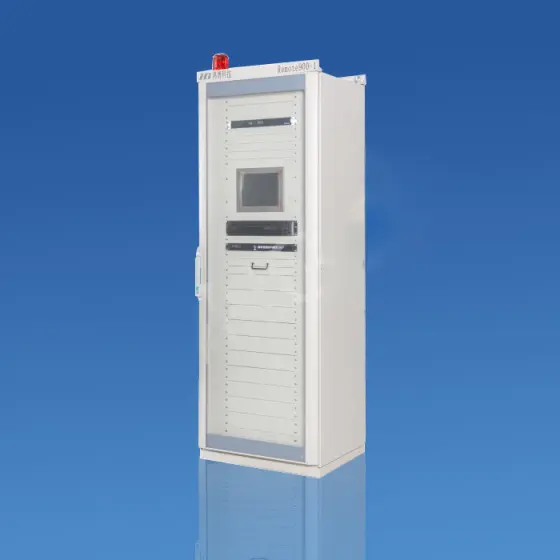
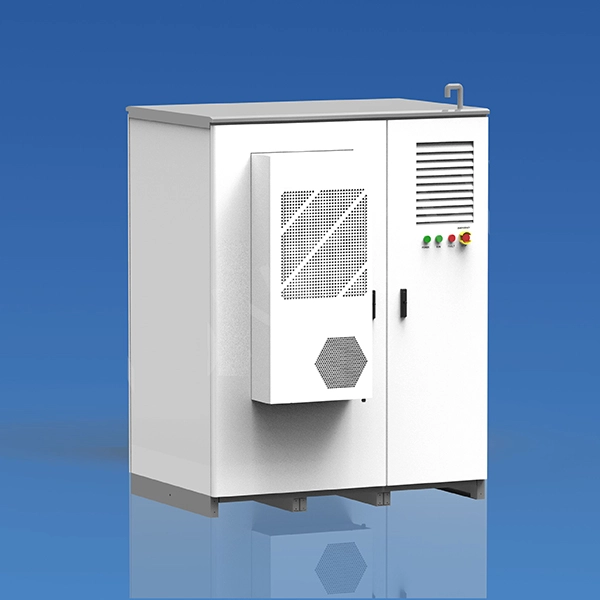
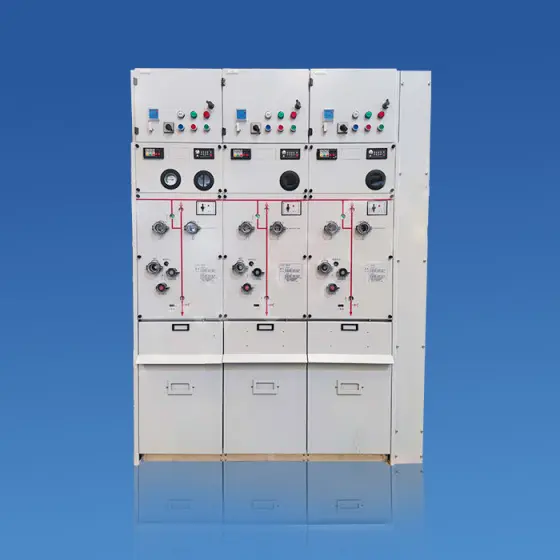
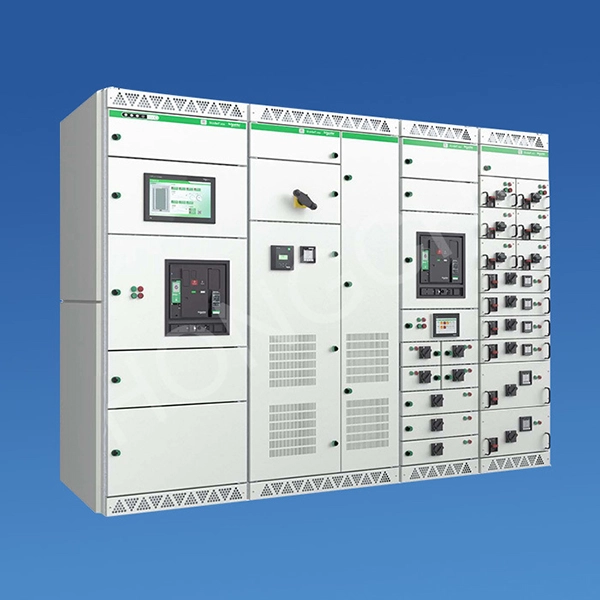
Remote-9001 Remote Monitoring Unit for Switchgear
Raydafon Group's Remote-9001 Remote Monitoring Unit for Switchgear offers smart switchgear protection.