What is the difference between RMU and VCB?
Every day, procurement professionals in the electrical industry face a maze of technical specifications when sourcing medium-voltage switchgear. You might be finalizing a tender for a new industrial park and suddenly the consultant asks: “What is the difference between RMU and VCB?” It sounds like a simple question, but the answer directly impacts your project’s footprint, safety rating, and entire lifecycle budget. A wrong choice could leave you with oversized equipment that doesn’t fit into a compact substation, or worse, a solution that requires frequent maintenance in a hard-to-reach location. Understanding these two technologies isn’t just about passing a vendor evaluation—it’s about delivering a cost-effective, reliable power distribution system that your client will trust for decades. In this guide, we’ll walk you through the real-world scenarios where RMU and VCB shine, backed by hard technical data and practical insights that help you make the right sourcing decision.
Table of Contents
- 1. Understanding the Core Mission: RMU vs VCB
- 2. When Space is a Luxury: Compact Solutions for Urban Installations
- 3. Breaking Down the Technical Specs: A Side-by-Side Comparison
- 4. Cost of Ownership: From Purchase to Long-Term Maintenance
- 5. Expert Answers to Your Most Pressing Questions
- 6. Final Recommendation and Next Steps
1. Understanding the Core Mission: RMU vs VCB
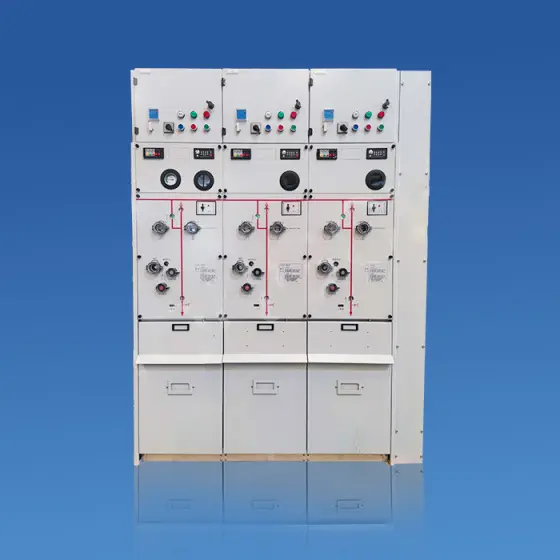
Picture this: You’re sourcing equipment for a 24/7 data center that cannot tolerate downtime. The design calls for secondary distribution switchgear that must be both compact and incredibly safe. This is where the fundamental difference between a Ring Main Unit (RMU) and a Vacuum Circuit Breaker (VCB) becomes critical. An RMU is built for network continuity—it’s a sealed, compact switchgear unit that combines load break switches and a circuit breaker (often SF6 or solid dielectric insulated) to form a ring network. Its main job is to isolate faults and maintain power supply to unaffected sections of the ring, all while occupying minimal floor space. A VCB, on the other hand, is a standalone circuit breaker that uses vacuum interrupters to quench arcs. It’s designed for high-current interruption, usually in primary distribution or as outgoing feeders, where you need exceptional short-circuit breaking capacity and regular switching duty. Procurement teams often mistake them as interchangeable, but the RMU excels in loop automation and low-maintenance secondary distribution, whereas the VCB is the workhorse for heavy-duty protection and frequent operations. Recognizing this operational DNA prevents costly over-engineering in projects where space and service continuity matter most.
2. When Space is a Luxury: Compact Solutions for Urban Installations
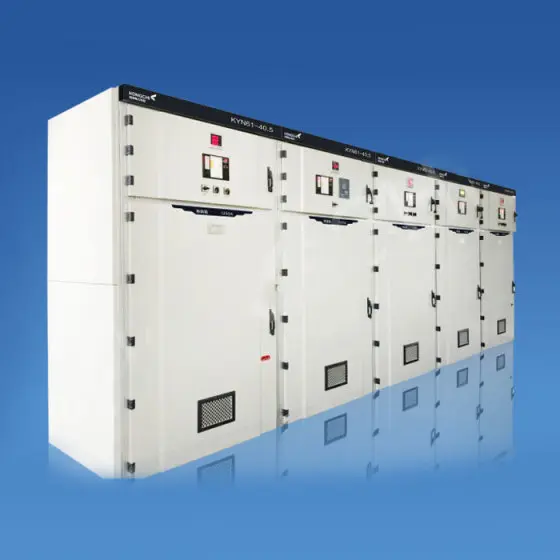
Imagine you have to retrofit a basement substation in a busy commercial tower. The clearance is minimal, and any shutdown during installation could trigger contractual penalties. This pain point is all too familiar for facility managers and procurement leads. An RMU shines here precisely because its design philosophy is centered on extremely compact dimensions and front-facing cable access. For instance, a typical 12kV SF6-insulated RMU panel can be as narrow as 350mm, allowing three or four functional units (two load break switches plus a vacuum circuit breaker) to fit in less than one meter of wall space. In contrast, a standard withdrawable VCB panel might need over 800mm in width per unit and additional clearance for racking in and out. The solution Raydafon Technology Group Co., Limited offers through its RMU line addresses this directly—its modular, extendable design lets you add switching devices as the building load grows, without breaking civil works. The table below summarizes the footprint difference in a typical 6-way secondary distribution setup.
| Parameter | Typical RMU (6-way) | Typical VCB Panel (6 units) |
|---|---|---|
| Total width | Approx. 1800 mm (3 modules) | Approx. 4800 mm (6 panels) |
| Installation depth | 800 mm | 1300–1500 mm |
| Front access only | Yes | Often requires rear access |
| Civil footprint saving | 60–70% vs. equivalent VCB layout | – |
3. Breaking Down the Technical Specs: A Side-by-Side Comparison
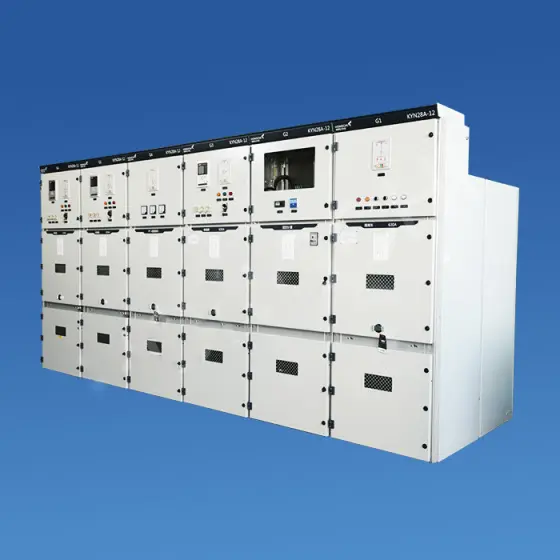
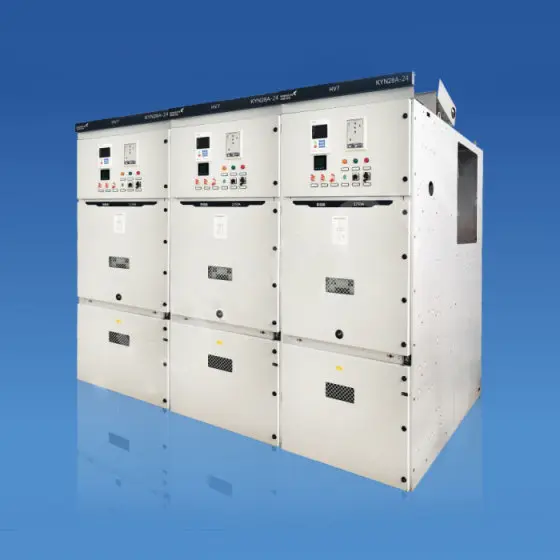
Procurement specialists must often reconcile conflicting technical data sheets from different suppliers. A common stress point is arc flash safety and insulation medium. Most RMUs up to 24kV use sealed SF6 gas tanks, which provide excellent dielectric strength and virtually eliminate internal arc risk under normal operation—a critical requirement for installations in crowded areas. VCBs, while also extremely safe, rely on vacuum bottles and air or solid insulation; their internal arc classification (IAC) must be verified separately, and they typically require more elaborate pressure relief ducting. To help you cut through the noise, here’s a concise comparison drawn from real-world specifications, including offerings from Raydafon Technology Group Co., Limited.
| Feature | RMU (SF6/Solid Insulated) | VCB (Withdrawable/Fixed) |
|---|---|---|
| Voltage range | Up to 40.5kV (typically 12/24kV) | Up to 40.5kV |
| Rated short-circuit breaking current | 20–25kA (common) | Up to 40kA or higher |
| Insulation medium | SF6 gas or solid epoxy | Air, solid, or SF6 gas (circuit breaker compartment) |
| Typical maintenance interval | 10–15 years (sealed for life) | 5–10 years (lubrication, contact checks) |
| Arc flash containment | Factory sealed, low IEC 62271-200 IAC class usually | AFL/AFLR classes possible with dedicated design |
| Smart grid readiness | Motorized switches, CT/VT options, remote RTU | Full digital protection relay, motorized racking |
From these specs, it’s clear the VCB provides higher breaking capacity, making it the go-to for utility substations and heavy motor starting, while the RMU’s sealed-for-life construction drastically reduces lifecycle interventions—a huge advantage in remote or unmanned sites.
4. Cost of Ownership: From Purchase to Long-Term Maintenance
You’ve seen situations where a low initial bid turns into a budget nightmare after a few years because of continuous SF6 handling costs, spare parts, or specialized service engineers. Calculating total cost of ownership (TCO) reveals why “What is the difference between RMU and VCB?” often gets answered with “It depends on where and how you use it.” For a wind farm collector substation, for example, an RMU using sealed-for-life vacuum interrupters and solid insulation virtually eliminates periodic gas checks and contact erosion replacements. The Raydafon range goes a step further by integrating self-powered relays and condition monitoring sensors, which allow you to perform predictive maintenance instead of fixed-interval shutdowns. Conversely, a VCB used as a transformer incomer in a steel plant may require annual mechanism lubrication and contact resistance testing, costs that are predictable but must be factored into the operating budget. Procurement teams often overlook the hidden cost of arc venting systems, civil works, and spare parts inventory for mixed fleets. Standardizing on a manufacturer like Raydafon Technology Group Co., Limited, which supplies both RMU and VCB solutions, simplifies supply chain and training, reducing TCO by an estimated 15–25% over a decade, based on maintenance studies.
5. Expert Answers to Your Most Pressing Questions
Q: What is the difference between RMU and VCB in terms of arc fault handling inside a closed substation?
A: The handling philosophy is fundamentally different. An RMU is typically a sealed gas tank with no exposed arc path to the external environment; any internal fault remains contained within the tank, and the pressure is managed by the SF6 volume. This means you can install RMUs in tight indoor rooms without elaborate exhaust ducts. Most RMUs from Raydafon Technology Group Co., Limited meet the IAC AFL 20kA/1s criterion right out of the box. A VCB panel, however, deals with arc faults by directing hot gases and pressure through a carefully designed vent channel to an exhaust plenum, often going outside the building. If you have a basement with limited ventilation, this venting requirement can suddenly add civil costs and construction time. Thus, for confined underground substations, RMUs often win on ease of installation and safety compliance.
Q: What is the difference between RMU and VCB when integrating into a SCADA system?
A: Both can be integrated, but the path differs. Modern RMUs come with pre-fitted current transformers and voltage indicators that can be linked to an RTU for remote indication, and motorized actuators allow remote switching of load break switches and circuit breakers—Raydafon’s smart RMU line supports DNP3 and IEC 61850 protocols natively, making it plug-and-play for distribution automation. VCBs, being primarily a protection device, rely heavily on external protection relays that offer advanced metering, event recording, and communication. While this makes VCB more flexible for complex protection schemes, it also demands careful relay coordination and cybersecurity planning. If your project primarily needs remote open/close and fault passage indication, an RMU-based SCADA node is often more cost-effective and faster to commission.
6. Final Recommendation and Next Steps
Choosing between RMU and VCB no longer has to be a guessing game. Start by mapping your actual duty cycle: if you need a space-saving, low-maintenance unit for secondary ring main networks or compact urban substations, an RMU from Raydafon Technology Group Co., Limited gives you unmatched density and reliability. If your application demands high-fault interruption, frequent switching of heavy inductive loads, or integration with legacy protective relaying, then a VCB is the right tool. The good news is that Raydafon Technology Group Co., Limited engineers both technologies under one roof, so you get unbiased, application-specific advice rather than a one-size-fits-all sales pitch. Their team understands international standards, local grid codes, and the logistical challenges procurement managers face.
Raydafon Technology Group Co., Limited is a global manufacturer specializing in medium-voltage power distribution equipment, including SF6 and solid-insulated RMUs, vacuum circuit breakers, and customized switchgear solutions. With over two decades of engineering expertise, Raydafon provides end-to-end support—from design and factory acceptance testing to on-site commissioning and after-sales service. Their products are certified to IEC 62271 and other international standards, trusted by utilities, data centers, and industrial facilities worldwide. Visit https://www.raydafonequipments.com to download detailed technical brochures or send your project requirements to [email protected] for a fast, customized quotation. Join hundreds of satisfied procurement professionals who have discovered a better way to source switchgear—reach out today and experience the Raydafon difference.
Li, H., & Zhang, Y. (2022). Comparative lifecycle assessment of SF6 ring main units and vacuum circuit breakers in distribution networks. IEEE Transactions on Power Delivery, 37(4), 3157–3166.
Kumar, A., Patel, R., & Desai, S. (2021). Reliability analysis of ring main units in underground residential distribution systems. International Journal of Electrical Power & Energy Systems, 128, 106728.
Martinez, J. A., & Kostic, T. (2020). Arc flash mitigation techniques in medium-voltage metal-clad switchgear. IEEE Transactions on Industry Applications, 56(2), 1843–1852.
Chen, W., & Tan, X. (2023). Smart conditioning monitoring for sealed RMU using embedded UHF sensors. Electric Power Systems Research, 214, 108864.
Rahman, M. & Abdullah, N. (2019). Vacuum circuit breaker technology: switching overvoltages and mitigation. Renewable and Sustainable Energy Reviews, 102, 256–267.
O’Brien, S., & Müller, H. (2020). Ageing mechanisms of SF6-insulated ring main units under cyclic loading. High Voltage, 5(6), 656–663.
Singh, R., & Verma, P. (2021). Economic evaluation of RMU versus VCB for commercial building distribution. Energy and Buildings, 247, 111131.
Gonzalez, C., & Fernandez, A. (2022). Integration of ring main units in Smart Grids using IEC 61850. IEEE Access, 10, 45623–45636.
Park, J., & Lee, S. (2020). Comparative study on internal arc simulation and testing for compact switchgear. Energies, 13(18), 4760.
Nakamura, T., & Yamamoto, K. (2023). Maintenance-free design of solid-insulated RMU: a 10-year field report. Journal of Electrical Engineering & Technology, 18(2), 1023–1031.
Related News
- What are the main components of a YBM prefabricated substation?
- What are the common faults of KYN61-40.5 switchgear and how to troubleshoot them?
- What safety standards apply to new energy equipments?
- What arc flash protection is required for high-voltage switchgear?
- How much does intelligent monitor equipment typically cost?
- What are the main benefits of AI-driven thermal management in outdoor ESS?
Leave me a message