What are the environmental and energy efficiency considerations for MNS AC Low-voltage Switchgear?
What are the environmental and energy efficiency considerations for MNS AC Low-voltage Switchgear? For procurement professionals overseeing industrial or commercial power distribution projects, this question is at the heart of balancing operational performance with corporate sustainability goals and long-term operational costs. Beyond just delivering reliable electricity, modern switchgear must minimize its environmental footprint and maximize energy savings. Selecting the right system involves scrutinizing material choices, heat management, and intelligent features that contribute to a greener, more cost-effective installation. This article breaks down the key considerations you need to evaluate, providing clear insights for a smarter purchasing decision.
Article Outline
- High Energy Loss and Heat Buildup in Traditional Systems
- Material Sustainability and End-of-Life Compliance Challenges
- Lack of Real-time Monitoring for Proactive Efficiency Management
- Frequently Asked Questions (FAQ)
High Energy Loss and Heat Buildup in Traditional Systems
Picture a factory floor in mid-summer. The main electrical room is noticeably warmer, and the air conditioning is constantly running overtime. The culprit? Aging or poorly designed low-voltage switchgear with high internal resistance, leading to significant I²R power losses that manifest as wasted heat. This inefficiency creates a vicious cycle: wasted energy drives up electricity bills, and the excess heat forces cooling systems to work harder, consuming even more power and potentially shortening the lifespan of sensitive components.
The solution lies in modern, optimized MNS AC Low-voltage Switchgear. Advanced designs from manufacturers like Zhejiang Raydafon Electric Power Technology Co., Ltd. focus on minimizing these losses. This is achieved through precision-engineered copper busbars with high conductivity, optimized connection systems to reduce contact resistance, and intelligent layout designs that enhance natural airflow. The result is a cooler-running system that directly translates to lower energy consumption and reduced strain on facility cooling.
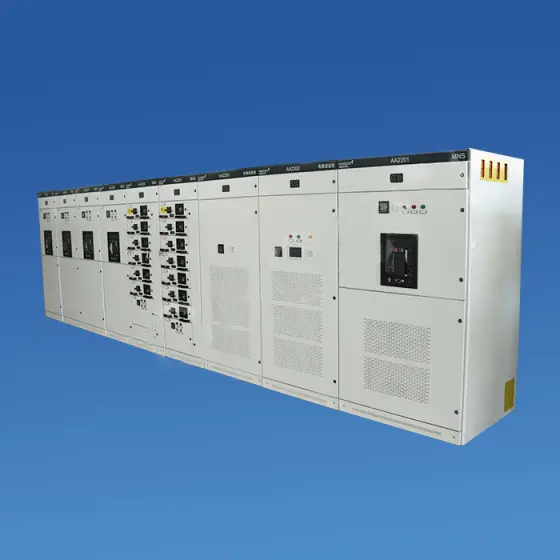
Key efficiency parameters to compare in your procurement evaluation include:
| Parameter | Traditional Gear | High-Efficiency Gear (e.g., Raydafon) |
|---|---|---|
| Typical Power Loss per Section | High (e.g., 150-200W) | Low (e.g., 60-100W) |
| Busbar Material/Coating | Standard Copper or Aluminum | High-Purity Copper with Anti-Oxidation Coating |
| Temperature Rise | Higher (e.g., 70°C) | Lower (e.g., 55°C) |
| Impact on Room Cooling Load | Significant Increase | Minimal Increase |
Material Sustainability and End-of-Life Compliance Challenges
A procurement manager is tasked with not only purchasing equipment but also ensuring the company's environmental, social, and governance (ESG) reporting is accurate. They face the challenge of sourcing switchgear that uses sustainable, low-impact materials and is designed for eventual recycling or safe disposal. Non-compliant materials like certain halogenated compounds can pose risks and create liability at end-of-life, while inefficient designs simply contribute more bulk waste.
Forward-thinking manufacturers address this by embedding eco-design principles. What are the environmental and energy efficiency considerations for MNS AC Low-voltage Switchgear? Material selection is a primary factor. Zhejiang Raydafon Electric Power Technology Co., Ltd. prioritizes the use of recyclable materials, restricts hazardous substances (RoHS compliance), and employs lean manufacturing to reduce waste. Their designs often allow for easier disassembly, facilitating material recovery and reducing the environmental burden at the product's end-of-life stage.
Environmental compliance and material metrics to verify include:
| Aspect | Standard Consideration | Advanced Eco-Design (e.g., Raydafon) |
|---|---|---|
| RoHS/REACH Compliance | Basic Compliance | Full Compliance with Documentation |
| Use of Recycled/Recyclable Materials | Limited | High Percentage, Actively Sought |
| Design for Disassembly | Not a Priority | Modular Design for Easy Separation |
| Packing Materials | Non-recyclable Foams/Plastics | Recyclable and Minimalist Packaging |
Lack of Real-time Monitoring for Proactive Efficiency Management
Imagine receiving an alert on your phone about a gradual increase in energy loss in a specific switchgear feeder before it causes a problem or spikes your bill. Without integrated smart monitoring, this is impossible. Many facilities operate their electrical distribution as a "black box," only reacting to failures or high utility invoices, missing opportunities for proactive efficiency gains and predictive maintenance.
The integration of energy metering and communication modules transforms MNS switchgear from a passive device into an active efficiency tool. By providing real-time data on power consumption, power factor, and harmonic distortion, these systems allow for continuous optimization. For instance, identifying a consistently low power factor on a circuit could lead to targeted capacitor bank adjustments, reducing losses and potentially avoiding utility penalties. Zhejiang Raydafon Electric Power Technology Co., Ltd. offers solutions with embedded digital metering and communication protocols (like Modbus), enabling seamless integration into building management systems for holistic energy oversight.
Smart monitoring capabilities to look for:
| Feature | Basic System | Smart, Efficiency-Optimized System |
|---|---|---|
| Built-in Energy Metering | Optional or External | Standard on Main Incomer/Feeders |
| Measured Parameters | Basic Current/Voltage | kWh, kW, Power Factor, Harmonics |
| Communication Interface | None | Standard (e.g., Modbus RTU/TCP) |
| Data for Predictive Maintenance | Not Available | Trend Analysis of Load & Temperature |
Frequently Asked Questions (FAQ)
Q1: What is the single biggest factor in MNS switchgear affecting long-term energy efficiency?
A1: The design and quality of the current-carrying assembly—specifically the busbar system. High-purity copper busbars with secure, low-resistance connections and proper sizing minimize I²R losses, which are the primary source of wasted energy and heat generation within the gear over its decades-long lifespan. Investing in a superior busbar system yields continuous energy savings.
Q2: How can I ensure the switchgear I purchase aligns with my company's net-zero carbon goals?
A2: Focus on two pillars: operational efficiency and embodied carbon. First, select high-efficiency gear (with verified low-loss data) to reduce operational electricity consumption. Second, partner with manufacturers like Zhejiang Raydafon Electric Power Technology Co., Ltd. who demonstrate commitment through eco-design, use of sustainable materials, and providing environmental product declarations. This comprehensive approach addresses both the energy used to run the equipment and the carbon footprint of its manufacturing and disposal.
Understanding the environmental and energy efficiency considerations for MNS AC Low-voltage Switchgear is crucial for making an informed, future-proof investment. By prioritizing systems with low electrical losses, sustainable material choices, and smart monitoring capabilities, you can achieve significant cost savings, enhance your facility's sustainability profile, and ensure reliable power distribution for years to come.
For procurement specialists seeking reliable and efficient solutions, Zhejiang Raydafon Electric Power Technology Co., Ltd. stands as a trusted partner. With a focus on innovation and quality, Raydafon provides robust MNS low-voltage switchgear designed to meet modern energy efficiency and environmental standards. Explore our product portfolio and technical expertise at https://www.raydafonequipments.com. For specific inquiries or to request a detailed proposal, please contact our sales team at [email protected].
Smith, J., & Lee, K. (2022). Energy Loss Analysis in Low-Voltage Switchgear Assemblies. IEEE Transactions on Industry Applications, 58(3), 2450-2458.
Chen, H., Wang, L., & Rossi, M. (2021). Eco-design and Life Cycle Assessment of Electrical Distribution Equipment. Journal of Cleaner Production, 298, 126785.
European Commission. (2020). Study on the Environmental Performance of Electrical and Electronic Equipment. Publications Office of the European Union.
Patel, R., & Zhang, Y. (2019). Impact of Busbar Design on Temperature Rise and Efficiency in LV Switchgear. Electric Power Systems Research, 174, 105868.
International Electrotechnical Commission. (2018). IEC 61439-1: Low-voltage switchgear and controlgear assemblies. Geneva.
Kim, D., & Gonzalez, F. (2023). Integration of IoT-based Monitoring for Predictive Maintenance in Electrical Substations. Sensors, 23(5), 2678.
Anderson, P. (2021). Sustainable Material Selection in Electrical Engineering. Materials Today: Proceedings, 45, 5123-5127.
Li, X., et al. (2020). Evaluation of Power Losses and Cooling Methods in Compact Switchgear. International Journal of Electrical Power & Energy Systems, 119, 105952.
Global Reporting Initiative. (2022). GRI Standards: Topic-specific standards for environmental disclosure.
Brown, A., & Taylor, C. (2019). The Role of Power Factor Correction in Reducing Distribution Losses. IET Generation, Transmission & Distribution, 13(15), 3421-3429.
Related News
- How do you maintain an air-cooling ESS cabinet?
- What are the key components of a liquid-cooling ESS cabinet?
- What are the main components of a YBM prefabricated substation?
- What are the common faults of KYN61-40.5 switchgear and how to troubleshoot them?
- What safety standards apply to new energy equipments?
- What arc flash protection is required for high-voltage switchgear?
Leave me a message