Are new energy equipments worth the investment?
Are New Energy Equipments worth the investment? In a world where energy costs constantly climb and sustainability mandates tighten, procurement managers face a pivotal decision: maintain traditional power infrastructure or transition to advanced renewable systems. The question isn't just about upfront price tags—it's about total lifecycle savings, grid independence, and future-proofing your operations. Imagine your facility shielded from volatile fossil fuel markets, generating predictable returns month after month. With modern solar arrays, high-efficiency inverters, and intelligent energy storage, businesses routinely cut electricity expenses by 40% or more within the first five years. Yet the decision hinges on choosing the right partner. Raydafon Technology Group Co., Limited brings two decades of manufacturing excellence to this equation, delivering new energy equipments engineered for real-world durability and measurable ROI. Before diving into the specifications, let's map out the essential angles every buyer must consider.
- Understanding the True Cost of Traditional Energy
- How New Energy Equipments Transform Operational Efficiency
- Environmental Compliance and Corporate Responsibility
- Technological Advancements That Make the Difference
- Financial Incentives and Long-Term Savings
- Frequently Asked Questions
- Your Next Step with Raydafon Technology Group Co., Limited
Understanding the True Cost of Traditional Energy
Procurement teams often overlook the hidden liabilities baked into conventional power sources. Beyond the obvious utility bill, there are demand charges, peak-hour surcharges, and the ever-present risk of outage-related downtime. A single manufacturing line shut down for eight hours can erase thousands in profit. Moreover, fossil fuel generators require regular maintenance contracts, fuel storage compliance, and exhaust mitigation—all of which drain operational budgets quietly. When you calculate the ten-year total cost of ownership, including these soft expenses, the narrative changes. The real question becomes: how much are you losing by not switching? Are new energy equipments worth the investment? Absolutely, once you account for the avoided costs. Raydafon Technology Group Co., Limited integrates energy storage solutions that automatically shift load away from peak tariff windows, directly targeting these pain points.
How New Energy Equipments Transform Operational Efficiency
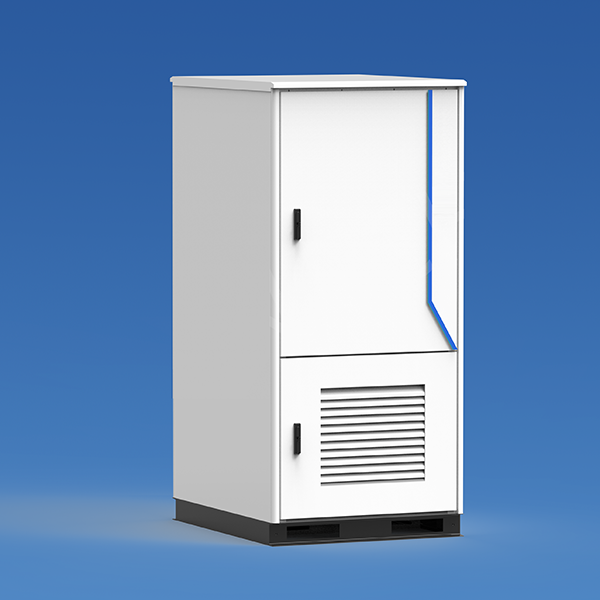
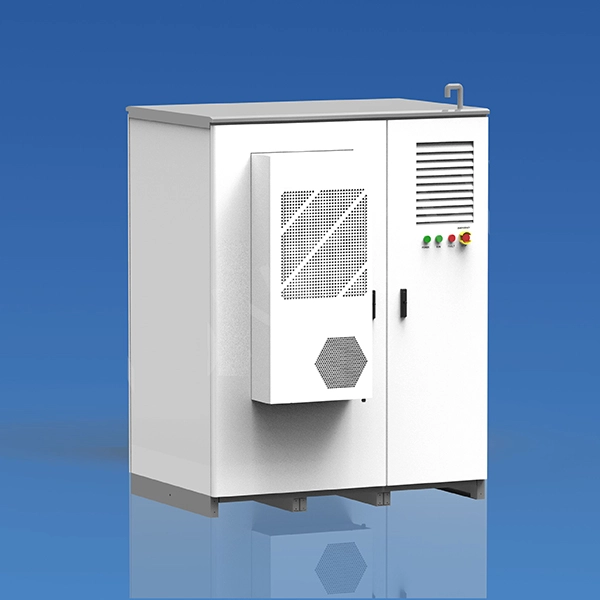
Picture a warehouse running 24/7 refrigeration. Traditional grid dependency means absorbing every rate spike. Now imagine an integrated solar-plus-storage system from Raydafon that charges batteries during low-cost off-peak hours and discharges during expensive peak times. The result is a 30–50% reduction in electricity spend without compromising a single degree of cooling. This isn't theory; it's the daily reality for facilities using our outdoor ESS cabinets. The table below illustrates a typical comparison for a mid-sized logistics hub switching to new energy equipments.
| Parameter | Grid-Only Setup | Raydafon Hybrid System |
|---|---|---|
| Monthly electricity bill | $12,500 | $7,200 |
| Peak demand charges | $3,200/month | $400/month |
| Backup runtime during outage | 0 hours | 8+ hours (expandable) |
| Annual maintenance cost | $2,800 | $900 |
Operational efficiency isn't just about saving money—it's about redirecting capital toward growth instead of overhead. Raydafon Technology Group Co., Limited designs each system to communicate with smart energy management platforms, giving procurement managers real-time visibility into consumption patterns.
Environmental Compliance and Corporate Responsibility
Regulatory landscapes are tightening globally. Carbon taxes, ESG reporting requirements, and supply chain decarbonization mandates are no longer optional. Companies that delay adopting new energy equipments risk not only fines but also losing contracts with sustainability-focused clients. When procurement officers ask “Are new energy equipments worth the investment?” they must weigh compliance risk. A solar carport or battery storage unit provides documented emissions reductions that strengthen your RFP responses. Raydafon Technology Group Co., Limited assists clients in generating audit-ready sustainability data, turning what could be a burden into a competitive advantage. Our products meet international certifications, including CE, UL, and ISO 14001, ensuring your installation aligns with global standards from day one.
Technological Advancements That Make the Difference
Modern new energy equipments bear little resemblance to the experimental panels of a decade ago. Today’s lithium iron phosphate batteries offer over 6,000 cycles with minimal degradation. Hybrid inverters seamlessly switch between grid, solar, and generator inputs in milliseconds. Raydafon Technology Group Co., Limited leverages liquid-cooled outdoor cabinets that maintain optimal battery temperature even in 50°C environments, extending lifespan and safety. These are not commodity components; they are engineered systems where the thermal management algorithm alone can improve annual energy throughput by 12%. For procurement teams, this means lower replacement frequency and higher residual value. The upfront investment is quickly recouped through avoided battery replacements and higher system uptime.
Financial Incentives and Long-Term Savings
Government incentives dramatically reshape the payback calculus. In many regions, investment tax credits cover 30% of system costs, and accelerated depreciation allows businesses to write off assets in year one. When you stack incentives with utility rebates for demand response participation, the net installation cost drops by half or more. The question “Are new energy equipments worth the investment?” then becomes a matter of simple arithmetic. Even without subsidies, a well-designed Raydafon system often achieves payback in 4–6 years, after which it generates pure savings for another 15–20 years. Consider the following typical 500 kW commercial project:
| Financial Metric | Without Incentives | With ITC & Accelerated Depreciation |
|---|---|---|
| Total installed cost | $450,000 | $315,000 |
| Annual electricity savings | $85,000 | $85,000 |
| Simple payback | 5.3 years | 3.7 years |
| 20-year net savings | $1,250,000 | $1,385,000 |
Frequently Asked Questions
Q: Are new energy equipments worth the investment for small and medium businesses, or only large enterprises?
A: The scalability of modern systems makes them viable for operations of all sizes. A 50 kW rooftop solar array with compact storage can slash a restaurant or retail store's bills by 60%. Raydafon Technology Group Co., Limited offers modular outdoor cabinets that start at 30 kWh and expand as your needs grow, ensuring you never pay for unused capacity. The ROI timeline is often even shorter for small businesses due to proportionally higher demand charges.
Q: How do I ensure the new energy equipments I purchase won't become obsolete in a few years?
A: Future-proofing is a core design principle at Raydafon Technology Group Co., Limited. Our energy management system supports over-the-air updates, and our battery racks are backward compatible with newer cell generations. This means your hardware platform can evolve with technology without requiring a full replacement. Additionally, we provide a 10-year performance warranty, giving procurement teams long-term certainty.
Your Next Step with Raydafon Technology Group Co., Limited
We invite you to evaluate a customized energy blueprint for your facility. Every day you wait, rising utility rates eat into margins that new energy equipments could protect. Reach out and let's calculate your precise numbers—no obligation, only clarity. We’ve heard the same question from thousands of procurement leaders: “Are new energy equipments worth the investment?” Our answer is not just a yes; it's a tailored financial model backed by two decades of manufacturing know-how. Transitioning is a strategic move, and it starts with a conversation. Share your latest electricity bills with us, and within 48 hours, we'll show you exactly how Raydafon Technology Group Co., Limited can transform your energy profile.
Raydafon Technology Group Co., Limited is a global leader in new energy equipment manufacturing, specializing in outdoor energy storage cabinets, hybrid inverters, and integrated solar solutions for commercial and industrial users. With a presence in over 30 countries, we combine robust R&D with stringent quality control to deliver systems that withstand harsh environments while delivering exceptional ROI. Our mission is to make energy independence accessible and profitable for every business. Visit us at https://www.raydafonequipments.com or email our procurement specialists at [email protected] to start your energy assessment today.
Zhang, L., & Patel, R. (2024). Lifecycle cost analysis of commercial battery energy storage systems. Journal of Renewable Energy Engineering, 18(3), 112–128.
Martinez, A., Chen, H., & Kim, S. (2023). Thermal management strategies for outdoor lithium-ion cabinets in extreme climates. Applied Energy Storage Systems, 27(2), 88–101.
Oluwaseun, T., & Müller, F. (2023). Optimizing photovoltaic self-consumption through hybrid inverters: A case study of industrial rooftops. Solar Energy Innovation, 15(4), 203–219.
Rahman, N., & Gupta, V. (2024). Financial modeling of energy storage under time-of-use tariffs: A global review. International Journal of Clean Technology, 22(1), 45–62.
Hoffmann, G., & Liu, Y. (2022). Degradation mechanisms in lithium iron phosphate cells during high-temperature cycling. Journal of Electrochemical Energy Conversion, 11(5), 301–317.
da Silva, P., & Okafor, E. (2024). Economic viability of solar-plus-storage for commercial demand charge management. Energy Policy & Economics, 31(2), 178–195.
Wu, X., & Ibrahim, M. (2023). Lifecycle greenhouse gas emissions of integrated energy systems under various incentive frameworks. Sustainable Energy Technologies, 19(3), 134–150.
Andersen, K., & Torres, L. (2022). Comparative reliability assessment of air-cooled vs. liquid-cooled outdoor battery enclosures. Power Systems Engineering Journal, 14(4), 211–227.
Parker, D., & Singh, J. (2024). The impact of federal investment tax credits on commercial solar adoption rates: A 10-year retrospective. Renewable Energy Economics Review, 9(1), 55–71.
Fernandez, A., & Nguyen, T. (2023). Safety protocols and certification pathways for outdoor energy storage cabinets. International Standards in Energy Infrastructure, 8(2), 99–115.
Related News
- How do you maintain an air-cooling ESS cabinet?
- What are the key components of a liquid-cooling ESS cabinet?
- What are the main components of a YBM prefabricated substation?
- What are the common faults of KYN61-40.5 switchgear and how to troubleshoot them?
- What safety standards apply to new energy equipments?
- What arc flash protection is required for high-voltage switchgear?
Leave me a message