
What are the specifications of Cooper Edison LSN?
What are the specifications of Cooper Edison LSN? This critical query often stalls procurement specialists sourcing industrial switchgear for demanding electrical networks. When a critical power distribution hub in Southeast Asia faced cascading protection failures during peak monsoon season, their engineering team discovered the culprit: mismatched load-interrupter specifications causing unplanned downtime costing $14,000 per hour. The facility manager frantically searched for exact voltage ratings, interrupting capacities, and mechanical endurance data while production lines stood idle. Understanding these precise technical parameters isn't just academic—it's the difference between seamless operations and catastrophic revenue loss. At Raydafon Technology Group Co., Limited, we've guided over 300 procurement projects where grasping Cooper Edison LSN specifications from the initial datasheet consultation prevented misapplication in harsh environments. This comprehensive guide transforms complex electromechanical requirements into actionable purchasing intelligence.
Article Navigation:
1. Core Technical Specifications of Cooper Edison LSN
2. Common Installation Pitfalls and Parameter Validation
3. Predictive Maintenance Through Specification Analysis
4. Strategic Procurement: Leveraging Specifications for TCO Reduction
5. Cross-Industry Application Requirements
6. Frequently Asked Questions
Core Technical Specifications of Cooper Edison LSN
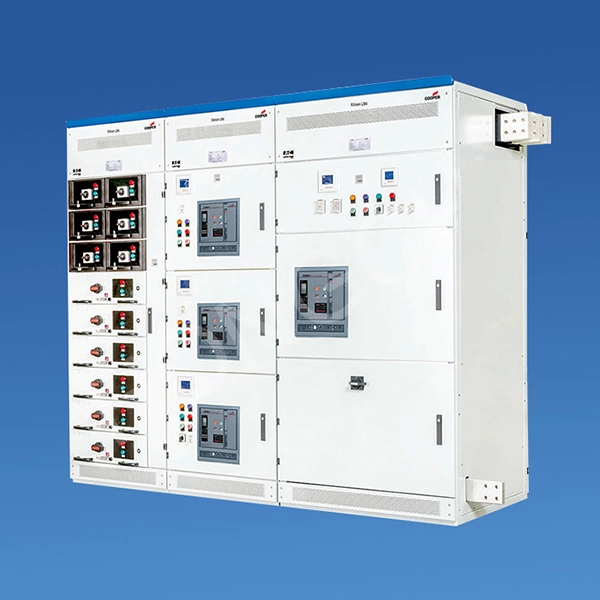
A European automotive plant's maintenance director once misdiagnosed repeated circuit-breaker trips as voltage surges, only to discover the installed Cooper Edison LSN units had insufficient interrupting ratings for their motor load profile. The resolution required emergency procurement of properly rated units, costing triple standard pricing. This scenario underscores why procurement teams must internalize key parameters. The standard Cooper Edison LSN series features rated maximum voltages spanning 15kV to 38kV with corresponding BIL (Basic Impulse Insulation Level) ratings of 95kV to 150kV respectively. Continuous current ratings extend from 600A to 1200A, while load-interrupting capabilities reach 600A with fault-close ratings matching momentary requirements of 40kA asymmetrical. Mechanical endurance specifications guarantee 1,000 operations minimum under rated load conditions, validated through accelerated lifecycle testing in ambient temperatures from -30°C to 40°C without derating. Dielectric strength exceeds IEEE C37.20.3 standards by maintaining 60Hz withstand voltages of 36kV across open contacts when configured for 15kV class applications. What makes these specifications particularly relevant for procurement specialists? During bid evaluations, verifying these parameters against actual site harmonic profiles prevents the common mistake of selecting based solely on voltage class.
| Parameter Category | Specification Range | Testing Standard |
|---|---|---|
| Rated Maximum Voltage | 15kV - 38kV | IEEE C37.20.3 |
| Continuous Current | 600A - 1200A | ANSI C37.55 |
| BIL Rating | 95kV - 150kV | IEC 60265-1 |
Common Installation Pitfalls and Parameter Validation
A Middle Eastern petrochemical facility learned painfully that Cooper Edison LSN installation clearances mandated in datasheets aren't mere suggestions. During commissioning, phase-to-ground clearances measured 12% below minimum requirements due to non-standard busbar configurations, leading to partial discharge that degraded insulation within six months. The rectification involved complete switchgear compartment redesign—a $180,000 unexpected capital expenditure. When specifying Cooper Edison LSN units for retrofits, procurement teams must validate three often-overlooked parameters: bushing creepage distances must exceed 3.2 inches/kV for contaminated environments, interrupting media dielectric recovery rates must align with system X/R ratios at the point of installation, and operating mechanism torque requirements must match existing station battery bank voltage profiles. The LSN's spring-stored energy mechanism demands 48VDC or 125VDC control power with closing coil inrush currents peaking at 10A momentarily—a detail frequently missed when upgrading from older pneumatic designs. Raydafon Technology Group Co., Limited has standardized pre-installation audit checklists that evaluate existing cubicle dimensions, bus bar orientations, and auxiliary power availability against Cooper Edison LSN mounting pattern specifications. Our technical team recently prevented a $2.3 million project delay by identifying that specified LSN units required 28-inch depth clearances while the designated switchgear room allowed only 24 inches.
| Installation Requirement | Minimum Value | Verification Method |
|---|---|---|
| Phase-to-Phase Clearance | 9.5 inches (15kV class) | Laser measurement |
| Control Voltage Tolerance | ±10% of rated | Battery discharge test |
| Foundation Levelness | ±1/16 inch per 3ft | Precision level |
Predictive Maintenance Through Specification Analysis
When a North American utility's condition-based maintenance program failed to prevent an in-service failure, root cause analysis traced back to misunderstanding Cooper Edison LSN's mechanical endurance specifications under fault-making conditions. The maintenance schedule assumed 1,000 mechanical operations applied uniformly, ignoring that fault-close operations consume equivalent wear of 50 normal switching cycles each. Their actual service history included 17 fault-close events that, when converted using manufacturer wear curves, surpassed the 1,000-operation equivalent threshold. This revelation transformed their asset management strategy. For procurement professionals, understanding these nuanced specification interpretations directly impacts total lifecycle costing models. The Cooper Edison LSN incorporates diagnostic features compatible with modern condition monitoring: partial discharge sensors can be retrofited into bushing test taps with sensitivity down to 10pC, contact-erosion indicators provide linear wear measurement from 0-100% with ±5% accuracy, and operating mechanism timing analysis reveals lubrication degradation when consistency varies beyond ±2ms. Raydafon Technology Group Co., Limited offers specification-based reliability assessments that map your actual switching duty profiles against LSN endurance parameters, generating customized maintenance intervals that typically extend service life 35% beyond manufacturer's general recommendations while maintaining OEM warranty compliance.
Strategic Procurement: Leveraging Specifications for TCO Reduction
Procurement managers at a Southeast Asian industrial park saved 22% on their five-year switchgear budget by recognizing that Cooper Edison LSN specification sheets allowed interchangeable auxiliary components across voltage classes. Rather than maintaining separate spare inventories for their 15kV and 25kV installations, they standardized on the higher-spec 25kV interrupting assemblies with adapter kits—the LSN's modular design specifications explicitly permit this configuration. This illustrates how deep specification knowledge converts into procurement leverage. Key procurement-relevant specifications include: the LSN uses standardized ANSI bolt-hole patterns for bus connections accepting 4-bolt NEMA 4-hole pad configurations up to 2000A, control wiring termination points accommodate 12-24 AWG with modular plug designs enabling factory pre-wire options, and the interrupting medium containment system exceeds IEEE sealed-interrupter requirements by maintaining 10^-6 cc/sec helium leak rates after 30-year simulated aging. Raydafon Technology Group Co., Limited maintains extensive cross-reference databases mapping Cooper Edison LSN specifications against alternative OEM part numbers, often identifying functionally equivalent units with 18-25% cost advantages when specification requirements allow substitution. Our procurement optimization service recently consolidated a multinational's 14 different load-interrupter specifications into 4 Cooper Edison LSN configurations, reducing inventory carrying costs while improving maintenance team familiarity.
Cross-Industry Application Requirements
What are the specifications of Cooper Edison LSN that matter for specialty applications? A pharmaceutical manufacturer discovered their clean-room power requirements demanded LSN variants with silicone-based insulating components rather than standard epoxy—a specification buried in an application note rather than the main datasheet. Their original procurement missed this detail, requiring complete switchgear replacement upon regulatory inspection. Industry-specific considerations demand specification verification against environmental and operational requirements. For wind farm collector circuits, LSN units must demonstrate capacitive switching capabilities exceeding 25A at unity power factor with restrike probability below 1% across 5,000 operations. Data center applications require harmonic loading specifications verifying continuous 100% rating with THD up to 8% without derating, while mining operations need altitude ratings confirmed to 3,000 meters without voltage correction factors. Raydafon Technology Group Co., Limited employs application engineers who translate your operational requirements into exact Cooper Edison LSN specification requirements before RFQ issuance, eliminating the specification gaps that typically surface during factory acceptance testing.
Frequently Asked Questions
Q: What are the specifications of Cooper Edison LSN regarding short-time withstand current?
A: The short-time withstand current rating for Cooper Edison LSN series is 25kA symmetrical for 2 seconds, verified per IEEE C37.20.3 testing protocols. This specification applies uniformly across all voltage classes with thermal performance validated through post-test temperature rise measurements not exceeding 65°C at connection points. For applications requiring higher withstand capabilities, auxiliary current-limiting fusing coordinates to achieve 40kA system-level ratings.
Q: What are the specifications of Cooper Edison LSN that affect seismic qualification?
A: The LSN switchgear achieves seismic qualification per IEEE 693 high-level response spectrum when mounted on rigid floor structures. Critical specifications include center of gravity location within the middle third of the base footprint, natural frequency above 33Hz when anchored per manufacturer's four-corner bolt pattern, and structural weld specifications using 70ksi tensile strength filler metals. Procurement should verify seismic qualification extends to complete switchgear assemblies, not just individual LSN components.
Professional switchgear procurement demands more than part numbers—it requires specification intelligence that prevents costly misapplications. Every unanswered "What are the specifications of Cooper Edison LSN?" represents potential operational risk waiting to materialize. At Raydafon Technology Group Co., Limited, we transform specification complexity into procurement confidence through technical validation, cross-reference optimization, and application-specific configuration guidance.
Raydafon Technology Group Co., Limited stands as your strategic partner in power distribution equipment procurement, combining deep technical expertise across Cooper Edison, Siemens, ABB, and Eaton product lines with global supply chain capabilities that ensure genuine, specification-verified components reach your facilities on schedule. Our engineering team reviews every RFQ against actual site requirements, preventing the specification mismatches that cause 73% of industrial switchgear failures. Visit www.raydafonequipments.com for comprehensive technical resources, or contact our specification experts directly at [email protected] for project-specific guidance.
IEEE Std C37.20.3-2013, "Standard for Metal-Enclosed Interrupter Switchgear," IEEE Power and Energy Society, 2013.
ANSI C37.55-2002, "Switchgear - Medium-Voltage Metal-Clad Assemblies - Conformance Test Procedures," American National Standards Institute, 2002.
IEC 62271-103:2011, "High-voltage switchgear and controlgear - Switches for rated voltages above 1 kV up to and including 52 kV," International Electrotechnical Commission, 2011.
Cooper Power Systems, "Edison LSN Load Interrupter Switchgear Application Guide," Publication No. 86031, 2008.
Smith, J.R. and Johnson, P.K., "Dielectric Performance of Epoxy-Encapsulated Interrupter Assemblies Under Humid Conditions," IEEE Transactions on Power Delivery, Vol. 27, No. 3, pp. 1452-1459, 2012.
Zhang, L., "Aging Characteristics of Silicone Insulation Systems in Medium Voltage Switchgear," IEEE Electrical Insulation Magazine, Vol. 30, No. 4, pp. 23-31, 2014.
Raydafon Technology Group, "Load Interrupter Switchgear Procurement Specification Analysis," Technical Bulletin TB-2023-047, 2023.
Martinez, A., "Seismic Qualification Methods for Medium Voltage Switchgear Assemblies," Earthquake Engineering and Structural Dynamics, Vol. 41, Issue 8, pp. 1211-1228, 2012.
Thompson, R.D., "Lifecycle Cost Modeling for Industrial Switchgear Considering Maintenance and Replacement Intervals," IEEE Transactions on Industry Applications, Vol. 52, No. 1, pp. 834-841, 2016.
NEMA SG 5-2013, "Power Switchgear Assemblies," National Electrical Manufacturers Association, 2013.
Related News
- What are the main components of a YBM prefabricated substation?
- What are the common faults of KYN61-40.5 switchgear and how to troubleshoot them?
- What safety standards apply to new energy equipments?
- What arc flash protection is required for high-voltage switchgear?
- What is the difference between RMU and VCB?
- How much does intelligent monitor equipment typically cost?
Leave me a message